
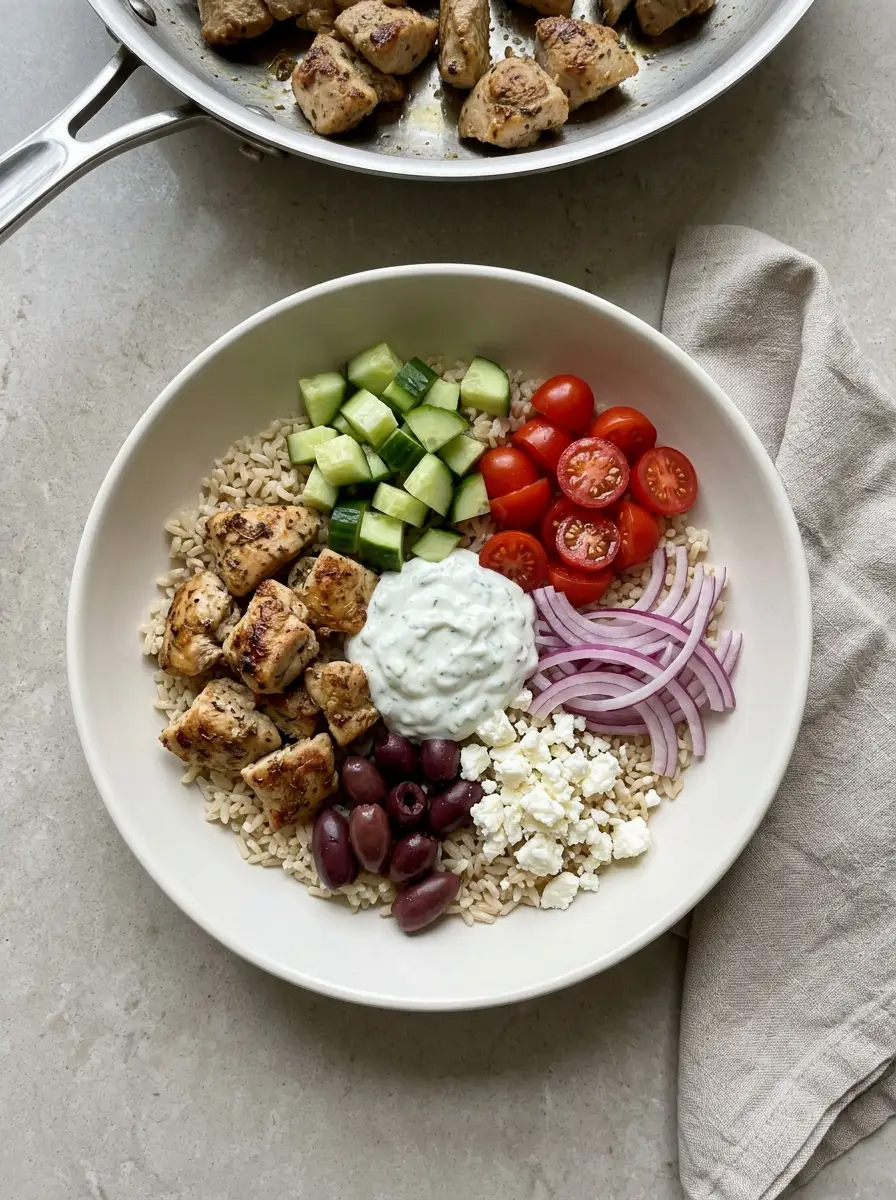
Chicken Gyro Bowls bring lemon-herb chicken, fluffy rice, crisp vegetables, salty feta, briny olives, and creamy tzatziki together in one colorful Mediterranean-style dinner. Each component contributes a different texture and flavor, making the bowls satisfying without feeling overly heavy.
The recipe also works well for meal preparation because the warm and cold components can be stored separately. Cook the rice and chicken ahead, prepare the vegetables and tzatziki, and assemble each bowl when you are ready to eat. The result is a flexible family meal that can be adjusted for different preferences without preparing separate dinners.
What Goes Into a Chicken Gyro Bowl?
A well-built bowl needs more than a group of ingredients placed next to one another. Each section should have a clear purpose and contribute something the other components do not provide.
The chicken is the warm, savory center. Greek yogurt, lemon, garlic, herbs, and spices season the meat and help it stay tender while it cooks. Browning the chicken in a hot skillet adds color and gives the small pieces lightly crisp edges.
Rice forms the base and absorbs some of the chicken juices and tzatziki. Brown rice adds a slightly nutty flavor and firm texture, although another cooked rice can be used when that better suits your household.
Cucumber, tomatoes, and red onion provide coolness and crunch. They keep the bowl fresh and create contrast with the warm chicken and rice.
Kalamata olives and feta provide concentrated salty flavor. They are used as accents rather than the main volume of the bowl, helping every bite taste more distinctly Mediterranean-inspired.
Tzatziki brings everything together. The creamy yogurt sauce softens the spices on the chicken, cools the vegetables, and adds lemon, garlic, cucumber, and dill throughout the bowl.
Why the Components Work Together
The success of these Chicken Gyro Bowls comes from contrast. The rice and chicken are warm, while the vegetables and tzatziki remain cool. The chicken is savory and spiced, the vegetables are fresh, the olives and feta are salty, and the sauce is creamy and tangy.
These contrasts prevent the bowl from tasting flat. A bowl made only with rice and chicken could feel dry, while one overloaded with sauce might lose the texture of the vegetables. Keeping the components distinct until serving preserves their individual qualities.
The chicken marinade also balances richness and acidity. Greek yogurt coats the meat and carries the herbs and spices, while lemon adds brightness. Garlic, oregano, smoked paprika, cumin, coriander, and parsley create a savory mixture with warmth but no aggressive heat.
The tzatziki repeats some of the same flavors found in the chicken, particularly yogurt, lemon, and garlic. This repetition connects the sauce to the protein without making both components taste identical. Cucumber and dill give the tzatziki its own fresh character.
Rice acts as a neutral base between these stronger flavors. It catches the sauce, softens the saltiness of the feta and olives, and makes the bowl substantial enough to serve as dinner.
The Five Components of a Balanced Bowl
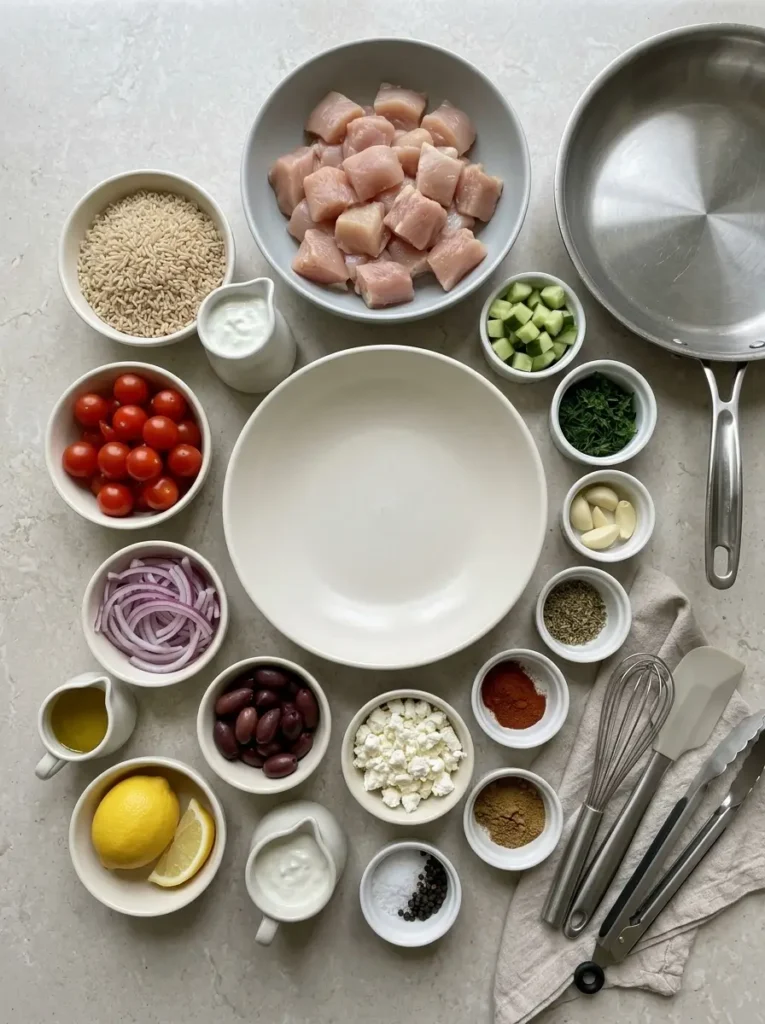
The lemon-herb chicken
Boneless, skinless chicken breast works well because it cooks quickly after being cut into bite-size pieces. Similar-size pieces are important so the chicken finishes evenly and smaller pieces do not become dry before larger ones are cooked.
The Greek yogurt marinade should coat the chicken rather than pool heavily around it. The yogurt carries the lemon, garlic, herbs, and spices across the surface of every piece.
Allowing the chicken to rest briefly in the marinade gives the seasoning time to distribute. A very long acidic marinade is unnecessary for small pieces and may change their texture.
The rice base
Brown rice gives the bowl a firm, slightly chewy base with a mild nutty flavor. It can be cooked in advance, which makes the final dinner easier to organize.
The rice should be fluffy rather than wet or sticky. Excess moisture can make the bottom of the bowl heavy once the tzatziki and vegetable juices are added.
Allow freshly cooked rice to rest briefly before fluffing it with a fork. This helps release steam and keeps the grains from becoming compressed.
The crisp vegetables
Cucumber and tomatoes provide most of the fresh volume in the bowl. English or Persian cucumber is especially useful because it has a crisp texture, thin skin, and fewer large seeds.
Cherry tomatoes hold their shape well and tend to provide dependable sweetness. Cut them into pieces that are easy to eat with the chicken and rice.
Red onion adds sharpness and crunch. Slice or dice it finely so it supports the other ingredients rather than dominating a bite.
The feta and olives
Feta contributes creaminess, saltiness, and a crumbly texture. Scatter it over the bowl rather than mixing it into the rice, where it could disappear.
Kalamata olives add a deep briny flavor. Their intensity means a small amount can season the entire bowl.
Drain the olives before adding them so their brine does not collect around the rice. When serving younger diners or anyone who dislikes olives, keep them in a separate bowl and let each person add their own.
The creamy tzatziki
Tzatziki should be thick enough to sit on top of the bowl rather than immediately running into the rice. Removing excess liquid from the cucumber is the most important step for maintaining that consistency.
Greek yogurt provides the creamy base, while lemon, garlic, dill, and cucumber give the sauce a bright, cooling flavor.
Prepare the tzatziki before cooking the chicken when possible. Resting it in the refrigerator gives the garlic, lemon, and dill time to blend into the yogurt.
A Preparation Strategy That Keeps Every Component Fresh
The easiest way to approach this recipe is to divide the work into warm components and cold components.
The rice and chicken are served warm. Start with the rice because it usually requires the longest unattended cooking period. While it cooks, prepare the chicken marinade and let the chicken rest in it.
The tzatziki, vegetables, feta, and olives remain cold. They can all be prepared while the chicken marinates, which prevents inactive waiting time.
Begin with the tzatziki so it can chill while the rest of the meal is completed. Squeeze as much moisture as possible from the cucumber before combining it with the yogurt and other sauce ingredients.
Next, cut the tomatoes, cucumber, and red onion. Drain the olives and crumble the feta when needed. Keep these toppings in separate bowls if family members prefer different combinations.
Cook the chicken last. It needs only a brief period in a hot skillet, and preparing it at the end allows it to reach the bowls while still warm.
This sequence also reduces cross-contamination. Finish cutting the vegetables before raw chicken touches the main cutting board, or use separate boards for produce and poultry.
The Best Cooking Order for Chicken Gyro Bowls
Start the rice first
Prepare the rice according to the method required for the variety you are using. Once it is cooked, keep it covered and fluff it shortly before assembling the bowls.
If using previously cooked rice, reheat it until steaming hot while the chicken cooks. Add a small splash of water before reheating when the grains seem dry.
Marinate the chicken while the rice cooks
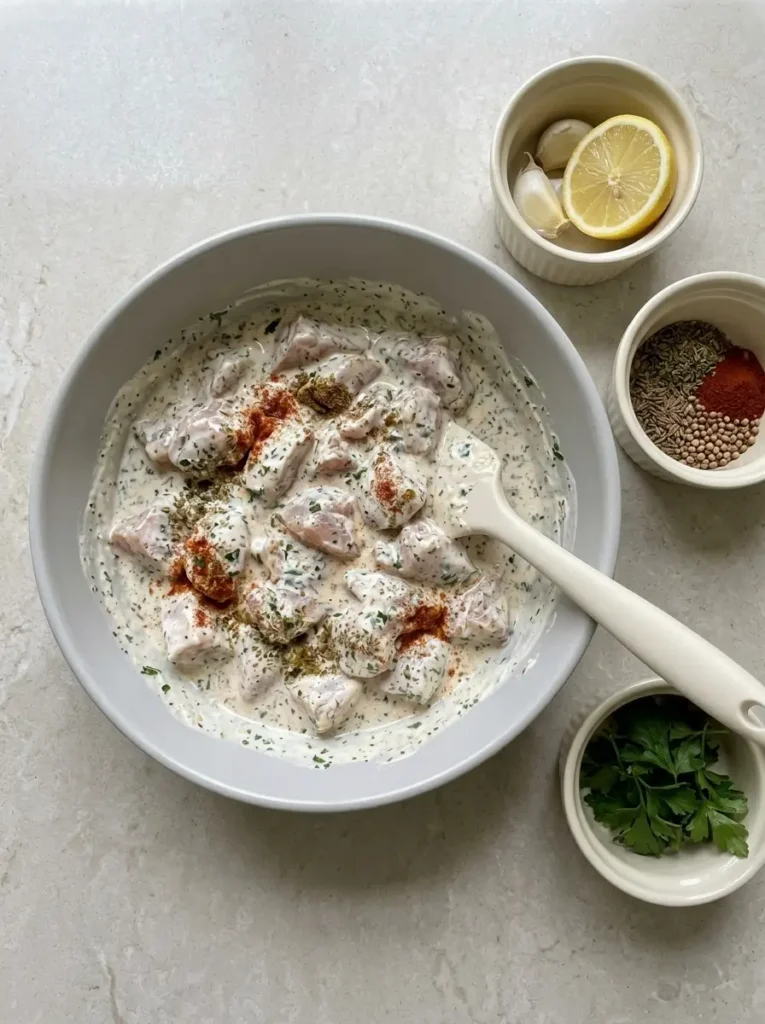
Combine the yogurt, lemon, garlic, herbs, spices, and olive oil until the mixture looks evenly blended. Add the chicken and turn the pieces until every surface is coated.
Keep the chicken refrigerated while it marinates. Do not leave raw poultry on the counter.
Make the tzatziki and prepare the toppings
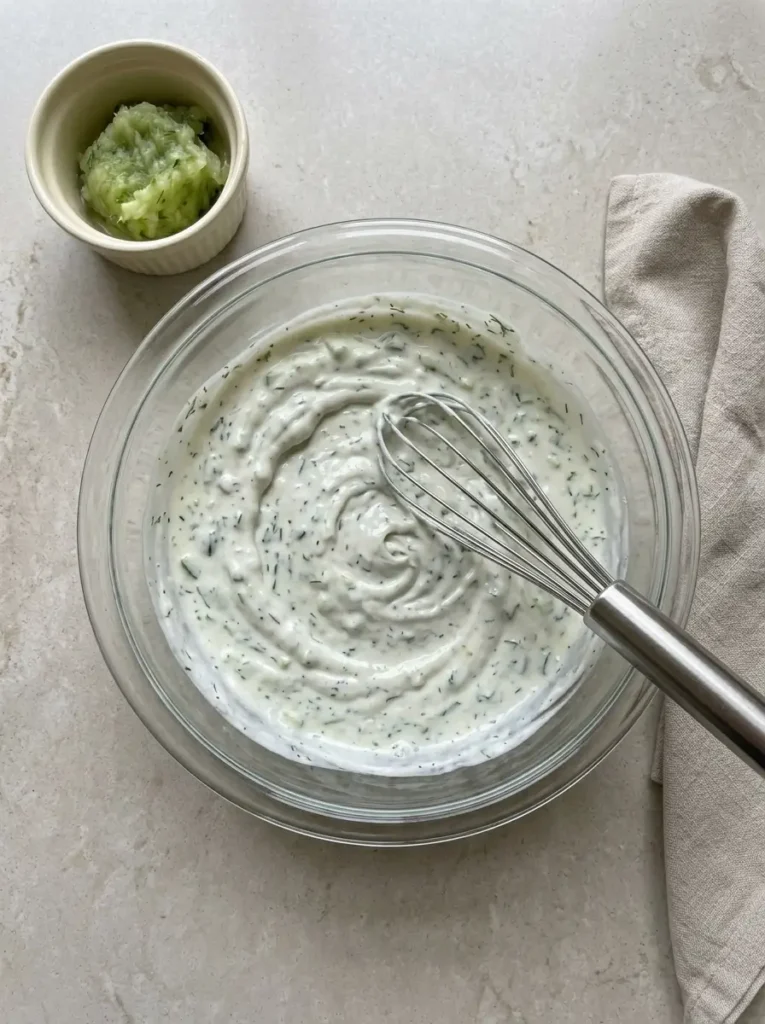
Squeeze the cucumber firmly before adding it to the yogurt. The cucumber should feel damp but should not release a pool of water into the bowl.
Stir the tzatziki until it is smooth, taste it before it contacts any raw ingredients, and refrigerate it until assembly.
Cook the chicken in one uncrowded layer
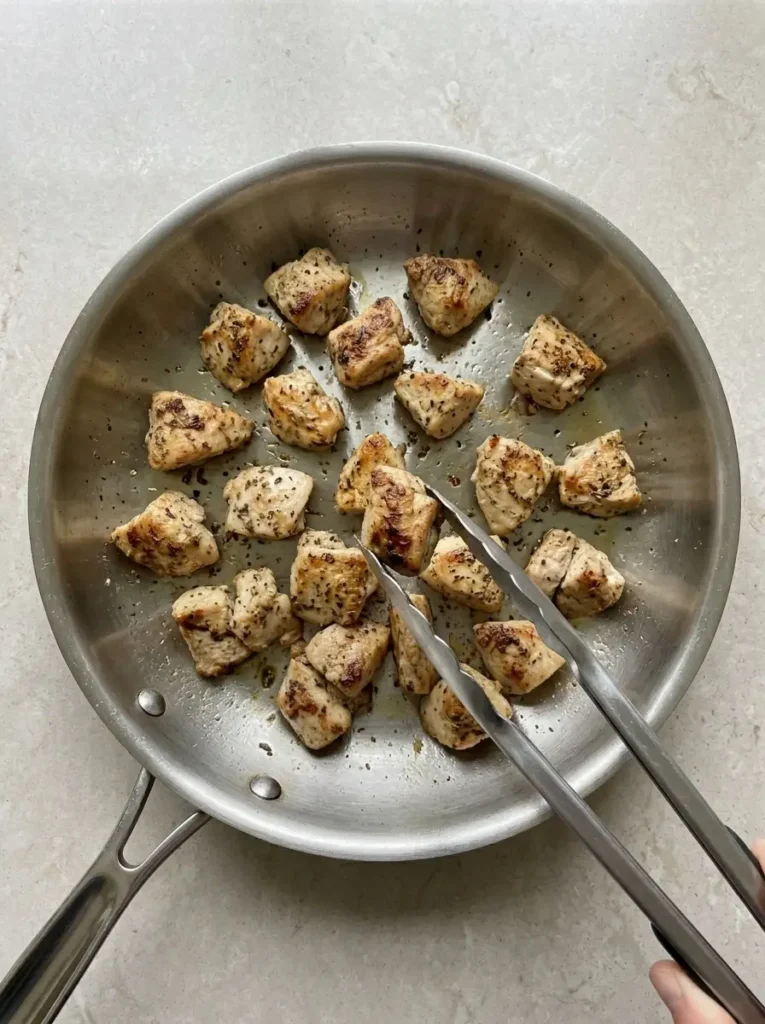
Heat a wide skillet and add enough oil to lightly coat the cooking surface. Place the marinated chicken in a single layer rather than pouring it into a pile.
Leave the first side undisturbed long enough to develop browning. Constant movement traps moisture around the chicken and prevents a light crust from forming.
Turn the pieces and continue cooking until the centers are fully cooked. Check the thickest pieces with an instant-read thermometer rather than relying only on exterior color.
How to Assemble the Bowl
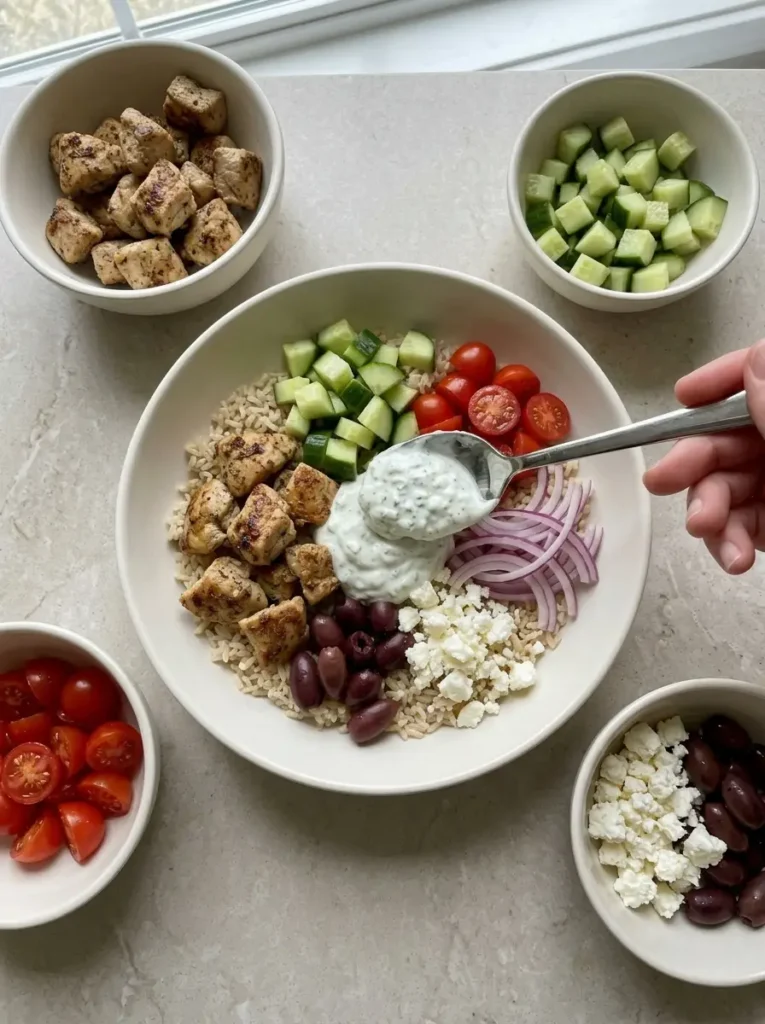
Begin with rice across the bottom of a wide bowl. Spreading it in an even layer creates enough room for the toppings and prevents everything from stacking in the center.
Add the warm chicken over one section of the rice. Placing it beside rather than directly beneath the cold toppings helps the cucumber and tomatoes remain crisp.
Arrange the cucumber, tomatoes, red onion, and olives in separate sections. This gives the bowl a colorful appearance and lets each ingredient keep its own texture until eating.
Scatter the feta over the chicken and vegetables. Finish with a generous spoonful of tzatziki placed near the center or along one side.
For a more casual family meal, place all the components on the table and let everyone build their own bowl. This is useful when some diners prefer no onion, fewer olives, extra vegetables, or more sauce.
Tips for Balanced Texture and Flavor
Do not add watery cucumber to the tzatziki
Excess cucumber moisture thins the sauce and can make it separate quickly. Squeeze the cucumber in clean hands, paper towels, or a clean kitchen towel before mixing.
Give the chicken enough skillet space
Cook in batches when the skillet cannot hold the chicken in one layer. Crowded chicken releases steam and develops less browning.
Keep cold toppings away from direct heat
Allow the chicken to stop releasing intense steam before placing cucumber or tzatziki directly beside it. This protects the vegetables’ crunch and the sauce’s consistency.
Taste the salty toppings before adding extra seasoning
Feta and Kalamata olives both contribute significant saltiness. Taste an assembled bite before adding more salt to the completed bowl.
Use a wide bowl
A wide, shallow bowl gives every component enough space and makes it easier to combine a little chicken, rice, vegetable, feta, olive, and sauce in each bite.
Keep meal-prep components separate
Store the warm chicken and rice together, but keep the vegetables, olives, feta, and tzatziki in separate containers. This prevents the rice from absorbing vegetable liquid and protects the cold components during reheating.
Chicken Gyro Bowls
Ingredients
Chicken Marinade
- 1/4 cup plain Greek yogurt
- 2 tablespoons fresh lemon juice
- 2 garlic cloves grated
- 2 tablespoons chopped flat-leaf parsley
- 1 tablespoon olive oil
- 1 1/2 teaspoons dried oregano
- 1/2 teaspoon smoked paprika
- 1/2 teaspoon ground cumin
- 1/2 teaspoon ground coriander
- Kosher salt to taste
- Freshly ground black pepper to taste
- 1 1/4 pounds boneless skinless chicken breasts, cut into bite-size pieces
Tzatziki Sauce
- 1 cup shredded cucumber
- 1 1/2 cups plain Greek yogurt
- 2 tablespoons fresh lemon juice
- 1 tablespoon chopped fresh dill
- 1/2 teaspoon grated garlic
- Kosher salt to taste
- Freshly ground black pepper to taste
Bowl Components
- 2 cups cooked brown rice
- 1 cup quartered cherry tomatoes
- 1 cup diced cucumber
- 1/4 cup diced red onion
- 1/3 cup Kalamata olives
- 1/2 cup crumbled feta cheese
- Olive oil as needed for the skillet
Instructions
Cook the rice:
- Prepare the brown rice according to its package instructions. Keep it covered and warm while preparing the remaining components.
Marinate the chicken:
- Whisk the Greek yogurt, lemon juice, garlic, parsley, olive oil, oregano, smoked paprika, cumin, coriander, salt, and black pepper in a medium bowl. Add the chicken and stir until every piece is coated. Cover and refrigerate for 30 minutes.
Prepare the tzatziki:
- Squeeze as much liquid as possible from the shredded cucumber. Stir it with the Greek yogurt, lemon juice, dill, garlic, salt, and black pepper. Cover and refrigerate until serving.
Prepare the vegetables:
- Cut the tomatoes, cucumber, and red onion. Drain the olives and crumble the feta. Keep all toppings refrigerated while cooking the chicken.
Cook the chicken:
- Heat a large skillet over medium-high heat and add enough olive oil to lightly coat the bottom. Arrange the chicken in one layer. Cook without moving for 3–4 minutes, then turn the pieces and cook for another 4–5 minutes, or until browned and the thickest pieces reach 165°F.
Assemble the bowls:
- Divide the rice among four bowls. Add the chicken, tomatoes, cucumber, red onion, Kalamata olives, and feta. Finish each bowl with tzatziki and serve immediately.
Cook the chicken in batches when necessary so it can brown rather than steam.
For meal preparation, store the chicken and rice together but keep the vegetables, feta, olives, and tzatziki separate.
Component Substitutions
Use chicken thighs
Boneless, skinless chicken thighs can replace the chicken breast. They have a richer flavor and remain moist easily, although they may require a slightly different cooking period.
Change the grain
White rice, quinoa, couscous, or another cooked grain can replace brown rice. Choose a base that is fluffy and mild enough to absorb the sauce without overpowering the chicken.
Replace or omit the olives
Leave out the olives when their strong flavor is not preferred. Extra cucumber or tomato can maintain the volume of the bowl.
Use a different cheese
A mild crumbly cheese can replace feta, although the flavor will be less distinctly salty and tangy. Avoid cheeses that melt quickly when they touch the warm chicken.
Use dairy-free yogurt
An unsweetened, thick dairy-free yogurt can be used for the marinade and sauce when necessary. Choose one without vanilla or added sugar and expect the flavor and thickness to vary.
Sauce and Topping Variations
Add hummus
A spoonful of plain hummus adds another creamy component and works especially well when the bowl contains less tzatziki.
Add chopped greens
Romaine, spinach, or mixed greens can be added between the rice and toppings for more fresh volume. Dry the leaves thoroughly so they do not introduce excess water.
Increase the herbs
Fresh parsley or dill can be scattered over the completed bowl. Keep the garnish light so it does not hide the lemon, garlic, feta, and olive flavors.
Add more acidity
A small squeeze of lemon over the chicken and rice can brighten a bowl prepared for immediate serving. Add it after reheating rather than before storing.
Make it more vegetable-forward
Increase the cucumber and tomatoes or add sliced bell pepper. Keep added vegetables crisp and mild so the tzatziki and chicken remain the defining elements.
Meal-Prep Instructions
Chicken Gyro Bowls are most successful for meal prep when the components are divided according to temperature and moisture.
Place the cooked rice and chicken together in reheatable containers. Let them cool before covering and refrigerating.
Keep the cucumber, tomatoes, onion, olives, and feta in a separate cold container. This prevents the vegetables from warming during reheating and stops their juices from soaking into the rice.
Store the tzatziki in its own small container. Stir it before serving because cucumber may continue releasing a little moisture as the sauce rests.
To serve, reheat only the chicken and rice. Add the vegetables, feta, olives, and tzatziki after the warm components are ready.
When packing lunch away from home, use an insulated lunch bag with a cold pack and keep the bowl refrigerated until mealtime whenever possible.
Storage and Reheating by Component
Chicken and rice
Cool the cooked chicken and rice promptly and refrigerate them in shallow airtight containers. Use them within three to four days.
Reheat the chicken and rice until steaming hot. Stir or rearrange the food during microwave reheating so the center and edges warm evenly.
Tzatziki
Keep tzatziki refrigerated in a sealed container. Stir it before using because the cucumber can release additional liquid.
Do not heat the sauce. Add it only after the chicken and rice have been reheated.
Vegetables and toppings
Store the cucumber, tomatoes, onion, olives, and feta cold. They may be kept separately or combined in one container when you plan to use them within a few days.
Drain any liquid that collects around the vegetables before adding them to the bowl.
Freezing
The cooked chicken can be frozen separately, and cooked rice can also be frozen when cooled and packaged properly.
Tzatziki and raw cucumber or tomato toppings do not maintain their best texture after freezing. Prepare those components fresh after the chicken and rice are thawed.
Frequently Asked Questions
Can I prepare Chicken Gyro Bowls the night before?
Yes. Prepare and store the chicken, rice, vegetables, feta, olives, and tzatziki separately. Reheat only the chicken and rice before assembling.
Can I bake the chicken instead of using a skillet?
Yes. Spread the marinated chicken in one layer on a lightly greased baking sheet and cook it until the thickest pieces reach the safe internal temperature. Skillet cooking creates more direct browning, while baking may be easier for a larger batch.
Why is my tzatziki watery?
The cucumber probably retained too much liquid. Squeeze it more thoroughly before mixing and stir the refrigerated sauce before serving.
Can I use store-bought tzatziki?
Yes. Choose a thick sauce with a fresh cucumber, lemon, garlic, and dill flavor. Using prepared sauce reduces the number of components that need to be made at home.
How do I prevent the chicken from becoming dry?
Cut the pieces evenly, avoid overcrowding the skillet, and remove the chicken as soon as it is fully cooked. An instant-read thermometer provides a more dependable result than cooking by color alone.