
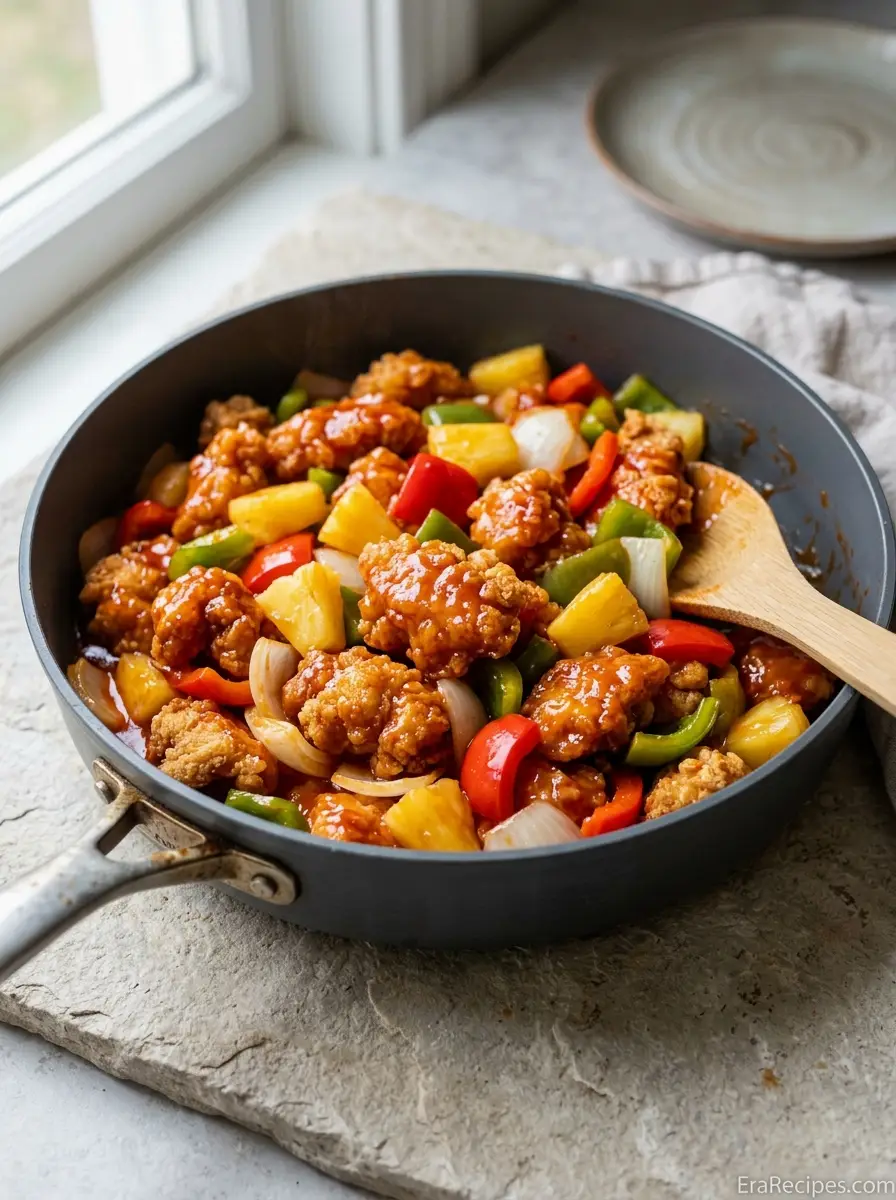
Sweet and Sour Chicken combines golden crispy chicken, juicy pineapple, colorful bell peppers, and onion in a glossy sauce that balances sweetness, acidity, and savory flavor. It delivers the familiar combination people expect from a takeout-style dinner while giving you control over the chicken, vegetables, sauce consistency, and final level of crispness.
The most important part of this recipe is timing. The chicken is coated and fried until crisp, the vegetables are cooked separately so they stay bright and slightly firm, and the sauce is thickened before everything comes together. The chicken is added at the very end so the coating stays textured instead of soaking in the sauce for too long.
This Sweet and Sour Chicken also makes a colorful family dinner because the pineapple and bell peppers naturally bring sweetness and freshness to the rich fried chicken. Serve it soon after tossing for the best contrast between the crisp coating and glossy sauce.
Why Sweet and Sour Chicken Works as a Family Dinner
The appeal of Sweet and Sour Chicken comes from contrast. The chicken has a crunchy exterior and juicy center, the vegetables remain slightly crisp, the pineapple adds bursts of sweetness, and the sauce ties everything together without needing a long simmer.
It is also easy to understand at the table. Every serving contains recognizable chicken, peppers, onion, and pineapple rather than a heavily blended sauce or unfamiliar ingredients.
This is one reason a pineapple chicken dinner works particularly well for families. Pineapple adds enough natural sweetness to balance the vinegar in the sauce while also giving the dish a fresh texture that keeps it from feeling too heavy.
The method requires a few separate stages, but each stage is straightforward. Once the ingredients are prepared, the actual cooking moves quickly.
For the best result, organize the coating ingredients, vegetables, pineapple, and sauce before beginning to fry the chicken. That allows you to move directly from one step to the next instead of leaving the cooked chicken waiting while you measure ingredients.
The Principal Ingredients Behind the Sweet-and-Sour Balance
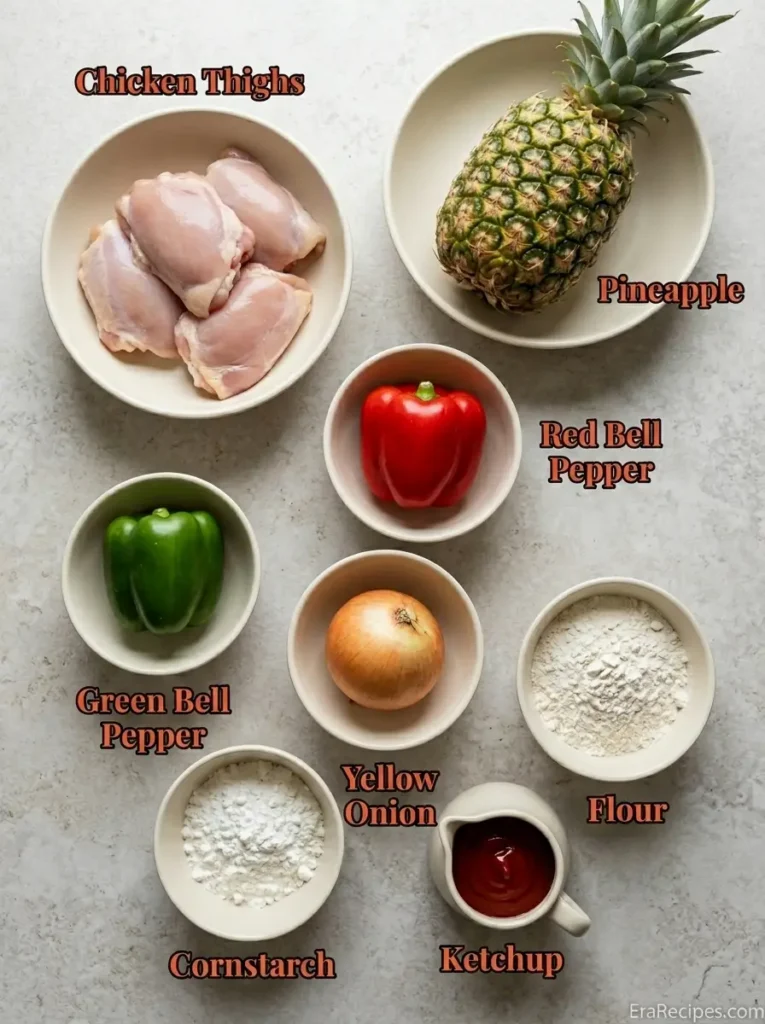
Chicken thighs stay juicy under the crisp coating
Boneless skinless chicken thighs are particularly useful for crispy sweet and sour chicken because they remain moist during frying. Their slightly richer flavor also stands up well to the bold sauce.
Cut the chicken into similarly sized pieces so they cook at approximately the same rate. Very large pieces may brown outside before the center is ready, while very small pieces can dry out.
Chicken breast can also be used when you prefer leaner white meat. Keep the pieces even and avoid overcooking them.
Flour and cornstarch create the coating
The coating combines all-purpose flour and cornstarch rather than relying on flour alone.
Flour provides structure while cornstarch helps create a lighter, crisp exterior. The chicken is first dipped in beaten egg, which gives the dry mixture something to cling to.
Shake off excess coating before frying. Thick patches of loose flour can fall into the oil and create an uneven surface.
Pineapple gives the sauce natural sweetness
Fresh pineapple brings both sweetness and acidity to the dish. It also remains distinct after a short period in the hot pan.
Canned pineapple can also work when fresh pineapple is unavailable. Drain it thoroughly before adding it so excess liquid does not thin the sauce.
Red and green bell peppers add color and crunch
Using two colors of bell pepper gives the finished dish the bright appearance associated with this style of chicken.
The peppers should become just tender rather than completely soft. Their slight crunch provides an important contrast to the sauce-coated chicken.
Onion adds a savory layer
Onion balances the sweetness from the pineapple and sugar. Cutting it into pieces similar in size to the peppers helps everything cook evenly.
What Makes the Sweet-and-Sour Sauce Work
The sauce relies on several familiar pantry ingredients rather than a bottled sweet-and-sour sauce.
Granulated sugar provides the primary sweetness. Apple cider vinegar supplies the sour element, while soy sauce adds salt and savory depth.
Ketchup contributes tomato flavor, sweetness, acidity, and the recognizable red-orange color.
Garlic powder and onion powder strengthen the savory flavor without introducing pieces that could burn while the sauce thickens.
Finally, cornstarch turns the liquid mixture into a glossy sauce that can cling to the chicken and vegetables.
The balance matters more than any single ingredient. Too much sugar makes the sauce flat, while too much vinegar can dominate the pineapple. Following the proportions in the recipe card gives you a sauce that starts bright and tangy but finishes pleasantly sweet.
Coat the Chicken Evenly Before Frying
Set up the coating station before heating the chicken.
Place the beaten eggs in one bowl and combine the flour and cornstarch in a separate shallow dish.
Season the egg lightly with salt and pepper. Dip each chicken piece into the egg, let the excess drip away, then coat it thoroughly in the flour mixture.
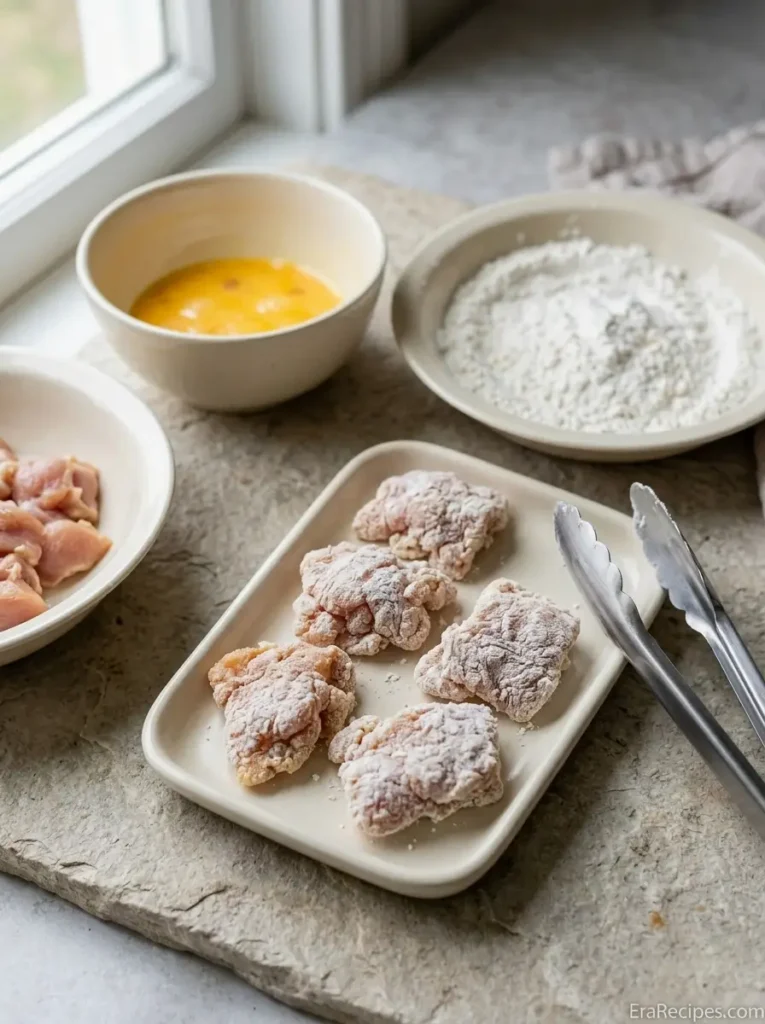
The coating should look dry and even, not thick or pasty. If several chicken pieces are pressed together after coating, separate them before frying.
Work in manageable batches rather than coating the entire recipe in one large pile. This reduces the chance of the pieces sticking together before they reach the oil.
Fry in Small Batches for a Crisp Coating
Heat the neutral frying oil in a deep, heavy pot and use a frying thermometer to monitor the temperature.
The oil should be hot enough for the coating to crisp promptly without becoming dark before the chicken cooks through.
Lower only a small number of pieces into the oil at one time. Crowding lowers the oil temperature and increases the chance of a heavy, greasy coating.
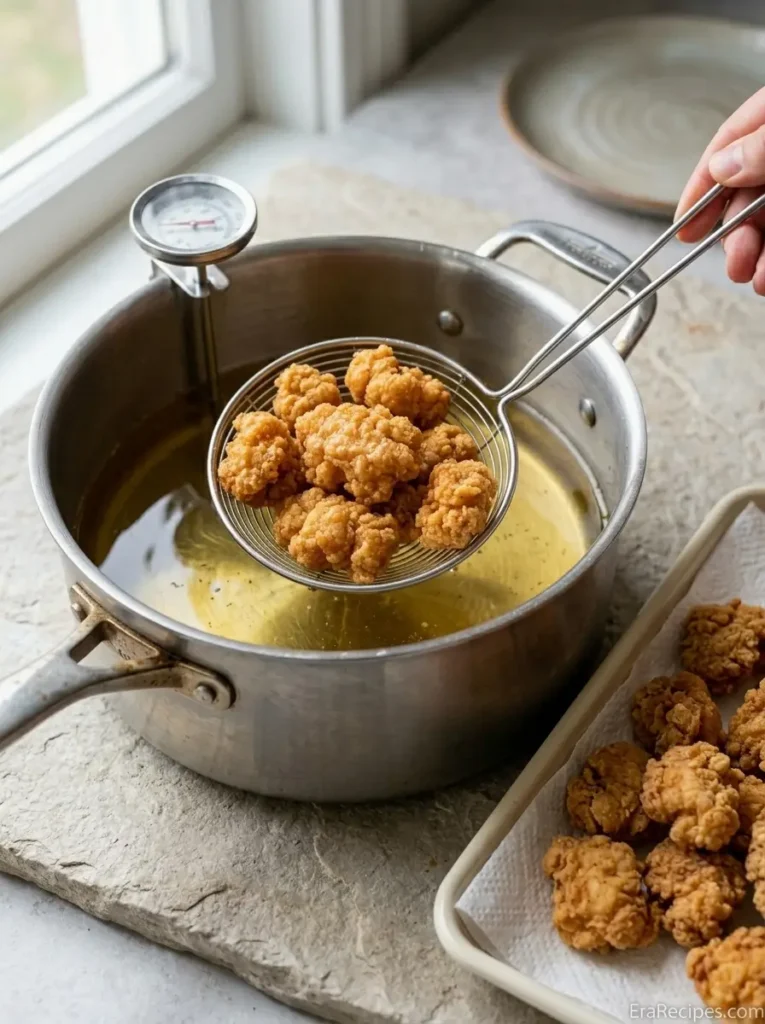
Cook each batch until the outside is golden and the chicken is cooked through. Poultry should reach an internal temperature of 165°F when checked with a food thermometer.
Remove the cooked pieces with a spider strainer or slotted utensil and place them on a paper-towel-lined tray.
Allow the oil to return to the correct temperature before adding the next batch.
Keeping the batches small is one of the most useful steps in a homemade Chinese chicken dinner because it gives the coating a better chance to stay crisp instead of absorbing excess oil.
Cook the Peppers and Pineapple Separately
While the chicken finishes frying, heat a small amount of oil in a wide sauté pan or wok.
Add the red bell pepper, green bell pepper, and onion. Cook them over medium-high heat until they are just tender.
Avoid cooking them until completely soft. They will continue heating after the sauce is added.
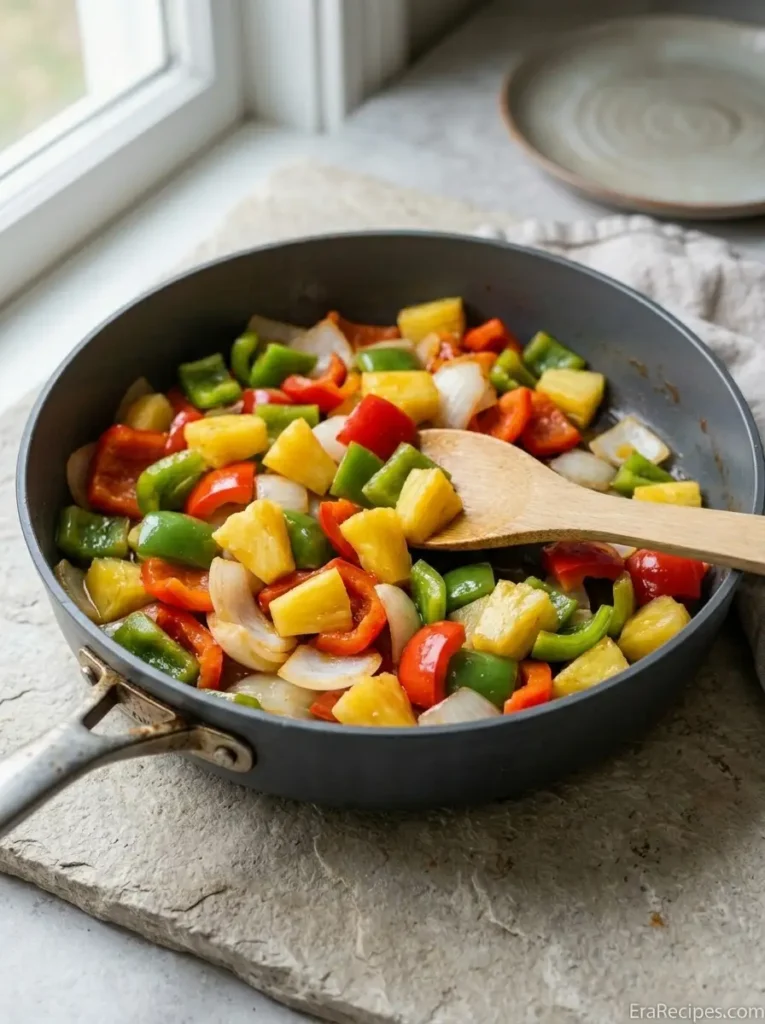
Stir in the pineapple after the vegetables have begun to soften. Pineapple needs much less cooking time than the peppers and onion, so adding it later keeps the pieces defined.
This brief cooking stage also warms the pineapple before the sauce goes into the pan, preventing it from cooling the sauce significantly.
Build the Sweet-and-Sour Sauce in the Pan
Whisk the sugar, apple cider vinegar, soy sauce, garlic powder, onion powder, ketchup, and cornstarch together in a small bowl.
Make sure the cornstarch is fully dispersed before pouring the mixture into the pan. Small dry clumps become difficult to remove after the sauce begins thickening.
Pour the sauce over the vegetables and pineapple and bring it to a gentle simmer.
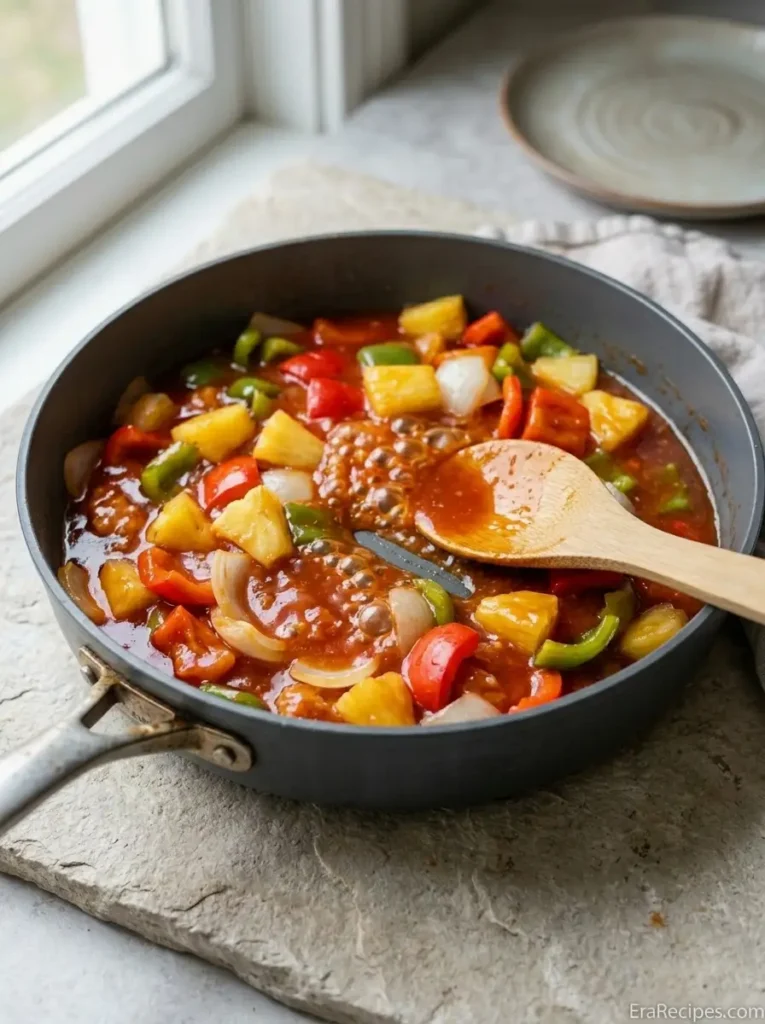
Within a few minutes, the sauce should change from thin and cloudy to glossy and noticeably thicker.
Use the spoon to draw a line through the pan. If the sauce briefly leaves a visible path before flowing back together, it is close to the correct consistency.
Do not continue reducing until it becomes extremely thick. The sauce needs enough movement to coat the fried chicken evenly in the final step.
Toss the Chicken at the Last Moment
Add the crispy fried chicken only after the sauce has thickened.
Gently toss until every piece has a thin glossy coating and the pineapple and vegetables are evenly distributed.
Serve immediately.
The longer the chicken sits in the sauce, the more moisture the coating absorbs. This is why a good takeout-style chicken recipe benefits from completing the sauce before the chicken goes back into the pan.
If you expect dinner to be delayed, keep the fried chicken and prepared sauce separate. Warm the sauce and vegetables, then toss in the chicken immediately before serving.
Sweet and Sour Chicken
Ingredients
Chicken
- 1 1/2 pounds boneless skinless chicken thighs cut into 1-inch pieces
- 2 large eggs lightly beaten
- Salt and black pepper to taste
- 1/2 cup all-purpose flour
- 1/2 cup cornstarch
- Neutral vegetable oil for frying
Vegetables and Pineapple
- 1/2 cup yellow onion cut into 1-inch pieces
- 1 green bell pepper cut into 1-inch pieces
- 1 red bell pepper cut into 1-inch pieces
- 3/4 cup pineapple chunks
Sweet-and-Sour Sauce
- 1/2 cup granulated sugar
- 1/3 cup apple cider vinegar
- 2 tablespoons soy sauce
- 1/2 teaspoon garlic powder
- 1/2 teaspoon onion powder
- 1/3 cup ketchup
- 1 tablespoon cornstarch
Instructions
Prepare the coating station:
- Place the beaten eggs in a bowl and season lightly with salt and pepper. In a separate shallow dish, combine the flour and cornstarch until evenly mixed.
Coat the chicken:
- Dip each chicken piece into the beaten egg, let the excess drip away, then coat it evenly in the flour-and-cornstarch mixture.
Fry the chicken in batches:
- Heat the neutral oil in a deep heavy pot to about 350°F. Fry the chicken in small batches for about 5 minutes, or until golden and cooked through to 165°F. Remove with a spider strainer and drain on a paper-towel-lined tray.
Cook the vegetables and pineapple:
- Heat about 2 teaspoons of neutral oil in a wide sauté pan over medium-high heat. Add the onion and bell peppers, season lightly with salt and pepper, and cook for 4–5 minutes until just tender. Stir in the pineapple.
Mix the sweet-and-sour sauce:
- Whisk together the sugar, apple cider vinegar, soy sauce, garlic powder, onion powder, ketchup, and cornstarch until completely smooth.
Thicken the sauce:
- Pour the sauce into the pan with the vegetables and pineapple. Bring to a gentle simmer and cook for 2–3 minutes until glossy and thickened.
Toss and serve immediately:
- Add the fried chicken to the pan and gently toss until every piece is coated. Remove from the heat and serve immediately for the crispiest texture.
Chicken breast can replace chicken thighs.
For the best leftover texture, store and use within about two days.
How to Keep Sweet and Sour Chicken Crispy
Maintain the frying temperature
Oil that is too cool causes the coating to absorb excess fat. Oil that is excessively hot can brown the exterior before the chicken has cooked safely.
Do not crowd the pot
Adding too much chicken at once quickly lowers the oil temperature. Several smaller batches give more reliable results.
Drain the chicken before saucing
Let excess oil drain from each batch before it meets the sauce.
Thicken the sauce first
Do not add the fried chicken to a watery sauce and wait for everything to reduce together. The coating would absorb too much liquid.
Toss just before serving
This is the most important step. The chicken should spend only enough time in the sauce to become evenly coated.
Easy Flavor Variations
Use chicken breast
Boneless skinless chicken breast can replace thighs. Cut the pieces evenly and monitor them carefully because breast meat can dry out faster.
Use canned pineapple
Drain canned pineapple chunks thoroughly before adding them to the vegetables.
Make the sauce slightly less sweet
If your pineapple is particularly ripe and sweet, the sugar can be reduced modestly according to taste.
Add fresh garlic or ginger
A small amount of fresh garlic or ginger can make the sauce more aromatic. Add it to the vegetables briefly so it becomes fragrant without burning.
Add another crisp vegetable
Water chestnuts are a useful addition when you want more crunch without substantially changing the flavor profile.
What to Serve With Sweet and Sour Chicken
Steamed white rice is the simplest accompaniment because it absorbs some of the sweet-and-sour sauce without competing with the chicken.
Brown rice works when you prefer a slightly nuttier flavor and firmer texture.
For a vegetable-heavy meal, serve the chicken with steamed broccoli, cucumber salad, or lightly cooked green beans on the side rather than adding many more vegetables directly to the sauce.
Because the dish already contains fried chicken and a sweet sauce, simple sides usually create the most balanced dinner.
Storage and Reheating
Sweet and Sour Chicken has its best texture immediately after cooking. Once refrigerated, the coating begins absorbing moisture from the sauce and becomes softer.
For the best eating quality, use leftovers within about two days.
For food safety, refrigerate cooked food promptly in shallow covered containers. USDA guidance generally recommends using cooked leftovers within three to four days and reheating leftovers to 165°F.
Reheat in a skillet
A skillet over medium-low heat gives the chicken a better texture than gentle microwaving. Add only a small amount of extra liquid if the sauce has become very thick.
Reheat in the microwave
The microwave is convenient for smaller portions, although the coating will stay softer. Heat in short intervals and stir so the chicken reheats evenly.
Keep components separate when planning ahead
If you know you will not serve the entire recipe immediately, keep some fried chicken separate from the sauce. Reheat both components independently and combine them just before eating.
Frequently Asked Questions
Can I use chicken breast instead of chicken thighs?
Yes. Boneless skinless chicken breast works well. Cut it into even pieces and avoid overcooking it so the center remains juicy.
Why is my Sweet and Sour Chicken soggy?
The frying oil may have been too cool, the pot may have been overcrowded, or the chicken may have remained in the sauce too long. Fry in small batches and toss with the thickened sauce immediately before serving.
Can I use canned pineapple?
Yes. Drain the pineapple thoroughly first. Excess pineapple liquid can thin the sauce and make it take longer to thicken.
What thickens sweet-and-sour sauce?
Cornstarch is the primary thickener. It is whisked into the cold sauce ingredients before the mixture enters the hot pan, then thickens as the sauce simmers.
Can I make Sweet and Sour Chicken ahead?
You can prepare the sauce mixture, cut the vegetables, and portion the coating ingredients ahead. For the best crispness, fry the chicken and combine it with the sauce close to serving time.