
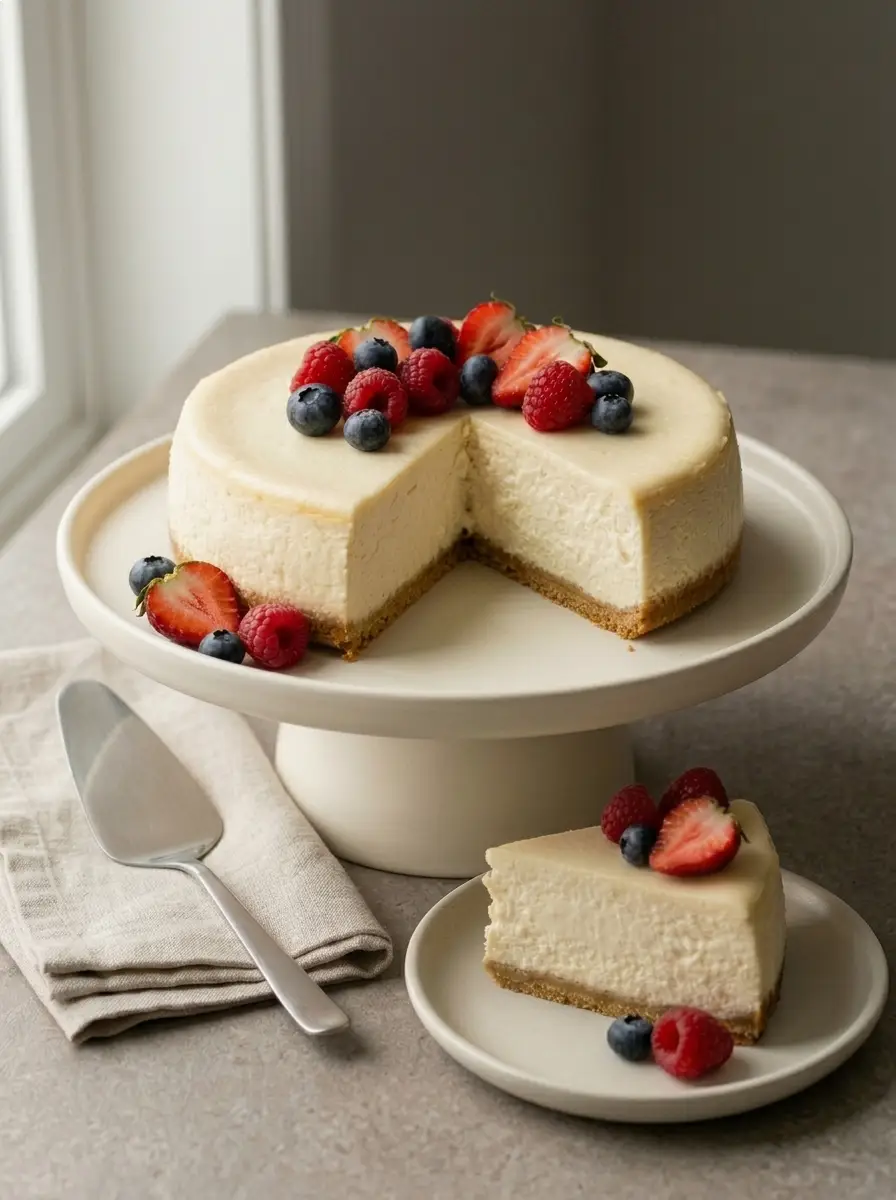
Cottage Cheese Cheesecake combines cottage cheese and cream cheese in a smooth baked filling over a simple graham-cracker crust. The cottage cheese is blended completely before baking, so the finished cheesecake has a creamy, uniform texture rather than noticeable curds.
Lemon zest and vanilla keep the filling bright and familiar, while the graham base gives each slice a lightly sweet, buttery contrast. The cheesecake is baked until set, cooled, and then refrigerated for several hours before slicing. That long chill is important because it gives the filling time to firm and develop the clean texture expected from cheesecake.
This Cottage Cheese Cheesecake is also a useful make-ahead dessert. Most of the active work happens before the pan goes into the oven, and the required chilling period means the cake can be prepared well before it is needed. Serve it plain or finish the chilled cheesecake with fresh berries for a simple presentation.
Why Cottage Cheese Works in a Baked Cheesecake
Cottage cheese behaves differently from cream cheese when used on its own, but blending the two together gives this cheesecake a smooth filling with enough structure for clean slices.
The key is processing the cottage cheese thoroughly. Its natural curds need to disappear into the cream cheese before the eggs and remaining ingredients are added. Once the mixture is blended until very smooth, the cottage cheese becomes part of the overall creamy base rather than creating a grainy texture.
That makes this a practical cottage cheese dessert for people who like the flavor and texture of a traditional baked cheesecake but want to incorporate cottage cheese into the filling.
The recipe still relies on cream cheese for richness and structure. The two cheeses complement each other instead of asking cottage cheese to perform the entire job on its own.
Eggs then help the filling set in the oven, while a small amount of all-purpose flour contributes additional stability. The result is a cheesecake that can be baked, chilled thoroughly, and cut into individual slices without requiring gelatin or another setting ingredient.
The Principal Ingredients and Their Roles
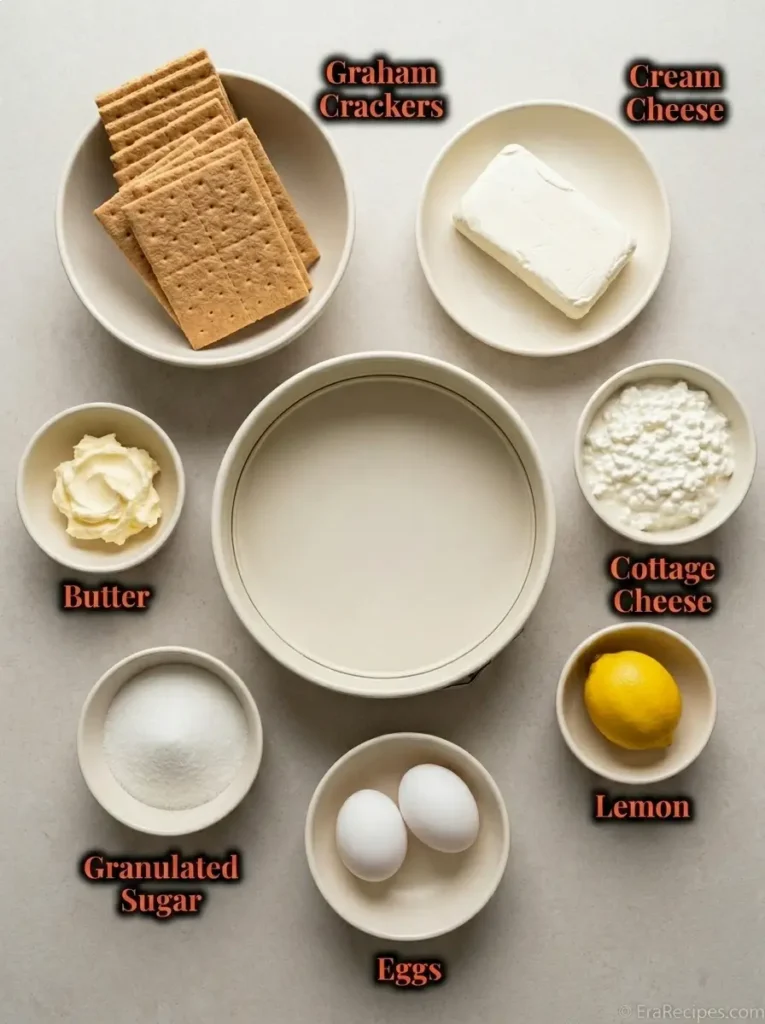
Cottage cheese creates a smooth lighter filling
Two-percent cottage cheese makes up a significant portion of the filling. Because cottage cheese naturally contains more visible texture than cream cheese, blending it completely is the most important preparation step.
Once smooth, it combines with cream cheese to create a filling that remains rich and creamy while giving this lighter cheesecake recipe a different balance than a cheesecake made entirely with cream cheese.
The cottage cheese should not be simply folded into the batter. Visible curds can remain in the finished cake and create an uneven texture.
Cream cheese gives the cheesecake structure
Cream cheese supplies the familiar body and richness associated with baked cheesecake.
Blending it together with cottage cheese before the eggs are added allows the two cheeses to become one smooth base. Scraping down the blender if necessary helps prevent small pieces of cream cheese from remaining around the bottom or sides.
Lemon zest adds brightness
Fresh lemon zest adds aroma without turning the cheesecake into a strongly lemon-flavored dessert.
Only the colored outer layer of the peel is needed. Avoid grating deeply into the white pith, which can introduce bitterness.
The lemon works particularly well with vanilla and fresh berries, giving the cheesecake a cleaner finish after the creamy filling.
Eggs help the filling set
Eggs provide the structure that develops during baking.
They are added after the cottage cheese and cream cheese have already been blended smooth. Adding them one at a time helps distribute them evenly without requiring excessive mixing.
Graham crackers make a simple crust
The base uses graham crackers combined with sugar, butter, and a small amount of water.
Unlike a very fine cookie-crumb crust, this mixture is processed to a coarse meal texture. Once pressed into the parchment-lined springform pan, it forms a thin base that supports the cheesecake filling.
Process the Graham Cracker Mixture First
Begin by preparing the springform pan and crust before making the filling.
Line the bottom of the pan with parchment paper and lightly prepare the sides so the chilled cheesecake releases more easily later.
Add the graham crackers, sugar, and cold whipped butter to a food processor and pulse several times.
Add the water and continue pulsing until the mixture resembles coarse meal.
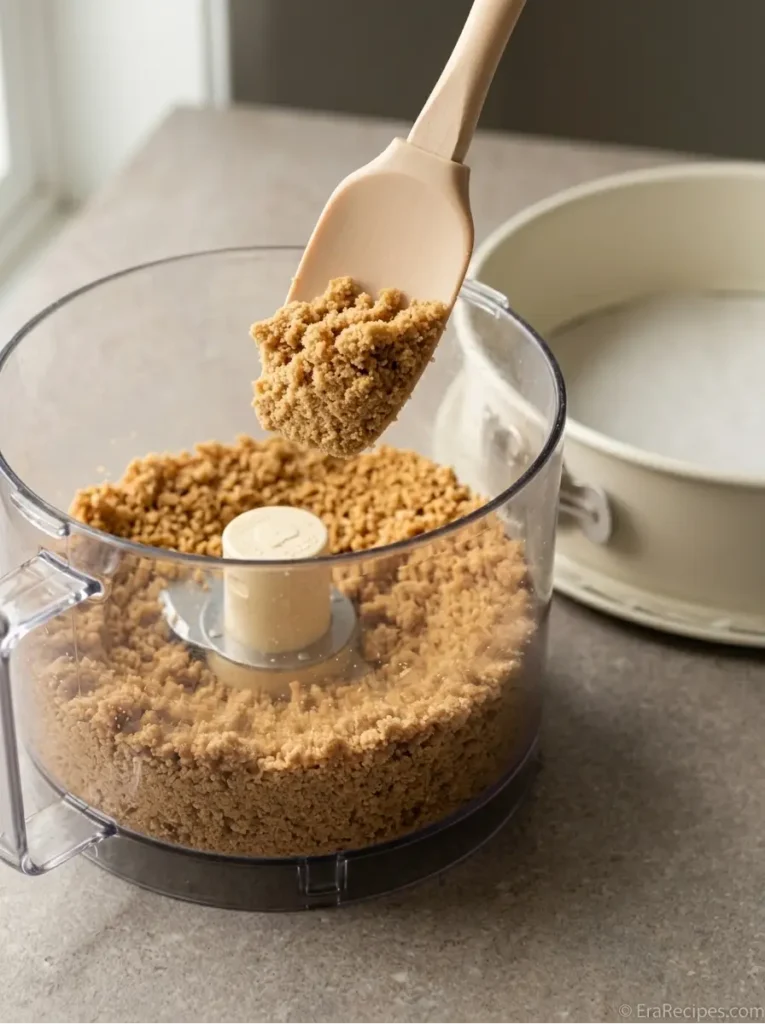
The goal is not a liquid paste. The mixture should remain crumbly but hold together when gently pressed.
Processing the crust before starting the filling also keeps the workflow simple. Once the graham mixture has been transferred to the pan, the food processor can be set aside and the blender used for the cheesecake filling.
Press the Crust Into an Even Base
Transfer the graham mixture to the prepared springform pan.
Spread the crumbs evenly before pressing so one side of the cheesecake does not end up with a noticeably thicker crust.
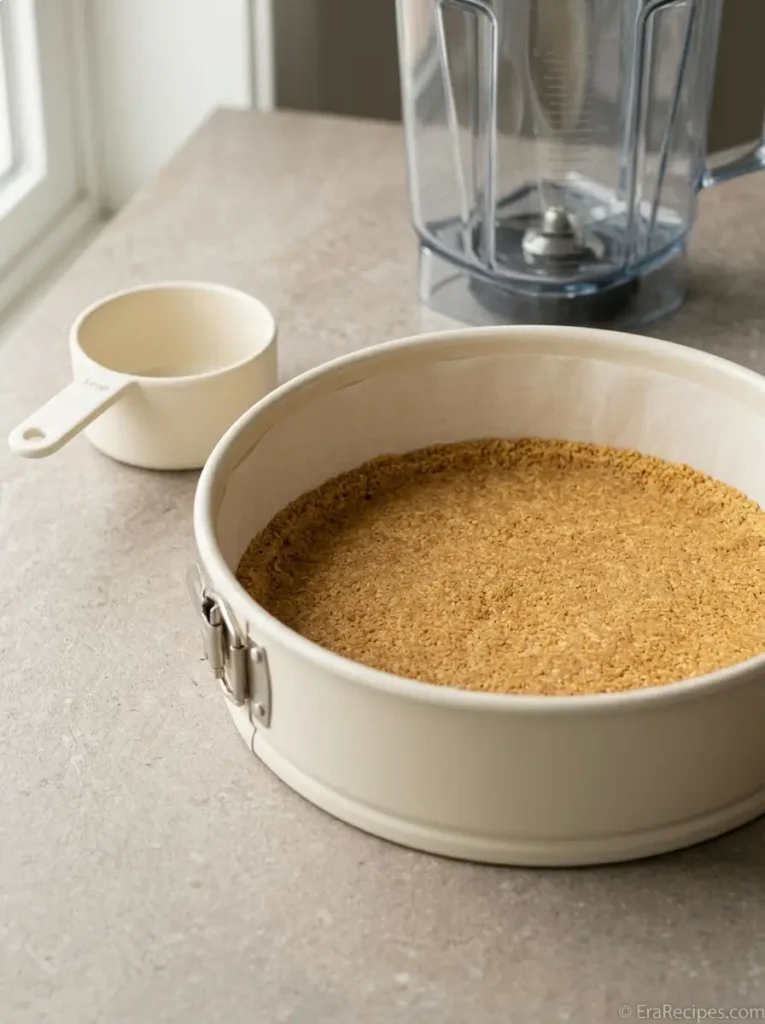
Press gently but firmly across the bottom. A flat-bottomed measuring cup can help create a more even surface than fingertips alone.
The crust does not need to extend high up the sides. Keeping it concentrated at the base produces a clean horizontal layer underneath the creamy filling.
Once the crust is even, set the pan aside and move directly to the filling.
Blend the Cottage Cheese Until Completely Smooth
Add the cream cheese, cottage cheese, and fresh lemon zest to a blender.
Blend until the mixture looks completely smooth. This step deserves extra attention because the final texture of the creamy cottage cheese cake depends heavily on eliminating the original cottage-cheese curds.
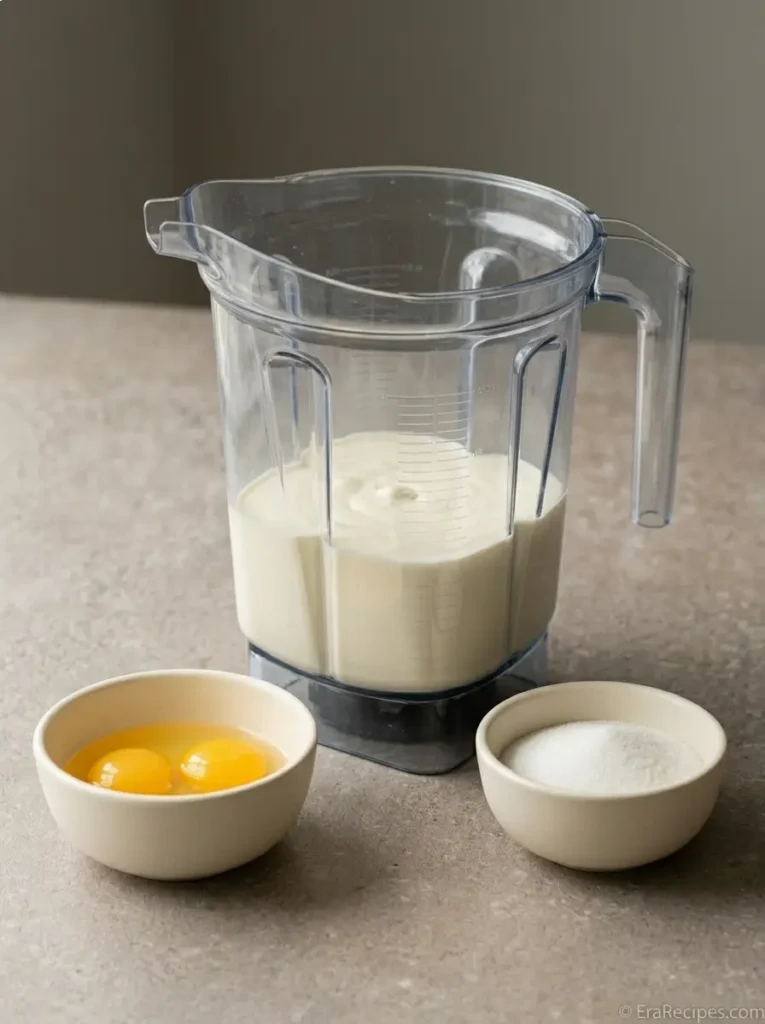
Stop the blender and check the mixture before continuing. If you can still see small pieces of cottage cheese or cream cheese, scrape the sides and blend again.
Once the cheese mixture is smooth, add the eggs one at a time.
Then add the vanilla, granulated sugar, and all-purpose flour and pulse until everything is evenly incorporated.
There is no advantage to continuing to blend for a long time after the ingredients are combined. Excessive mixing can incorporate unnecessary air into a cheesecake batter.
Pour the Batter Over the Graham Crust
Pour the finished batter into the prepared springform pan.
The mixture should look smooth and pourable with no obvious cheese curds remaining.
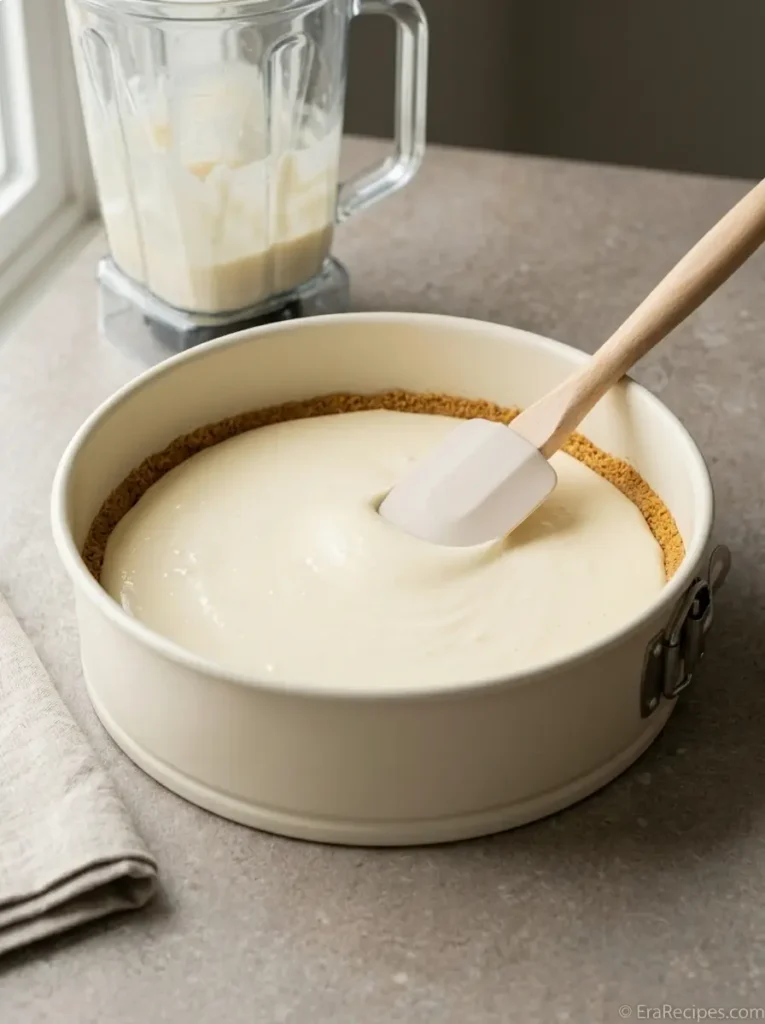
Use a spatula to level the surface if needed. A relatively even top helps the cheesecake bake consistently from the center toward the edges.
If you see a few large air bubbles on top, gently tap the pan against the work surface once or twice. Do not aggressively shake the pan because the graham crust underneath should remain undisturbed.
Bake Until the Center Is Set, Then Chill Thoroughly
Bake the cheesecake in a fully preheated 350°F oven.
The recipe needs roughly 45 minutes in the oven. At the end of baking, the cheesecake should look set rather than liquid through the center.
Avoid waiting for the top to become deeply browned. This cheesecake should remain pale with only a light natural baked color.
Once baked, transfer the pan to a wire rack and allow the cheesecake to cool.
Cooling before refrigeration reduces the temperature gradually instead of placing a very hot pan directly into the refrigerator.
After cooling, refrigerate the cheesecake for at least four hours. Overnight chilling also works well and is particularly convenient when the dessert is being prepared for a gathering.
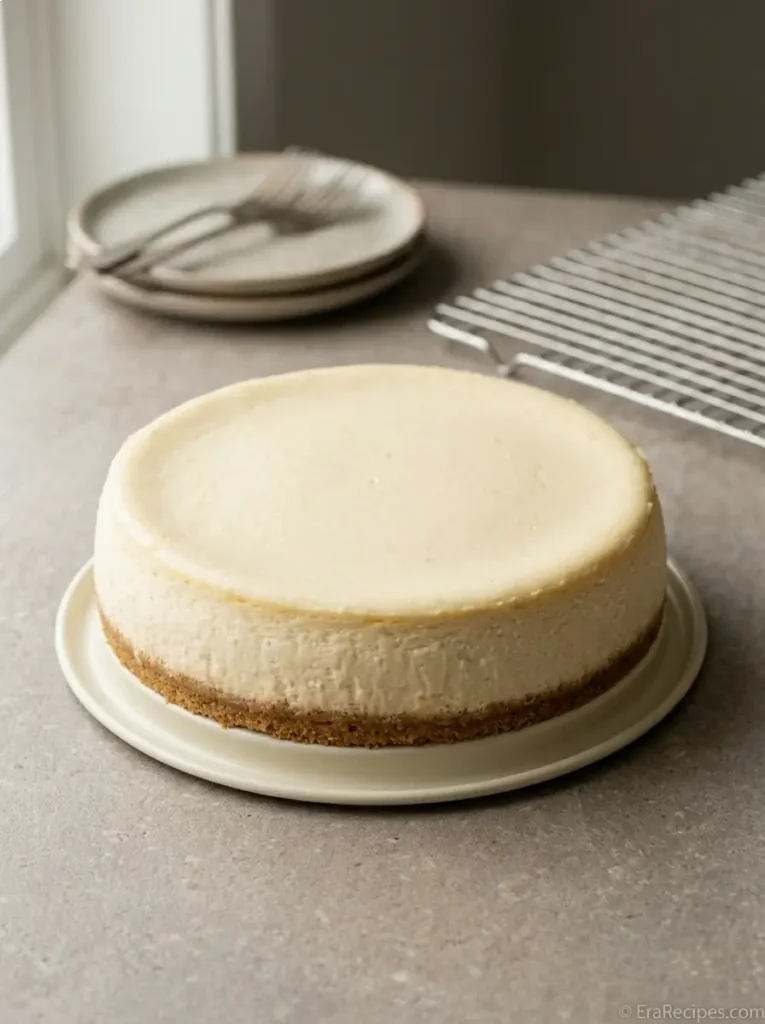
The refrigeration stage is what transforms the cooled cake into a firm, sliceable cheesecake. Cutting it too early can produce a softer center and less defined portions.
How to Get Clean Cheesecake Slices
Keep the cheesecake cold until you are ready to serve it.
Carefully release the springform ring. If the sides appear to cling to the pan, run a thin knife around the edge before opening the latch.
Use a sharp knife for slicing and wipe the blade clean after each cut.
For especially neat portions, warm the knife briefly with hot water, dry it completely, and then make a straight downward cut through the cheesecake and crust.
Cleaning the knife between slices prevents creamy filling and graham crumbs from being dragged across subsequent pieces.
Cottage Cheese Cheesecake
Ingredients
Graham Cracker Crust
- 6 sheets graham crackers about 3.5 ounces total
- 2 tablespoons granulated sugar
- 3 tablespoons cold whipped butter
- 1 tablespoon water
Cottage Cheese Cheesecake Filling
- 8 ounces cream cheese
- 2 1/3 cups 2% cottage cheese
- 1 teaspoon fresh lemon zest
- 2 large eggs
- 1/3 cup granulated sugar
- 2 teaspoons all-purpose flour
- 1 tablespoon vanilla extract
Optional Topping
- Fresh berries or other fresh fruit
Instructions
Prepare the pan and oven:
- Line the bottom of a 9-inch springform pan with parchment paper and lightly prepare the sides to prevent sticking. Preheat the oven to 350°F.
Make the graham cracker crust:
- Add the graham crackers, granulated sugar, and cold whipped butter to a food processor and pulse several times. Add the water and pulse again until the mixture resembles coarse meal. Press the crust gently and evenly across the bottom of the prepared pan.
Blend the cheese mixture until smooth:
- Add the cream cheese, cottage cheese, and lemon zest to a blender. Blend until completely smooth with no visible cottage-cheese curds remaining.
Finish the cheesecake batter:
- Add the eggs one at a time and blend between additions. Add the vanilla, granulated sugar, and flour and pulse until evenly combined.
Bake and chill the cheesecake:
- Pour the smooth batter over the prepared crust. Bake for about 45 minutes, or until the cheesecake is set. Cool on a wire rack, then refrigerate for at least 4 hours or overnight.
Slice and serve:
- Carefully release the chilled cheesecake from the springform pan. Top with fresh fruit if desired and cut into 12 slices.
Give the cheesecake the full four-hour chilling time before slicing.
Keep leftovers refrigerated in an airtight container for up to 5 days.
Why This Cheesecake Works as a Make-Ahead Dessert
The required chilling time makes this recipe naturally suited to advance preparation.
You can bake the cheesecake the day before it is needed, cool it, and refrigerate it overnight. The next day, release it from the pan and add any optional fresh fruit shortly before serving.
This schedule is especially helpful for family gatherings because dessert preparation does not compete with the rest of the meal.
The chilled cheesecake is also easier to transport than one that has only recently cooled. Keeping it in the springform pan during transport can provide additional protection; remove the ring after the cheesecake has reached its serving location.
Fresh Fruit Toppings That Keep the Dessert Simple
The cheesecake can be served without any topping, allowing the lemon and vanilla in the filling to remain the main flavors.
Fresh berries are a simple addition when you want more color and acidity.
Blueberries pair well with the lemon in the filling and require no cutting. Strawberries can be sliced shortly before serving, while raspberries add a softer texture and stronger tartness.
Keep the topping relatively light so the smooth cheesecake remains the focus.
A blueberry compote can also work, but add it to individual slices rather than covering the whole cheesecake if you want to preserve the clean appearance of the top.
Simple Variations
Use chocolate graham crackers
Chocolate graham crackers can replace the standard graham crackers for a darker crust and stronger contrast with the pale filling.
Use vanilla wafer cookies
Vanilla wafers create a sweeter cookie base with a softer vanilla flavor.
Use fresh berries on top
Fresh blueberries, strawberries, raspberries, or figs can add color and fresh flavor without changing the cheesecake itself.
Add a fruit compote at serving time
A spoonful of blueberry compote can be served beside individual slices for a more pronounced fruit flavor.
What Makes It a High-Protein Cheesecake?
The high-protein cheesecake keyword comes mainly from the use of cottage cheese alongside cream cheese and eggs.
Cottage cheese naturally contributes protein to the filling while also providing moisture and body once blended.
The important point for the finished dessert is texture: cottage cheese is not being used as a visible topping or left in curds. It is processed until smooth so it becomes part of the cheesecake base.
This allows the recipe to keep a familiar baked-cheesecake format while incorporating a significant amount of cottage cheese into each batch.
Storage
Keep Cottage Cheese Cheesecake refrigerated because the filling contains cottage cheese, cream cheese, and eggs.
Store leftover slices in an airtight container or cover the remaining cheesecake securely before returning it to the refrigerator.
The verified recipe recommends refrigerated storage for up to five days.
As a general food-safety rule, cheesecake should not remain above refrigerator temperature for extended periods. FoodSafety.gov specifically lists cheesecake among refrigerated foods that should be discarded after being held above 40°F for more than two hours. See the FoodSafety.gov guidance.
Frequently Asked Questions
Can you taste the cottage cheese in Cottage Cheese Cheesecake?
The cottage cheese is blended thoroughly with cream cheese and lemon zest until smooth. The finished cheesecake should have a uniform creamy texture rather than visible cottage-cheese curds.
Do I need to blend the cottage cheese first?
Yes. Thorough blending is one of the most important steps. It creates the smooth base needed for a cheesecake-style filling.
How long does Cottage Cheese Cheesecake need to chill?
Refrigerate it for at least four hours after it has baked and cooled. Chilling overnight is also a convenient option when preparing the cheesecake ahead.
Can I make this creamy cottage cheese cake the day before?
Yes. Bake and cool it, then refrigerate overnight. Add optional fresh fruit shortly before serving.
Why is my cheesecake difficult to slice cleanly?
It may not be cold enough yet. Allow the cheesecake to chill thoroughly, use a sharp knife, and wipe the blade between every cut.