
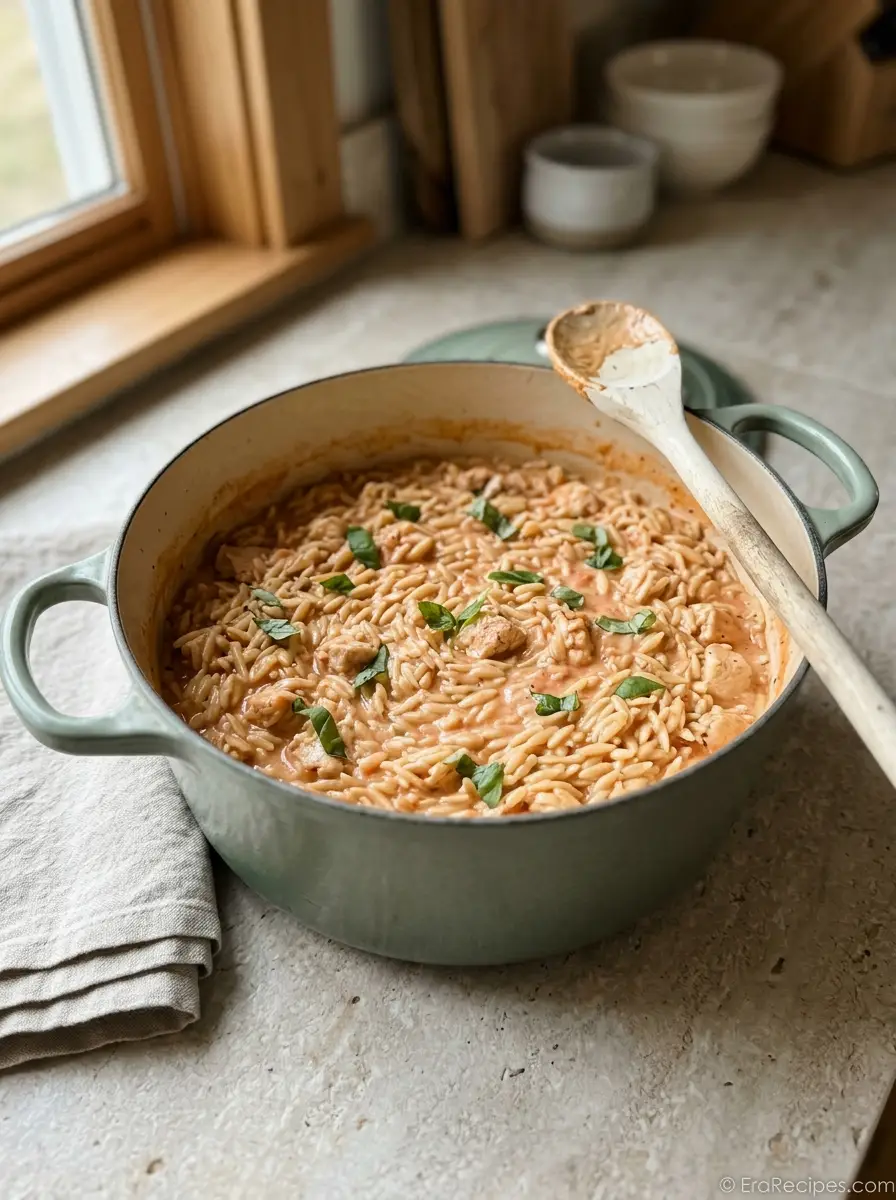
Creamy Tomato Chicken Orzo combines tender orzo, cooked chicken, concentrated tomato paste, cream, Parmesan, and fresh basil in a sauce that is rich without becoming heavy. The defining feature of this dinner is not simply that everything cooks in one pot. It is the way a small group of flavorful ingredients works together to turn the cooking liquid into a smooth tomato-Parmesan sauce.
Tomato paste creates depth without overwhelming the pasta with chunks of tomato. Heavy cream softens the tomato’s acidity, while Parmesan brings saltiness and savory flavor. Fresh basil is added near the end so its aroma stays bright. The orzo ties everything together by releasing starch directly into the sauce as it cooks.
The result is a Creamy Tomato Chicken Orzo that has the comfort of a creamy tomato pasta but still tastes balanced enough for a regular family dinner. It is also ready in about 30 minutes, making the recipe practical when you want flavor without spending the evening building several separate components.
Why the Creamy Tomato Sauce Is the Star
The sauce is what separates this dish from a basic chicken-and-pasta skillet.
Instead of pouring a finished tomato sauce over cooked pasta, the sauce develops around the orzo while it cooks. Tomato paste, chicken broth, heavy cream, butter, Parmesan, and pasta starch gradually become one smooth mixture.
That process creates a sauce that clings closely to the small pieces of orzo instead of collecting at the bottom of the pot.
The flavor also develops in stages. Onion and garlic provide the savory base. Tomato paste adds concentrated tomato flavor. Cream rounds out the acidity. Parmesan strengthens the savory finish, and fresh basil adds a final layer of freshness.
This layered approach is especially useful in an easy chicken orzo recipe because it produces plenty of flavor without requiring a long ingredient list or a sauce that simmers for an hour.
The Flavor Builders Behind the Sauce
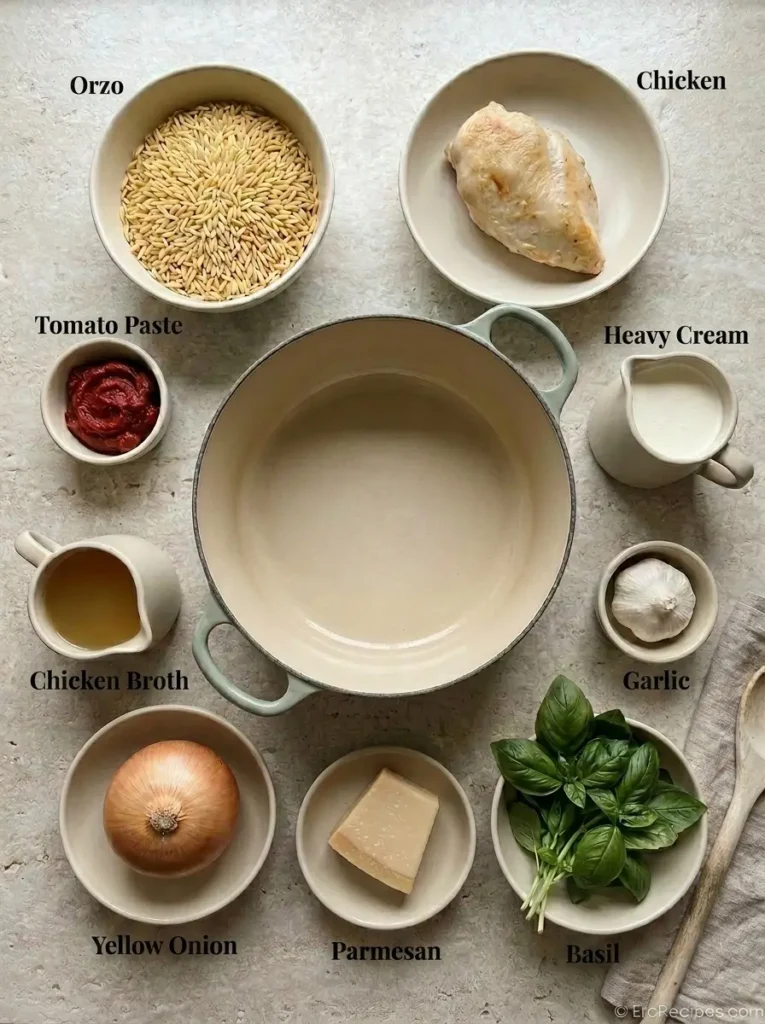
Tomato paste gives concentrated tomato flavor
Tomato paste is more concentrated than canned tomatoes or tomato sauce, so a relatively small amount provides noticeable color and flavor.
It gives the finished Creamy Tomato Chicken Orzo its warm red-orange color without turning the dish into marinara with pasta added to it.
The tomato paste should spend a little time in the pot with the onion, garlic, and Italian seasoning before the main liquid is added. That brief cooking stage helps distribute the paste through the aromatics and gives it a deeper flavor.
Heavy cream softens the tomato
Tomato paste has both sweetness and acidity. Heavy cream smooths those sharper edges and changes the sauce from a straightforward tomato base into a creamy tomato pasta sauce.
The cream is added before the orzo cooks, allowing the pasta to absorb some of that richness as it becomes tender.
The goal is not an extremely thick cream sauce. The liquid needs enough movement for the orzo to simmer properly. The sauce becomes significantly thicker later as the pasta releases starch and absorbs broth.
Chicken broth keeps the sauce savory
Chicken broth provides most of the liquid required to cook the orzo and reinforces the chicken flavor of the meal.
A small amount is also used earlier to loosen the flavorful bits from the bottom of the pot after the onion and garlic have cooked.
That step helps carry those browned flavors into the sauce instead of leaving them attached to the cookware.
Onion and garlic build the background flavor
Onion and garlic are not meant to dominate the finished dish, but they provide an important foundation.
Cooking the onion first gives it enough time to soften and become sweeter. Garlic is added later because it needs much less cooking time.
Once the garlic smells fragrant, the next ingredients should follow fairly quickly. Garlic that becomes very dark can make an otherwise smooth tomato sauce taste bitter.
Parmesan provides more than cheese flavor
Freshly grated Parmesan adds saltiness and savory depth, but it also changes the physical texture of the sauce.
When stirred into the hot orzo near the end, the finely grated cheese melts into the tomato-cream mixture and helps it feel fuller and silkier.
Adding Parmesan after the orzo is cooked gives you more control than simmering it throughout the entire cooking process.
Fresh basil keeps the rich sauce balanced
Basil provides contrast to the cream, butter, and Parmesan.
Rather than cooking the basil for the entire recipe, stir it in near the end so the leaves retain more of their fresh aroma.
A small amount is enough. The basil should lift the tomato flavor instead of making the pasta taste primarily herbal.
Develop the Tomato Base Before Adding the Main Liquid
Heat olive oil and butter in a Dutch oven or other heavy pot over medium heat.
Add the finely chopped onion and cook until it softens. This usually takes several minutes, and the onion should become translucent rather than deeply browned.
Add the garlic and cook briefly until fragrant.
Pour in a small amount of chicken broth and use a wooden spoon to scrape across the bottom of the pot.
Then stir in the tomato paste and Italian seasoning.
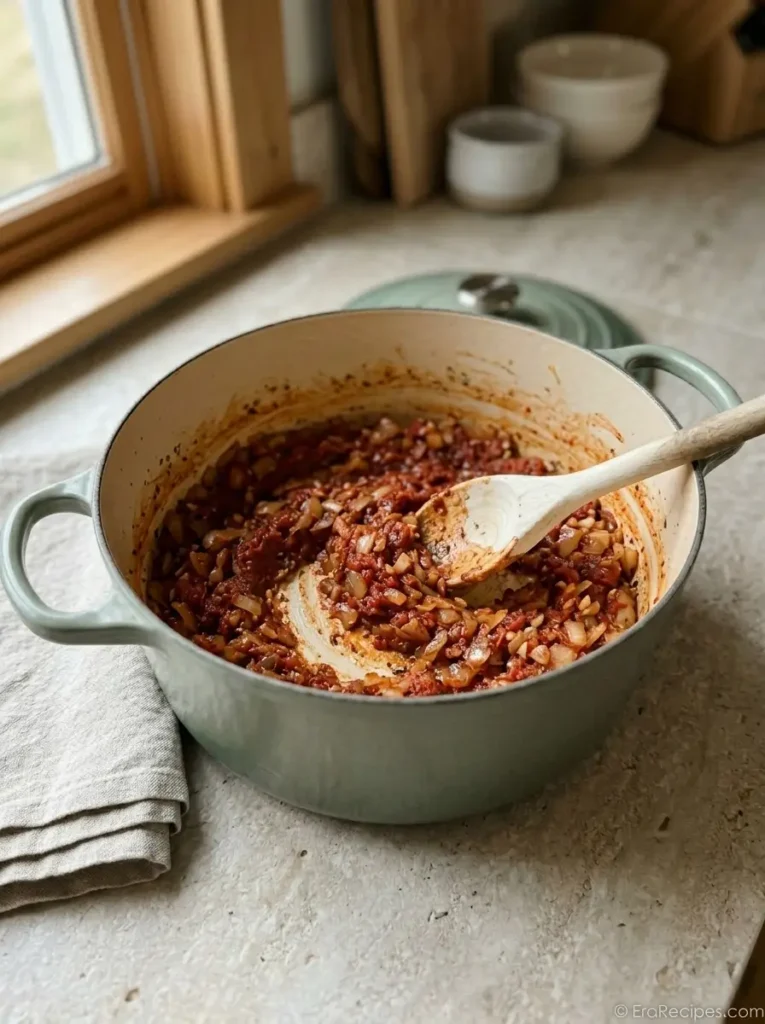
At this stage, the mixture should look concentrated, glossy, and brick-red.
Taking a moment to develop this base means the tomato paste is already evenly distributed before it meets the larger quantity of broth and cream.
It also prevents dense pockets of tomato paste from remaining in the finished sauce.
Why Orzo Makes the Sauce Creamier
Orzo is a pasta shape even though it resembles rice.
Its small size gives it two advantages in this recipe. First, it cooks relatively quickly. Second, its large total surface area releases starch efficiently into the surrounding cooking liquid.
Add the remaining chicken broth, heavy cream, and uncooked orzo directly to the tomato base.
Stir thoroughly, bring the mixture to a boil, then reduce the heat to maintain a steady simmer.
Cook the orzo uncovered for about 10 minutes while stirring frequently.
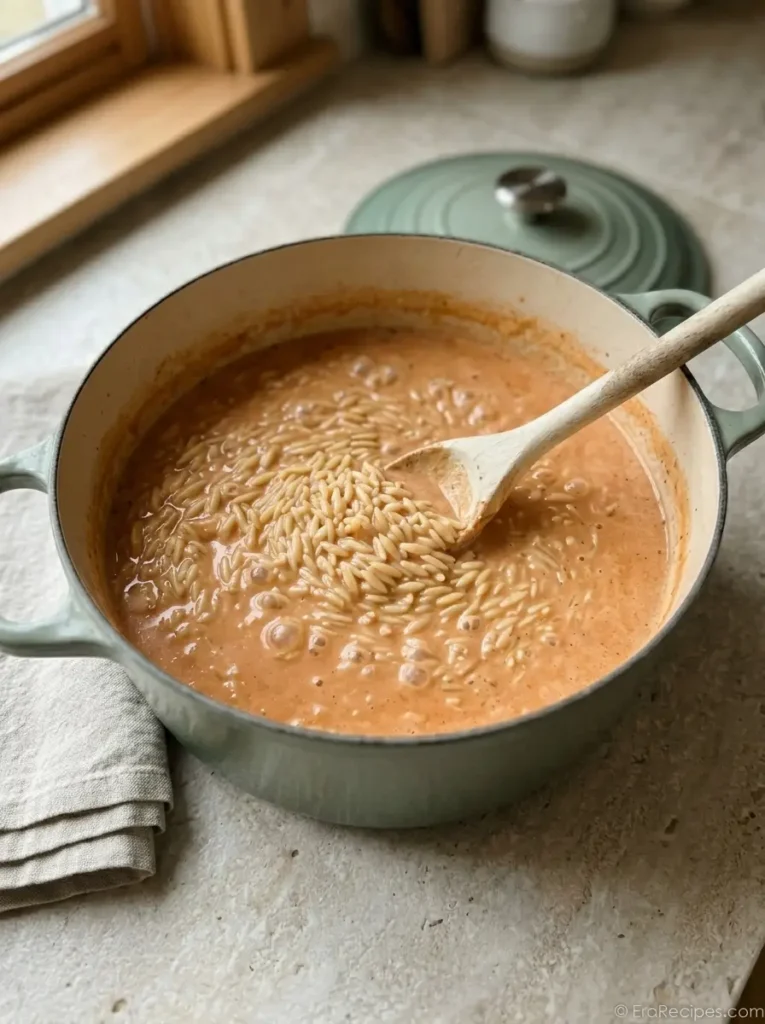
The liquid will gradually change in appearance. At first it should look somewhat loose because the pasta still needs enough moisture to cook.
As the orzo softens, it absorbs some of the liquid and releases starch into what remains. The sauce becomes thicker without requiring flour, cornstarch, or a separate roux.
This is the central technique behind the dish.
If the sauce is already extremely thick while the orzo is still hard in the center, the heat may be too high or the liquid may be evaporating too quickly. Add a small amount of chicken broth and continue simmering gently.
If the pasta is almost tender but the sauce still seems slightly loose, do not rush to correct it. The final Parmesan and the short resting period will thicken it further.
Balance the Finish With Chicken, Parmesan, and Basil
Once the orzo reaches an al dente texture, the sauce is ready for its final ingredients.
Stir in the cooked chicken first so the pieces are distributed throughout the pot.
Add the freshly grated Parmesan and torn basil.
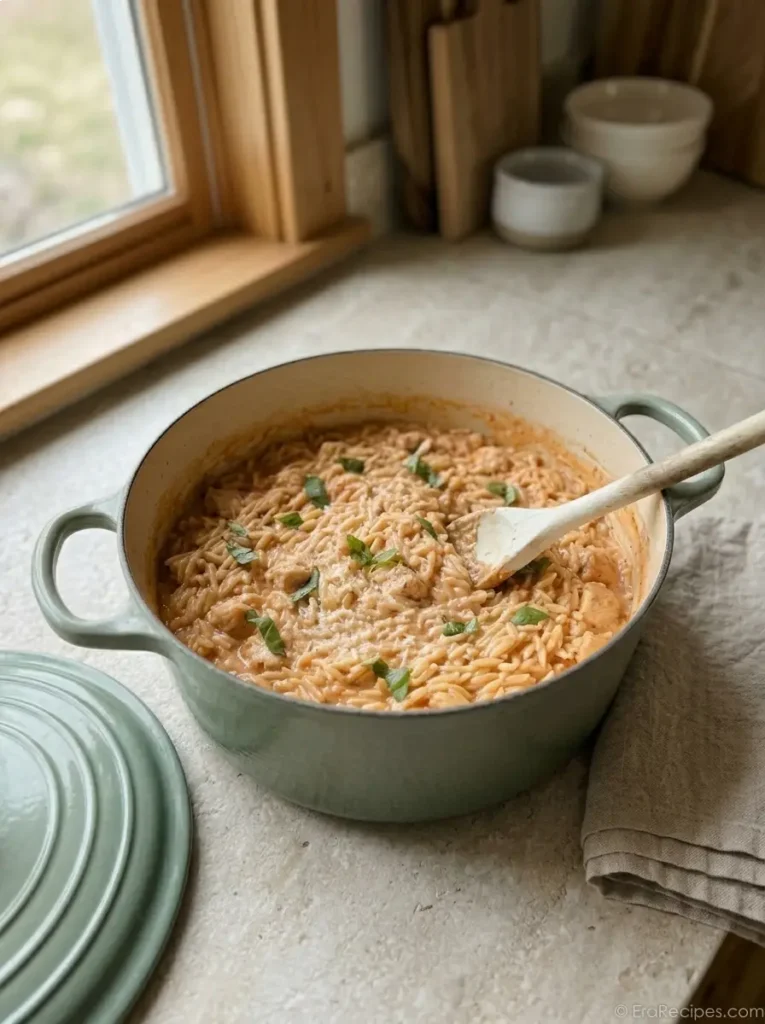
The Parmesan should begin disappearing into the sauce almost immediately.
Remove the pot from the heat and cover it for about three to five minutes.
This resting period may seem minor, but it makes a noticeable difference. The orzo continues absorbing a small amount of liquid, the chicken warms completely, and the Parmesan finishes melting into the sauce.
After the rest, stir everything again.
The Creamy Tomato Chicken Orzo should now look noticeably thicker than it did when the pasta first finished simmering.
Season with salt and black pepper only at this stage. Chicken broth and Parmesan can both contribute significant salt, so seasoning too aggressively earlier can make the finished dish too salty.
How to Fine-Tune the Tomato-Cream Balance
If the tomato flavor tastes too sharp
Give the sauce its full resting period first. Cream and Parmesan both soften the tomato flavor as everything comes together.
If needed, a small additional splash of cream can make the sauce gentler, but add it gradually.
If the sauce tastes too rich
Add a small amount of warm chicken broth rather than more cream.
Broth loosens the sauce and lightens the mouthfeel without making it watery when added carefully.
If you want more tomato flavor
A little extra tomato paste can intensify the flavor, but it is best cooked briefly before large amounts of liquid are added.
Adding raw tomato paste at the very end can make the finished sauce taste harsher.
If the Parmesan seems too strong
Add a spoonful of chicken broth and a little more basil.
The goal is for Parmesan to make the tomato sauce more savory, not turn the recipe into a cheese sauce.

Creamy Tomato Chicken Orzo
Ingredients
- 1 tablespoon olive oil
- 2 tablespoons unsalted butter
- 1/2 small yellow onion finely chopped
- 3 cloves garlic minced
- 2 1/4 cups chicken broth divided
- 1/4 cup tomato paste
- 1/2 teaspoon Italian seasoning
- 1 cup heavy whipping cream
- 1 cup uncooked orzo
- 2 cups cooked chicken cut or pulled into bite-size pieces
- 1/2 cup freshly grated Parmesan cheese
- 1 handful fresh basil torn
- Salt to taste
- Black pepper to taste
Instructions
Soften the aromatics:
- Heat the olive oil and butter in a Dutch oven over medium heat. Add the onion and cook for about 5 minutes until soft and translucent. Add the garlic and cook for about 30 seconds.
Develop the tomato base:
- Pour in 1/4 cup chicken broth and scrape the bottom of the pot. Stir in the tomato paste and Italian seasoning until the mixture is smooth, glossy, and evenly combined.
Simmer the orzo:
- Add the remaining 2 cups chicken broth, heavy cream, and uncooked orzo. Bring to a boil, then reduce to a gentle simmer. Cook uncovered for about 10 minutes, stirring frequently, until the orzo is al dente.
Finish the creamy sauce:
- Stir in the cooked chicken, freshly grated Parmesan, and torn basil. Mix gently until the Parmesan begins melting into the sauce.
Rest and adjust:
- Remove the pot from the heat, cover, and let it rest for 3–5 minutes. Stir again, then adjust the consistency with a small splash of chicken broth if needed. Season with salt and black pepper to taste.
The sauce should look slightly loose before the resting period; the orzo and Parmesan continue thickening it.
Leftovers will thicken in the refrigerator, so add chicken broth while reheating.
What the Sauce Should Taste Like at Each Stage
Thinking about the sauce in stages makes this T4 version easier to reproduce consistently.
After the tomato paste
The mixture should taste concentrated, savory, and strongly tomato-forward. It is not supposed to taste like the final sauce yet.
After the broth and cream
The tomato becomes softer and the mixture tastes much milder. At this point, the liquid may seem less seasoned than expected because the orzo has not cooked and the Parmesan has not been added.
After the orzo cooks
The sauce gains body from starch and the flavor becomes more concentrated as some of the liquid is absorbed.
After Parmesan and basil
The final sauce should taste rounded and savory with recognizable tomato flavor, mild creaminess, Parmesan in the background, and a fresh basil finish.
Why Cooked Chicken Is Added Near the End
This recipe is designed around already-cooked chicken.
Adding it only after the orzo has finished cooking protects the chicken from unnecessary heat.
If cooked chicken were simmered with the pasta for the entire 10-minute cooking period, lean breast meat could become noticeably drier.
Adding it near the end gives the sauce enough time to coat the pieces while the covered resting period heats them throughout.
This is also one reason the recipe works well with leftover roasted chicken or plain cooked chicken breast.
It turns something already prepared into a completely different one-pot family meal.
Simple Flavor Variations
Add baby spinach
Stir a few handfuls of baby spinach into the hot orzo shortly before the chicken and Parmesan. Let the leaves wilt into the sauce.
Add crushed red pepper
A small pinch added with the Italian seasoning gives the tomato base gentle warmth.
Use additional fresh basil
For stronger basil flavor, add extra leaves at the table instead of cooking them into the sauce for longer.
Use cooked turkey
Leftover cooked turkey can replace the chicken without requiring a major change to the method.
Make the sauce less rich
Replace a modest portion of the heavy cream with additional chicken broth. The final sauce will be lighter but still gain creaminess from the orzo starch and Parmesan.
Serving Creamy Tomato Chicken Orzo
This pasta is filling enough to be the center of dinner.
A simple green salad works particularly well because a tart vinaigrette contrasts with the creamy sauce.
Roasted broccoli, asparagus, or green beans are also useful sides when you want more vegetables.
Crusty bread can be served alongside the orzo for anyone who wants to catch the remaining tomato-Parmesan sauce from the bowl.
Keep the sides relatively simple. The flavor-focused sauce already gives the main dish plenty of richness and character.
Storage and Reheating Without Losing the Creamy Texture
Orzo continues absorbing liquid after cooking, so leftovers will be considerably thicker than the freshly prepared dish.
Transfer leftovers to shallow covered containers and refrigerate them promptly.
When reheating, add a small splash of chicken broth before warming the orzo slowly over low heat.
Stir often as it reheats. Add another small amount of broth only if necessary.
Microwave reheating also works for individual servings. Add a spoonful of broth, cover loosely, heat in short intervals, and stir between intervals.
USDA guidance recommends using most cooked leftovers within three to four days and reheating leftovers to 165°F. Review the USDA food-safety guidance.
Frequently Asked Questions
Why is my Creamy Tomato Chicken Orzo too thick?
Orzo continues absorbing liquid during cooking and resting. Add warm chicken broth a little at a time and stir until the sauce returns to a creamy consistency.
Why is my tomato sauce too thin?
Allow the orzo to finish cooking and give the pot its covered resting period before deciding the sauce is too thin. Pasta starch and Parmesan both continue thickening it near the end.
Do I need to boil the orzo separately?
No. Cooking the orzo directly in the broth, cream, and tomato base is what helps create the creamy sauce.
Can I use leftover chicken?
Yes. Fully cooked leftover chicken works especially well because it can be added near the end and warmed gently without extending the cooking time.
Can I make this quick weeknight dinner ahead?
Yes, although Creamy Tomato Chicken Orzo is creamiest immediately after cooking. Add chicken broth during reheating because the orzo will continue absorbing sauce in the refrigerator.