
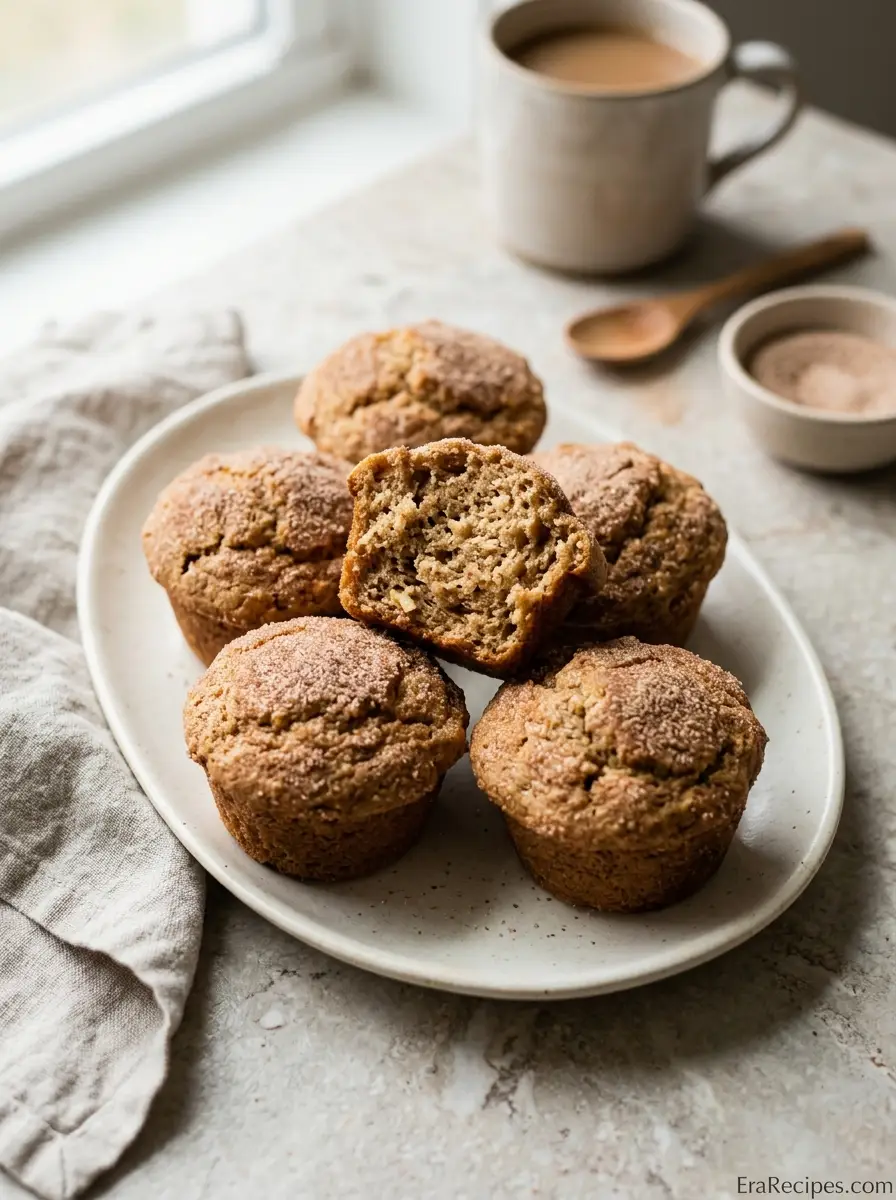
Apple Cider Spice Muffins layer concentrated cider, applesauce, freshly shredded apple, cinnamon, allspice, cloves, and nutmeg into a soft fall muffin with plenty of real apple character. A buttery cinnamon-sugar coating finishes the outside and gives each muffin a lightly crisp, sweet contrast to the moist crumb inside.
The most important flavor step happens before the batter is mixed. Fresh apple cider is simmered until its volume is reduced significantly, concentrating the apple flavor without adding too much liquid. That reduction is then combined with applesauce and shredded apple, giving the muffins three different sources of apple flavor rather than asking one ingredient to do all the work.
These Apple Cider Spice Muffins fit naturally into fall breakfast baking, weekend brunch, school-morning treats, and seasonal baking days. They feel special enough for a cool Saturday morning but still use a straightforward muffin method that requires no stand mixer.
Why Three Layers of Apple Flavor Matter
Apple flavor can disappear surprisingly easily in baked goods.
Flour, sugar, eggs, oil, and warm spices all add volume and flavor of their own, so simply pouring ordinary apple cider into muffin batter does not necessarily create a strongly apple-forward result.
This recipe solves that problem by using apple in three different forms.
First, apple cider is reduced until the flavor becomes more concentrated.
Second, applesauce adds more apple character while also contributing moisture to the batter.
Third, fresh shredded apple remains physically present in the muffin crumb.
These three layers create a fuller result than one apple ingredient alone. The cider carries concentrated flavor, the applesauce blends smoothly throughout the batter, and the shredded apple provides fresh fruit texture and moisture.
That combination is what gives these apple cider muffins a recognizable apple identity even after the warm spices and cinnamon-sugar coating are added.
The Ingredients That Build the Apple-Spice Flavor
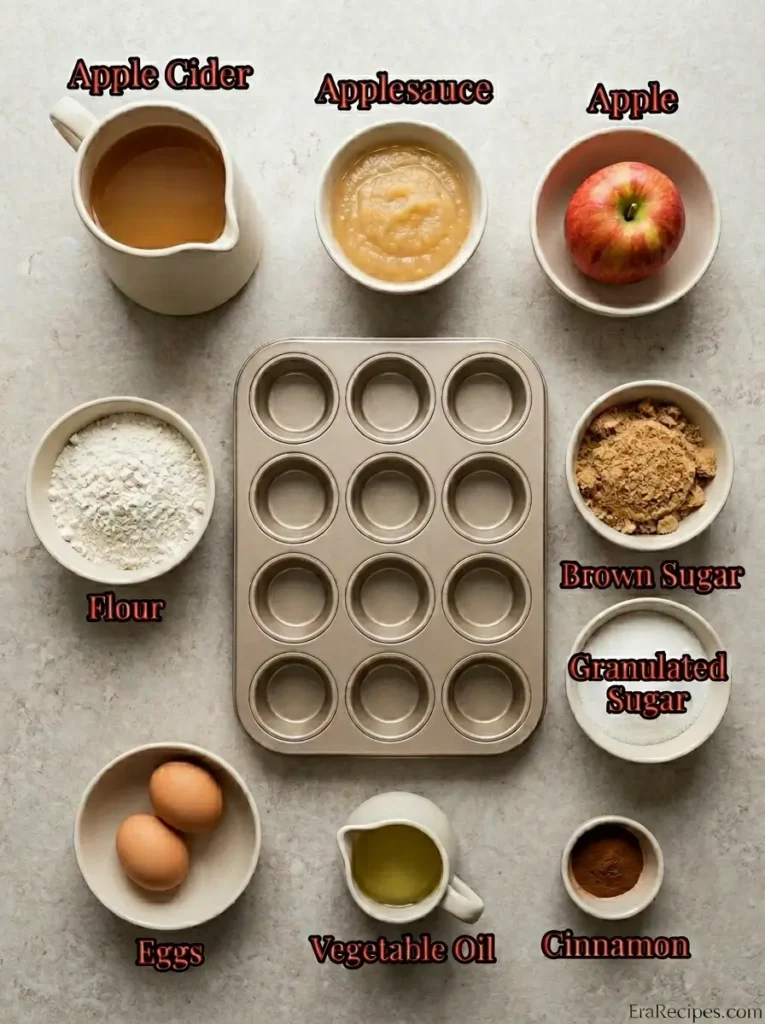
Reduced cider concentrates the first layer of apple flavor
Fresh, nonalcoholic apple cider is the foundation of the flavor profile.
Instead of adding the entire measured amount directly to the batter, the cider is simmered first. Reducing it removes water while leaving more of its apple flavor concentrated in a smaller volume.
The finished reduction does not need to become thick like syrup. It should simply be darker and reduced to the correct amount.
Applesauce supports both flavor and moisture
Unsweetened applesauce contributes another layer of apple flavor without introducing large fruit pieces.
Because it blends smoothly into the wet ingredients, it also helps keep the interior soft.
Using unsweetened applesauce is useful because the recipe already includes both brown sugar and granulated sugar.
Fresh shredded apple changes the crumb
The shredded apple is more than a flavor addition.
Fine strands of fruit disappear partially into the muffin as they bake, leaving moisture and small apple flecks throughout the crumb.
Shredding works differently from adding large cubes. Large apple pieces create obvious fruit pockets, while shredded apple spreads more evenly through each muffin.
This is especially useful when you want an easy apple recipe that tastes clearly of fresh fruit without creating heavy or wet pockets inside the batter.
Cinnamon leads the spice mixture
Cinnamon is the most prominent spice, but it is supported by smaller amounts of allspice, cloves, and nutmeg.
The smaller spices should remain in the background.
Cloves in particular can easily dominate baked goods when overused, so the modest amount is important.
The goal is a warm autumn spice profile rather than a muffin that tastes primarily of one strong spice.
Brown and granulated sugars do different jobs
Brown sugar brings deeper caramel-like sweetness and moisture, while granulated sugar gives cleaner sweetness.
Using both creates a more balanced flavor than relying completely on one type.
Additional granulated sugar is reserved for the cinnamon coating after baking.
Oil keeps the crumb soft
Vegetable oil provides the main fat in the muffin batter.
Because oil stays liquid at room temperature, it helps the muffins retain a soft texture even after they cool.
Butter is used later for the cinnamon-sugar coating rather than as the principal fat inside the batter.
Reduce the Apple Cider Before Mixing the Batter
Pour 3/4 cup of fresh apple cider into a small saucepan and bring it to a gentle simmer over medium heat.
Cook it until the cider has reduced to approximately 1/4 cup.
This usually takes around 20 minutes, although the exact time depends on the saucepan, burner, and simmer intensity.

Do not judge the reduction by thickness alone. It may still look quite fluid.
Volume is the more useful measurement. Once the cider reaches approximately 1/4 cup, remove it from the heat.
Allow the reduction to cool before adding it to the wet ingredients.
Hot cider added directly to eggs can affect the batter, so this cooling period is part of the recipe rather than wasted time.
If you want to make the baking session easier, the cider reduction can be prepared ahead and refrigerated until needed.
Balance the Dry Spices Before Adding the Apple
While the cider cools, combine the all-purpose flour, baking powder, baking soda, salt, cinnamon, allspice, cloves, and nutmeg in a large bowl.
Whisk thoroughly.
Spices can form small concentrated pockets when they are added directly to wet batter, especially cinnamon and cloves.
Distributing them through the flour first helps ensure that one muffin does not receive noticeably more spice than another.
The baking powder and baking soda should also be evenly dispersed so all 12 muffins rise consistently.
Mix the Wet Ingredients Without a Mixer
In a separate bowl, whisk together the vegetable oil, brown sugar, granulated sugar, eggs, applesauce, and cooled reduced cider.
Continue until the mixture looks evenly combined.
A stand mixer is not necessary here.
In fact, a basic whisk is ideal because muffin batter benefits from relatively gentle mixing.
Once the wet mixture is uniform, pour it into the dry ingredients.
Whisk only until the flour mixture is incorporated.
Stop once you no longer see large pockets of dry flour.
Fold In the Shredded Apple Gently
Add the freshly shredded peeled apple to the batter.
If using the optional chopped walnuts, add them at the same stage.
Switch to a spatula and fold rather than continuing to whisk aggressively.
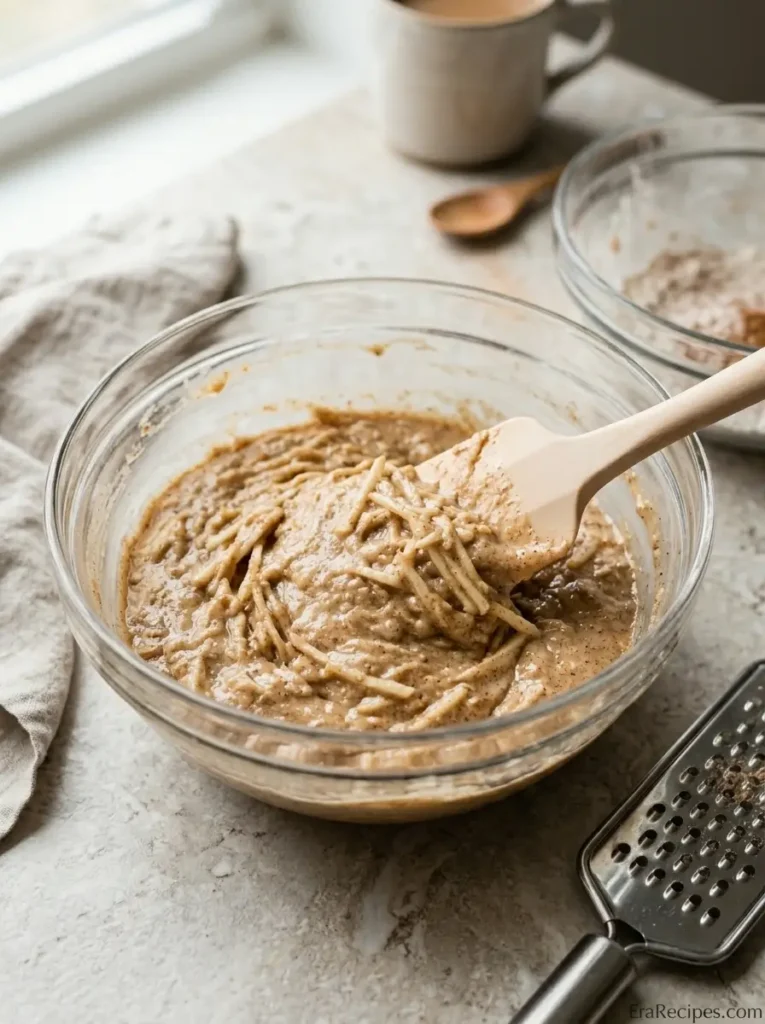
The finished batter should be relatively thick with fine apple strands distributed throughout.
A few small lumps are normal in muffin batter.
Repeated stirring after the flour has hydrated can make the crumb tougher, so stop once the apple is evenly dispersed.
This gentle mixing is one of the simplest ways to keep cinnamon spice muffins soft rather than dense.
Fill the Muffin Cups All the Way to the Top
Prepare a standard 12-cup muffin pan with liners or nonstick spray.
Divide the batter evenly among all 12 cups.
Unlike some muffin recipes that fill each cup only two-thirds or three-quarters full, this batter is portioned all the way to the top.
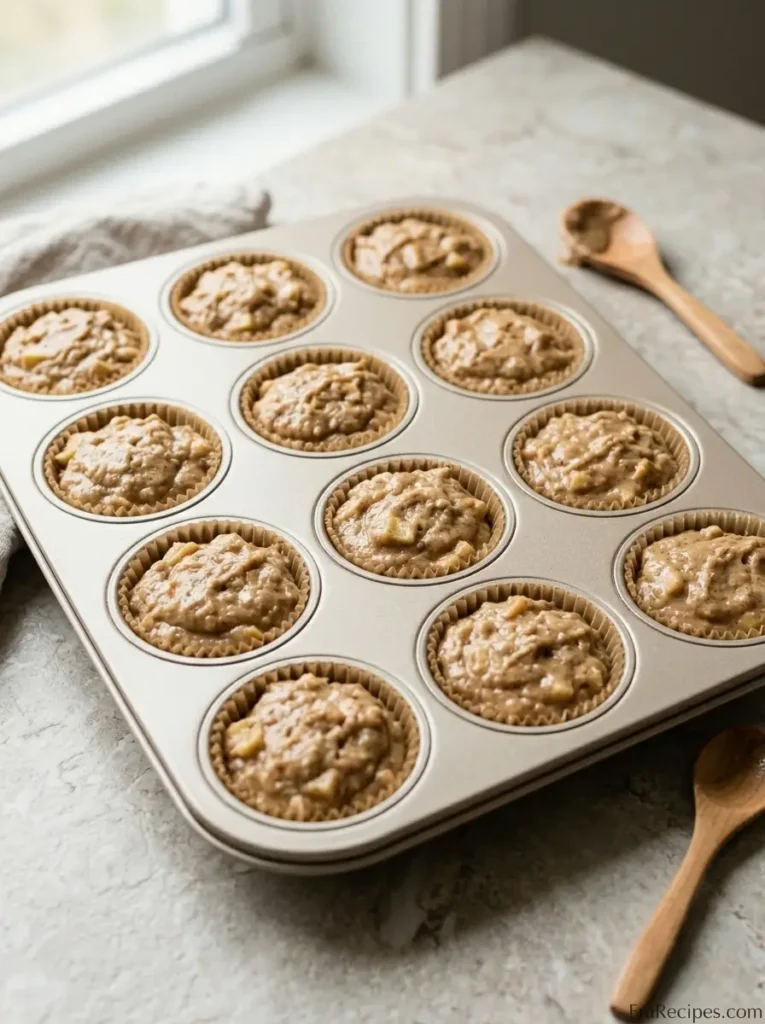
The full cups are intentional because the recipe uses a high-temperature start to encourage tall muffin tops.
Try to distribute the batter evenly so the muffins finish at approximately the same time.
If one cup contains substantially more batter than another, its center may need longer to bake.
Use Two Oven Temperatures for Taller Muffin Tops
Begin baking at 425°F.
After 5 minutes, keep the muffins inside the oven and reduce the temperature to 350°F.
Continue baking for approximately 15–16 minutes more.
The short burst of high heat at the beginning helps the batter rise quickly and establish taller domes.
The lower temperature then gives the centers time to bake through without over-browning the tops.
Do not remove the muffin pan while waiting for the oven temperature to decrease. Simply change the setting and allow the muffins to remain inside as the oven adjusts.
Check the centers with a clean wooden pick. It should come out clean or with only a few moist crumbs rather than wet batter.
Cool Briefly Before Adding Cinnamon Sugar
Let the baked muffins cool in the pan for approximately 10 minutes before transferring them to a cooling rack.
Meanwhile, combine granulated sugar and cinnamon in a bowl.
Lightly brush a warm muffin with melted unsalted butter, then coat the surface with cinnamon sugar.
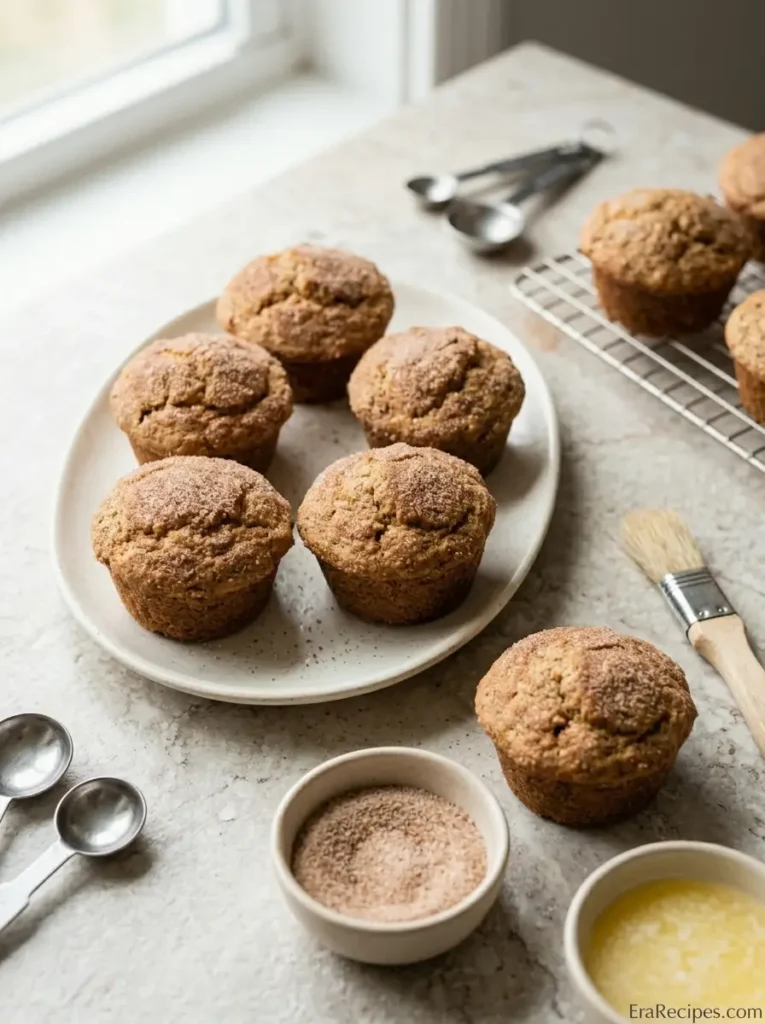
You can coat only the tops or remove the liners and coat more of the exterior.
The warm muffin and melted butter help the sugar mixture adhere.
The result should look granular rather than glazed. Individual sugar crystals should remain visible across the golden muffin surface.
That cinnamon-sugar exterior adds a different texture from the soft interior and reinforces the fall-spice profile without changing the apple-centered flavor underneath.
How the Finished Muffin Should Taste
The first flavor should be apple and cinnamon rather than plain sweetness.
The concentrated cider creates a deeper apple background, while applesauce and shredded apple keep the interior moist.
Allspice, cloves, and nutmeg should support the cinnamon rather than overpower it.
The cinnamon-sugar exterior adds a sweeter first bite, but the interior itself should remain balanced enough to work for breakfast or brunch.
Texture is equally important.
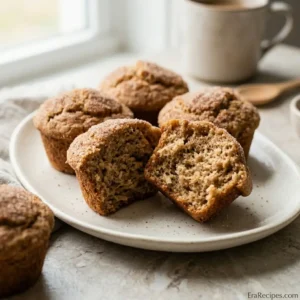
The top should have a lightly crisp sugar coating, while the crumb underneath should be tender, springy, and moist without appearing wet or underbaked.
Apple Cider Spice Muffins
Ingredients
Muffins
- 3/4 cup fresh nonalcoholic apple cider
- 1 3/4 cups all-purpose flour
- 1 teaspoon baking powder
- 1/2 teaspoon baking soda
- 3/4 teaspoon salt
- 2 teaspoons ground cinnamon
- 1/4 teaspoon ground allspice
- 1/4 teaspoon ground cloves
- 1/4 teaspoon ground nutmeg
- 1/2 cup vegetable oil
- 1/2 cup packed light or dark brown sugar
- 1/2 cup granulated sugar
- 2 large eggs at room temperature
- 1/4 cup unsweetened applesauce
- 1 1/2 cups peeled and freshly shredded apple about 1 1/2 to 2 apples
- 3/4 cup chopped walnuts optional
Cinnamon-Sugar Coating
- 1/2 cup granulated sugar
- 1 1/2 teaspoons ground cinnamon
- 2 tablespoons unsalted butter melted
Instructions
Reduce and cool the cider:
- Pour the apple cider into a small saucepan and simmer over medium heat, stirring occasionally, until reduced from 3/4 cup to 1/4 cup, about 20 minutes. Transfer the reduction to a heat-safe bowl and let it cool before using.
Prepare the pan and dry ingredients:
- Preheat the oven to 425°F. Prepare a standard 12-cup muffin pan with liners or nonstick spray. In a large bowl, whisk the flour, baking powder, baking soda, salt, cinnamon, allspice, cloves, and nutmeg until evenly combined.
Mix the wet ingredients:
- In a separate bowl, whisk the vegetable oil, brown sugar, granulated sugar, eggs, applesauce, and cooled reduced cider until smooth and evenly blended.
Finish the batter and fill the pan:
- Pour the wet ingredients into the dry ingredients and whisk just until combined. Fold in the freshly shredded apple and optional walnuts. Divide the batter evenly among all 12 muffin cups, filling each cup all the way to the top.
Use the two-temperature bake:
- Bake for 5 minutes at 425°F. Without removing the muffins from the oven, reduce the temperature to 350°F and continue baking for about 15–16 minutes, until a wooden pick inserted in the center comes out clean. Cool in the pan for 10 minutes, then transfer to a cooling rack.
Add the cinnamon-sugar finish:
- Whisk the granulated sugar and cinnamon together. Lightly brush a warm muffin with melted butter, then coat the top—or more of the exterior if desired—in the cinnamon-sugar mixture. Repeat with the remaining muffins.
Keep the muffin pan inside the oven when lowering the temperature from 425°F to 350°F; the temperature transition is part of the tall-muffin technique.
The cinnamon-sugar surface naturally becomes softer and slightly sticky as it sits, so the coating has its best texture relatively soon after baking.
Serve Them for a Cozy Fall Breakfast
Apple Cider Spice Muffins are especially well suited to cool mornings because they need very little additional preparation once baked.
Serve them as part of a simple breakfast with fresh fruit, eggs, or yogurt, or place them in a basket for a relaxed weekend brunch.
The cinnamon-sugar coating makes them flavorful enough that butter or additional spread is optional.
They also travel well once completely cool, which makes them useful for breakfast away from home or an afternoon snack.
For a seasonal breakfast table, pair the muffins with fresh apples, pears, or another simple fruit rather than adding several other heavily spiced baked goods.
Use the Apple Flavor Instead of Adding More Toppings
These muffins already contain several layers of flavor, so they do not need icing, glaze, or caramel sauce.
Keeping the top simple allows the concentrated cider and spice mixture to remain noticeable.
If you want extra texture, the optional walnuts are enough to add a little crunch inside the crumb.
For a nut-free batch, simply leave them out.
Plan the Cider Reduction Ahead
The cider reduction is the longest individual preparation step, but it is also the easiest part to move to another day.
Reduce the cider, allow it to cool, cover it, and refrigerate it.
When you are ready to bake, bring out the measured reduction and proceed with the batter.
This turns the actual muffin-mixing session into a much shorter process and makes the recipe more practical for a weekend morning.
It is also useful when preparing several breakfast items at once because the saucepan step no longer competes with the rest of the baking schedule.
Storage Without Losing the Best Texture
Allow the muffins to cool completely before covering them.
They can be kept lightly covered at room temperature for up to three days or refrigerated for longer storage.
The cinnamon-sugar coating gradually pulls moisture toward the surface, so the exterior may become softer and slightly sticky after the first day or two.
For the best contrast between the sugar coating and the moist crumb, the muffins are at their best relatively soon after coating.
If mold appears on a muffin or another bread-like baked good, discard it rather than cutting away only the visible area. USDA guidance on moldy bread and baked goods explains that porous foods can be contaminated below the visible surface.
Freeze Extra Muffins for Later
For longer storage, freeze completely cooled muffins in an airtight freezer-safe container or bag.
Separating layers with parchment can help prevent the cinnamon-sugar surfaces from rubbing together.
Thaw muffins in the refrigerator or at room temperature.
If you want to warm one before serving, use a brief gentle reheating rather than heating it until the exterior becomes wet.
Frequently Asked Questions
Why do I need to reduce the apple cider?
Reducing the cider concentrates its apple flavor while removing excess water. That gives the muffins a stronger cider character without making the batter unnecessarily thin.
Can I use apple juice instead of apple cider?
Cloudy apple juice can work in a pinch, but fresh apple cider provides the stronger seasonal flavor intended for these muffins. Whatever you use should be nonalcoholic and should not be apple cider vinegar.
Why do the muffins start at 425°F?
The brief high-temperature start helps the muffin batter rise quickly and develop taller domes. After five minutes, the oven temperature is reduced to 350°F so the centers can finish baking.
Can I leave out the walnuts?
Yes. Walnuts are optional and can be omitted without changing the main batter method.
Can I prepare Apple Cider Spice Muffins ahead?
Yes. The cider reduction can be prepared in advance, and the baked muffins can also be frozen for longer storage. For the best cinnamon-sugar texture, enjoy freshly coated muffins relatively soon after baking.