
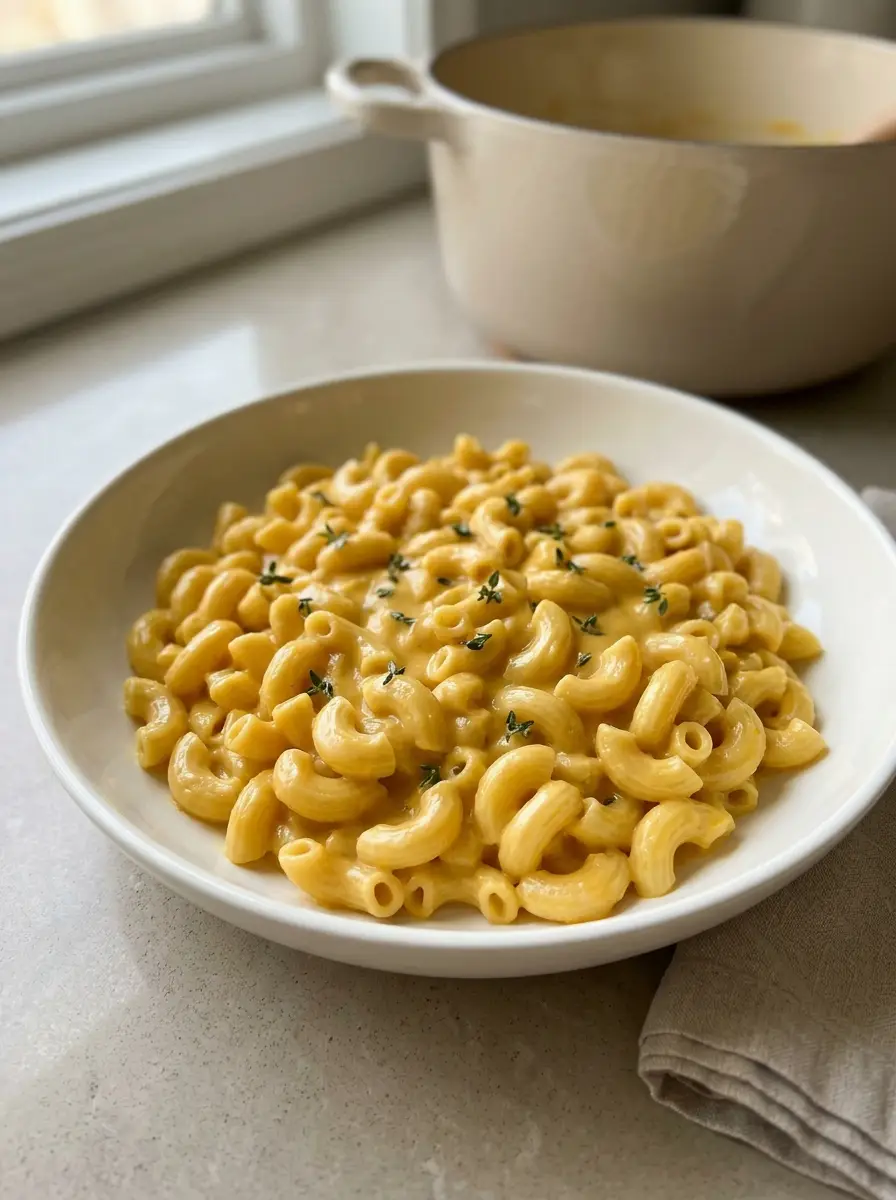
Butternut Squash Mac and Cheese turns a familiar comfort food into a creamy autumn dinner with warm color, gentle sweetness, and plenty of savory cheese flavor. Tender short pasta is coated in a smooth sauce made with cooked butternut squash, sharp cheddar, Parmesan, thyme, onion, cream, and a small amount of nutmeg.
This is a practical stovetop recipe rather than a baked casserole. The pasta cooks while the sauce is prepared in a second pot, allowing the entire meal to come together in about 20 minutes. There is no need to roast a whole squash, transfer the pasta to a baking dish, or wait for a breadcrumb topping to brown.
The squash gives the cheese sauce a velvety texture and a naturally golden-orange appearance. Sharp cheddar keeps the dish recognizable as mac and cheese, while Parmesan, thyme, black pepper, and onion balance the squash’s mild sweetness.
Why This Quick Fall Mac and Cheese Works
A useful weeknight dinner needs to be manageable from beginning to end. This Butternut Squash Mac and Cheese uses two pots, a short ingredient list, and a cooking sequence that lets the pasta and sauce finish at nearly the same time.
The recipe begins with cooked butternut squash rather than raw squash. This removes the longest preparation step. You do not need to peel a whole squash, cut it into cubes, roast it, and wait for it to cool before making the cheese sauce.
The sauce starts with grated onion and thyme cooked briefly in butter and olive oil. Grating the onion helps it soften quickly and distribute evenly through the sauce without leaving large pieces among the pasta.
Flour is stirred into the butter and onion before the chicken stock is added. This creates a light thickening base that helps the squash, cream, and melted cheeses form one smooth sauce.
The butternut squash is then whisked into the stock mixture until it becomes warm and evenly blended. Cream adds richness, but the sauce does not rely entirely on dairy for its consistency. The squash and flour also provide body.
Sharp cheddar gives the sauce the tangy flavor expected from mac and cheese. Parmesan adds a salty, nutty finish, while nutmeg supports the squash and cream without making the pasta taste heavily spiced.
The result is a creamy autumn dinner that feels comforting but does not require a long bake. It works well for busy fall evenings, quick family meals, and nights when you want seasonal flavor without spending an hour in the kitchen.
The Ingredients Behind the Creamy Texture
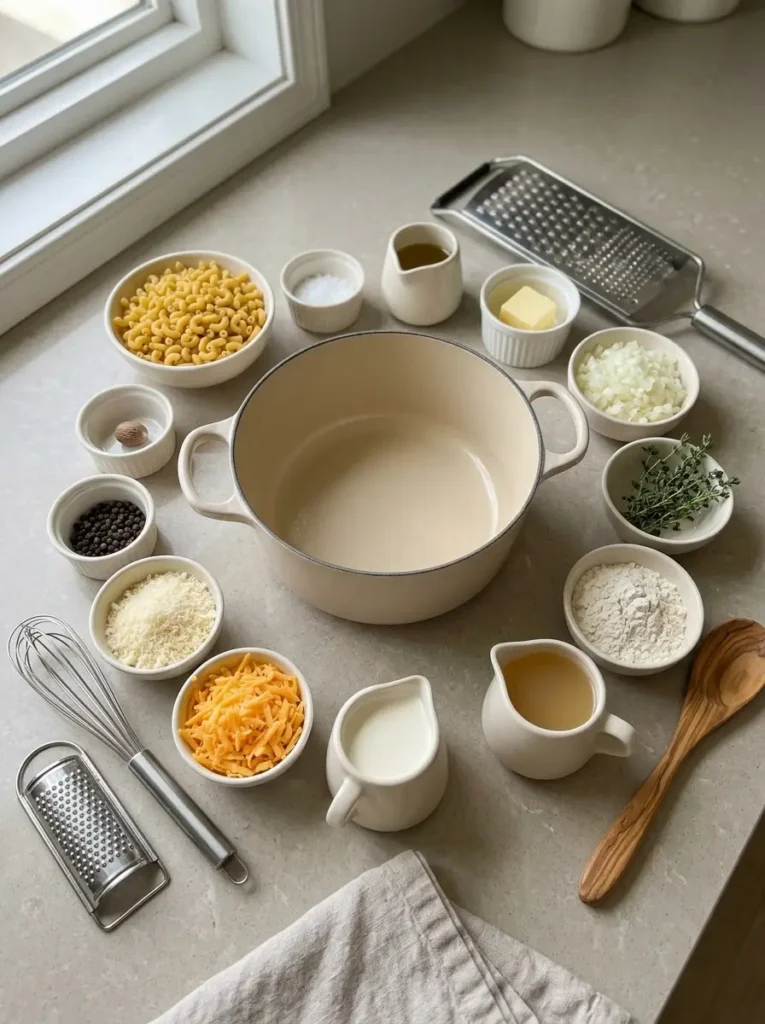
Short ridged pasta holds more sauce
Short pasta with ridges, curves, or hollow centers gives the sauce more places to cling. Mini penne, tubatini, elbow macaroni, small shells, cavatappi, or another compact pasta shape can work well.
Long smooth noodles are less practical because the sauce is thick and intended to coat individual bite-size pieces. A short pasta shape also makes the finished meal easier to portion and serve.
Cook the pasta only until al dente. It will continue absorbing a small amount of moisture after it is drained and folded into the hot sauce.
Cooked butternut squash creates the golden base
The squash should be completely cooked and soft enough to blend smoothly into the sauce. Frozen cooked squash is convenient because it removes the need for peeling and roasting.
Thaw it fully before starting. Partly frozen squash can lower the temperature of the sauce and may remain in firm pieces rather than blending evenly.
If the thawed squash contains excess water, drain it before measuring. Too much additional moisture can make the finished sauce thinner than intended.
A smooth squash purée produces the most uniform sauce. Mashed squash can also work, although the finished pasta may contain a few small visible pieces.
Sharp cheddar supplies the classic cheese flavor
Sharp cheddar is important because the cream and squash soften its flavor. Mild cheddar may taste less noticeable once the other ingredients are combined.
Grating cheese from a block generally produces a smoother sauce. Packaged shredded cheese can contain anti-caking powder that sometimes prevents it from melting as evenly.
Have the cheddar grated before you begin cooking. The sauce moves quickly once the cream and squash are hot, and pausing to grate cheese can lead to unnecessary simmering.
Parmesan strengthens the savory side
Parmesan adds concentrated savory flavor and helps balance the natural sweetness of the squash.
It is saltier than cheddar, so the completed sauce should be tasted before additional salt is added. Chicken stock also contributes seasoning.
Chicken stock keeps the sauce from feeling too heavy
Chicken stock forms the main liquid base and loosens the flour mixture before the squash and cream are added.
Using stock rather than making the sauce entirely with cream creates a lighter consistency while still providing savory depth.
Choose a reduced-sodium stock when possible. It gives you more control over the final seasoning after the cheddar and Parmesan have melted.
Cream adds richness
Cream or half-and-half rounds out the sauce and gives it a smooth finish. It should be stirred in after the squash has blended into the stock.
The sauce needs only a gentle bubble at this stage. A hard boil can reduce the liquid too quickly and make the sauce thicker than necessary before the cheese is added.
Thyme, onion, and nutmeg create the fall flavor
Fresh thyme brings an herbal note that fits naturally with butternut squash. Some of it cooks with the onion, while a small amount can be reserved for serving.
Grated onion adds sweetness and savory depth without changing the smooth texture. It needs only a brief cooking period before the flour is added.
Nutmeg should remain subtle. Its purpose is to support the squash, cream, and cheese rather than become a dominant spice.
Prepare the Pasta and Sauce at the Same Time
The quickest approach is to place the pasta water over high heat before beginning the sauce. Once the water boils, salt it and add the pasta.
While the pasta cooks, begin the sauce in a medium heavy-bottomed pot. This parallel cooking method allows both components to finish within the same short time window.
Stir the pasta occasionally so the pieces do not stick together. Begin testing it before the longest package cooking time because small pasta shapes can soften quickly.
Drain the pasta thoroughly when it reaches al dente. Do not rinse it. The light layer of starch left on the pasta helps the butternut squash sauce cling more effectively.
Try to avoid draining the pasta too early. Pasta that sits in a colander for several minutes can cool, dry out, and begin sticking together before it reaches the sauce.
Build the Butternut Squash Sauce in Stages
Cook the thyme and grated onion
Warm the olive oil and butter together over medium heat. The butter contributes richness, while the olive oil helps distribute the heat through the base of the sauce.
Add the chopped thyme and grate the onion directly into the pot. Stir frequently while the onion softens.
The onion needs only a brief cooking period. It should become fragrant and soft without turning deeply brown.
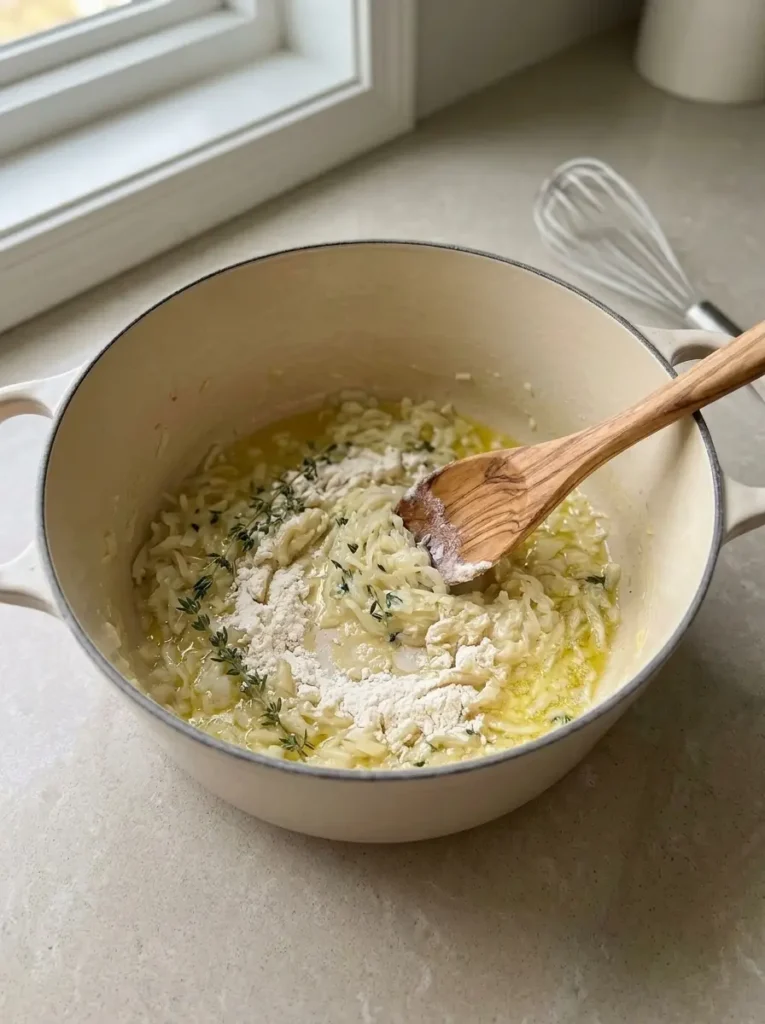
Cook the flour before adding liquid
Sprinkle the flour over the softened onion and stir it into the butter and olive oil. Continue cooking briefly to remove the raw flour flavor.
The mixture will look thick and slightly pasty. This is expected and does not mean it is too dry.
Begin whisking as the chicken stock is added. Gradual additions make it easier to keep the sauce smooth and prevent flour lumps from remaining around the bottom of the pot.
Whisk in the squash until smooth
Add the thawed cooked squash after the stock has been incorporated. Whisk until the sauce has an even golden-orange color and no large squash pieces remain.
Allow the squash to warm completely before adding the cream. A smooth, hot squash base helps the dairy blend more evenly.
Stir in the cream or half-and-half and bring the sauce to a gentle bubble. Avoid allowing it to boil aggressively.
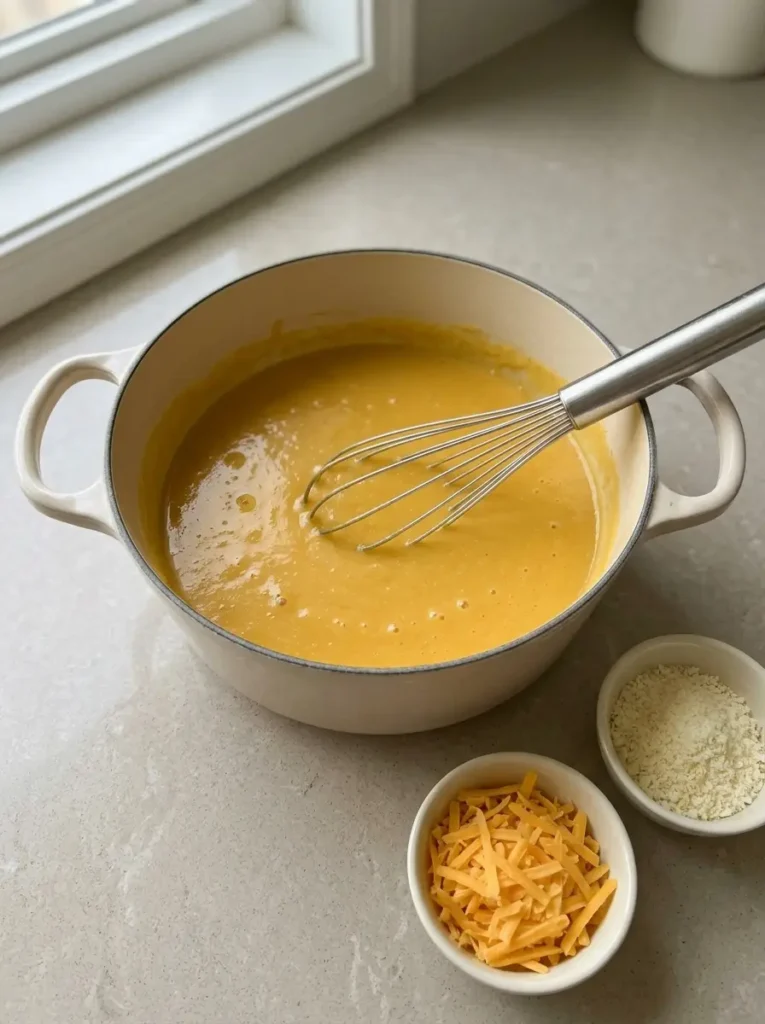
Melt the cheese over lower heat
Reduce the heat before adding the cheddar and Parmesan. Cheese melts more smoothly when the sauce is hot but not boiling.
Add the cheeses gradually and stir continuously in a broad figure-eight motion. This moves the sauce across the entire bottom of the pot and helps prevent cheese from collecting in one place.
Continue stirring until the sauce is smooth and no visible piles of shredded cheese remain.
Season with nutmeg and black pepper, then taste before adding salt. The amount needed depends on the stock and cheeses.
Combine the Pasta Without Making It Heavy
Add the well-drained pasta directly to the finished sauce. Fold rather than stirring aggressively so the pasta keeps its shape.
Continue folding until every piece is covered and no plain pasta remains at the bottom of the pot.
The finished sauce should cling to the ridges and curves while still moving easily when stirred. It should not sit in watery pools or form stiff clumps.
If the mixture looks too thick, add a small splash of warm chicken stock, cream, or reserved pasta water. Add only a little at a time because the sauce can become loose quickly.
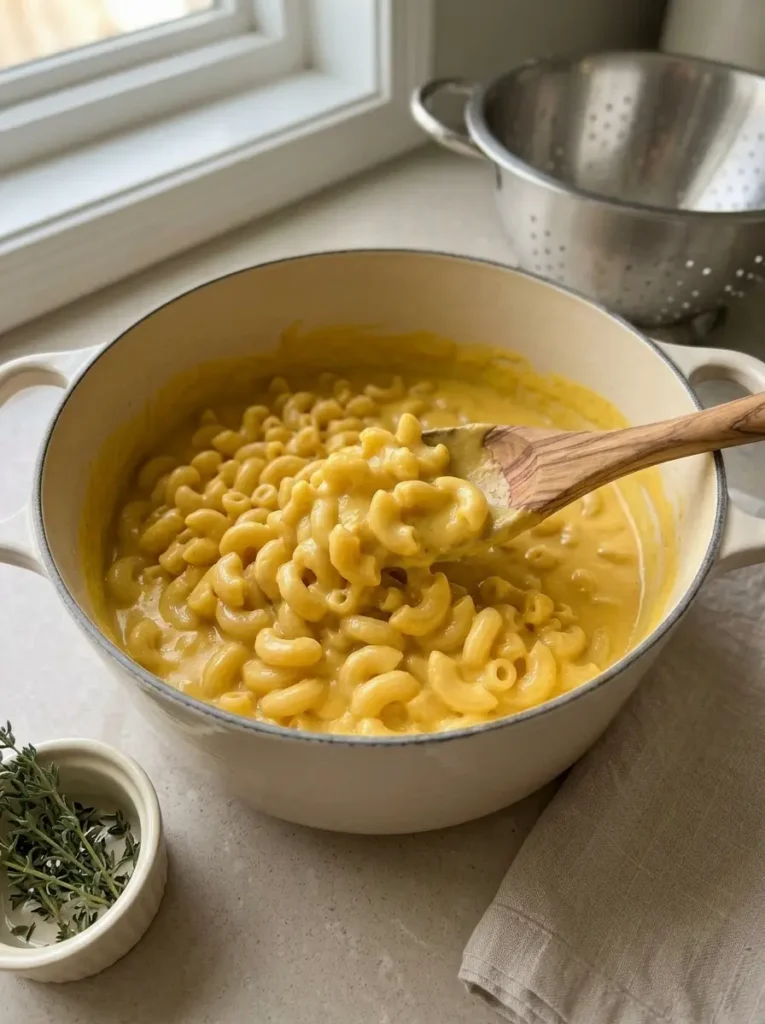
Serve the pasta promptly. Cheese sauce naturally thickens as it cools, so the smoothest and creamiest texture is available immediately after mixing.
How to Keep the Cheese Sauce Smooth
Thaw the squash completely
Partly frozen squash can cool the sauce and create uneven thick areas. Thaw it fully and stir it before it enters the pot.
Cook the flour briefly
Flour needs a short cooking period in the butter and oil. Adding stock immediately can leave the sauce with a noticeable raw flour taste.
Whisk the stock in gradually
Adding the stock in stages gives the flour time to disperse. Continue whisking around the bottom and corners of the pot.
Lower the heat before adding cheese
High heat can cause cheese proteins to tighten and release oil. Reduce the heat once the squash and cream mixture has become hot.
Add freshly grated cheese in portions
Small additions melt faster and more evenly than one large pile. Let each portion begin melting before adding more.
Do not boil the completed cheese sauce
Once the cheddar and Parmesan have melted, keep the sauce below a boil. Excessive heat can make it grainy or greasy.
Adjust the consistency before serving
The sauce will continue thickening as it stands. Add a small splash of warm liquid when the pasta becomes too firm or difficult to stir.
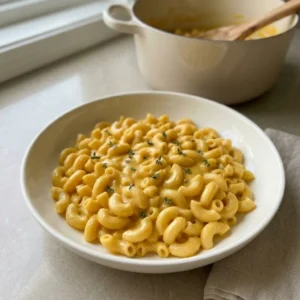
Butternut Squash Mac and Cheese
Ingredients
- 1 pound ridged macaroni tubatini, mini penne rigate, or another short pasta
- Salt for the pasta water and finished sauce
- 1 tablespoon extra-virgin olive oil
- 2 tablespoons unsalted butter
- 1/2 medium onion
- 2 tablespoons chopped fresh thyme leaves plus additional thyme for serving
- 3 tablespoons all-purpose flour
- 2 cups chicken stock
- 10 ounces frozen cooked butternut squash thawed
- 1 cup heavy cream or half-and-half
- 2 cups shredded sharp cheddar cheese
- 1/2 cup grated Parmesan cheese
- 1/4 teaspoon ground nutmeg
- Freshly ground black pepper
Instructions
Cook the pasta:
- Bring a large pot of salted water to a boil. Add the pasta and cook until al dente according to its package directions. Drain it thoroughly without rinsing.
Soften the onion and thyme:
- While the pasta cooks, heat the olive oil and butter in a medium heavy-bottomed pot over medium heat. Add the thyme and grate the onion directly into the pot. Cook for 1–2 minutes, stirring frequently, until the onion softens.
Prepare the thickened base:
- Add the flour and cook for 1–2 minutes while stirring. Gradually whisk in the chicken stock until the mixture becomes smooth.
Complete the cheese sauce:
- Whisk in the thawed butternut squash until smooth and warmed through. Stir in the cream or half-and-half and bring the sauce to a gentle bubble. Reduce the heat, then gradually stir in the cheddar and Parmesan using a figure-eight motion until melted. Season with nutmeg, black pepper, and salt as needed.
Combine and serve:
- Add the drained pasta to the sauce and fold until every piece is evenly coated. Divide among serving bowls and finish with additional fresh thyme.
Reduce the heat before adding the cheese and do not boil the completed sauce.
Easy Variations for Different Fall Dinners
Use vegetable stock
Low-sodium vegetable stock can replace chicken stock for a meat-free version. Because brands vary in flavor and salt level, taste the sauce after the cheese melts.
Change the pasta shape
Elbows, cavatappi, mini shells, gemelli, or ridged penne can replace the original pasta. Choose a shape that can hold a thick sauce.
Add a green vegetable
Cooked peas, chopped spinach, or small steamed broccoli florets can be folded in with the pasta.
Drain vegetables carefully before adding them so they do not introduce excess water into the cheese sauce.
Create a baked finish
Transfer the completed mac and cheese to a lightly greased baking dish and add a thin layer of buttered breadcrumbs.
Broil briefly until the surface becomes golden. Watch carefully because the topping can darken quickly.
Add a little garlic
A small amount of finely grated garlic can cook with the onion and thyme. Keep the quantity moderate so it does not overpower the squash.
Use a different cheese combination
Monterey Jack, Gruyère, or fontina can replace part of the cheddar. Keep at least one strongly flavored cheese so the sauce does not taste flat.
What to Serve With Butternut Squash Mac and Cheese
Butternut Squash Mac and Cheese can work as a main dish because the pasta and cheese make it substantial. A crisp or simply cooked vegetable helps balance the creamy sauce.
A green salad with a tart vinaigrette provides freshness and acidity. Lettuce, cucumber, apple slices, or dried cranberries can support the fall flavor without making the meal heavier.
Roasted broccoli, green beans, Brussels sprouts, or asparagus also work well. Keep their seasoning simple so the thyme, squash, cheddar, and Parmesan remain the main flavors.
For a larger dinner, serve smaller portions beside roasted chicken, baked salmon, turkey meatballs, or another uncomplicated protein.
Warm dinner rolls can be added for a gathering, although the pasta already provides a generous starch.
Make-Ahead and Storage Guidance
This recipe has its creamiest texture immediately after the pasta and sauce are combined, but several ingredients can be prepared ahead.
Grate the cheeses, measure the squash, chop the thyme, and prepare the onion in advance. Keep them covered in separate containers in the refrigerator.
The sauce can also be made shortly before serving. Reheat it slowly over low heat and whisk in a small amount of stock or cream before combining it with freshly cooked pasta.
Cool leftovers promptly and transfer them to a covered container. Refrigerate them and use them within three to four days.
Reheat it on the stovetop
Place the desired portion in a saucepan over low heat. Add a small splash of milk, cream, chicken stock, or water.
Stir gently until the sauce loosens and the pasta is heated through. Avoid high heat, which can cause the cheese sauce to separate.
Reheat it in the microwave
Place one portion in a microwave-safe bowl and add a teaspoon or two of liquid. Cover loosely and heat in short intervals.
Stir between intervals so the center and edges heat evenly. Add another small amount of liquid when necessary.
Freeze the sauce rather than the pasta
Cooked pasta can soften during freezing and reheating, while cheese sauce may lose some of its smoothness.
For better results, freeze the squash sauce separately. Thaw it in the refrigerator, reheat it gently, and combine it with freshly cooked pasta.
Frequently Asked Questions
Can I use fresh butternut squash?
Yes. Cook peeled butternut squash until completely tender, then mash or purée it until smooth. Measure the cooked squash before adding it to the sauce.
Why did my cheese sauce become grainy?
The heat may have been too high when the cheese was added, or the completed sauce may have boiled. Reduce the heat and add freshly grated cheese gradually.
Can I replace the cream with milk?
Whole milk can be used, but the sauce may be slightly lighter and thinner. Add it gradually and allow the flour-thickened base to become smooth before adding the cheeses.
How can I loosen thick leftover mac and cheese?
Add a small amount of milk, cream, stock, or water while reheating over low heat. Stir gently and add more liquid only when needed.