
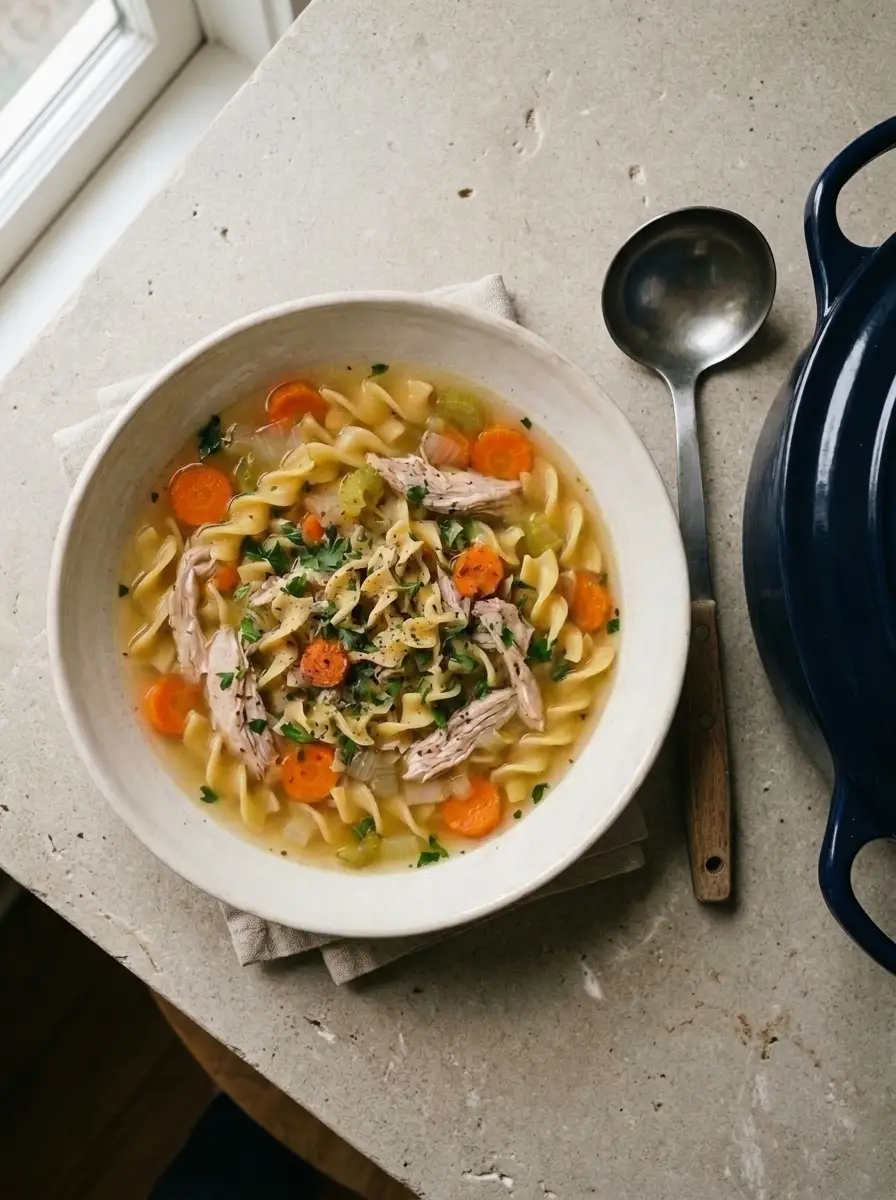
Chicken Noodle Soup combines tender chicken, wide egg noodles, carrots, celery, and onion in a deeply savory golden broth. Browning the chicken before simmering builds a stronger foundation, while removing the white meat before the dark meat keeps every piece tender. It is a comforting family dinner that can be prepared ahead, reheated easily, and adjusted with familiar vegetables or different noodle shapes.
Why This Soup Tastes Deeply Homemade
A satisfying Chicken Noodle Soup begins with the broth. The vegetables and noodles add color, texture, and substance, but the chicken and its cooking method create the flavor that holds the entire soup together.
This version starts by browning bone-in chicken directly in the soup pot. The hot surface creates a golden exterior on the chicken and leaves flavorful browned bits on the bottom. Once the stock and water are added, those bits loosen and become part of the broth.
Using bone-in pieces provides more flavor than simmering boneless chicken alone. A mixture of white and dark meat is especially effective because each contributes something different. Breast meat produces tender, familiar pieces for the finished bowls, while thighs create a richer broth during their longer simmer.
The chicken pieces are not removed at the same time. Breast meat is lean and can become dry when it stays in the pot for the full cooking period. Dark meat contains more connective tissue and benefits from additional gentle simmering. Giving each type the time it needs produces moist chicken and a fuller-tasting broth.
Carrots, celery, and onion join the pot after the chicken has flavored the liquid. This prevents the vegetables from cooking for so long that they lose their shape. Wide egg noodles are added last because they need only a few minutes to become tender.
The result is a classic chicken soup with a clear golden broth, recognizable vegetables, tender shredded chicken, and noodles that remain soft without becoming mushy. It feels generous enough for dinner while staying simple enough for a quiet family meal.
How Browning and Gentle Simmering Build the Broth
Browning creates the first layer of flavor
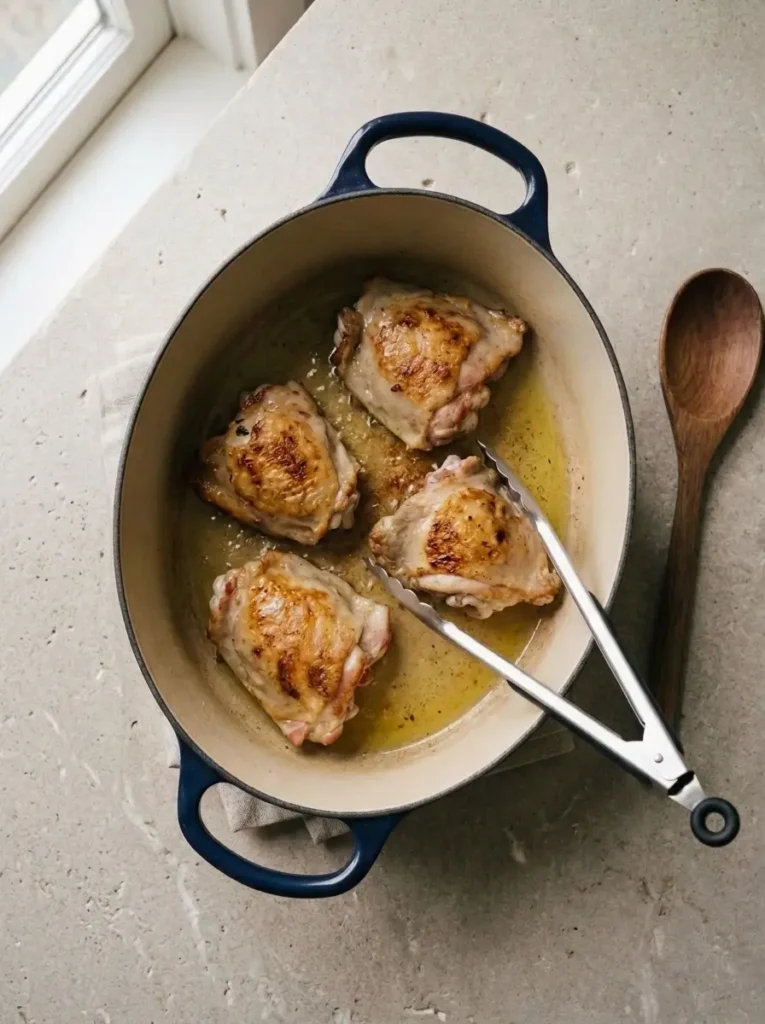
Heat the oil before placing the seasoned chicken in the Dutch oven. The chicken should make immediate contact with the hot surface rather than sitting in oil that is still warming.
Arrange the pieces in one uncrowded layer and let the first side cook without constant movement. Sliding or turning the chicken repeatedly prevents the surface from developing an even golden color.
The chicken does not need to cook through during this stage. Browning is only the beginning of the process. The meat finishes cooking after the stock, water, thyme, and bay leaf are added.
A bare simmer keeps the meat tender
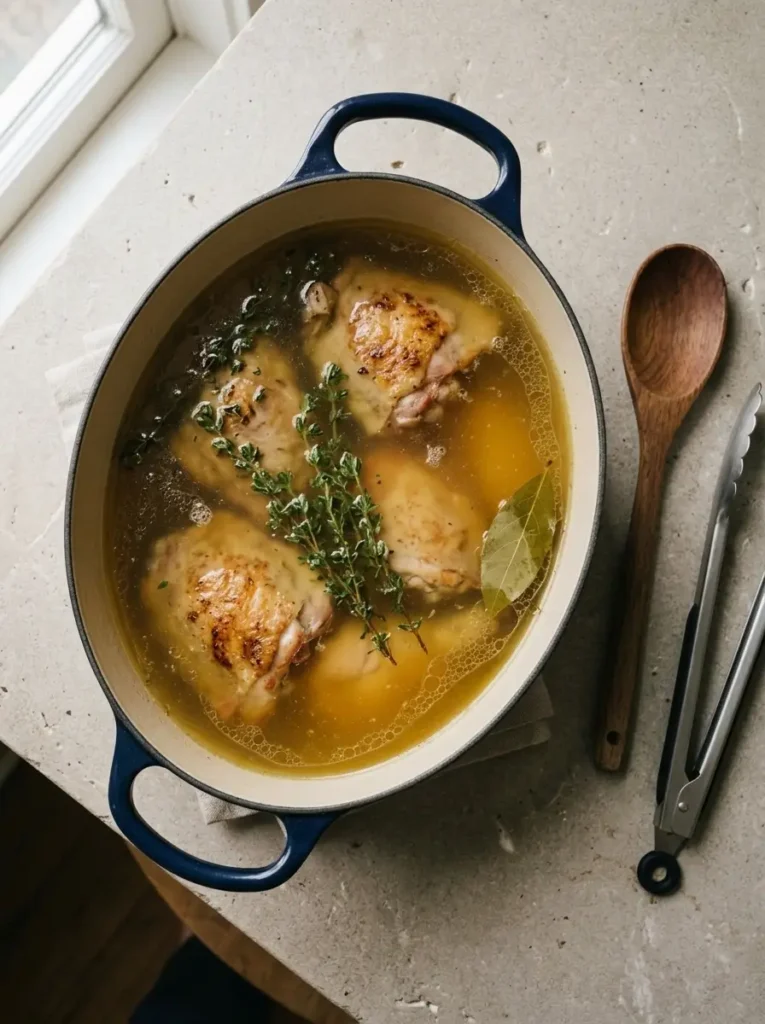
Once the broth reaches a simmer, lower the heat until only a few small bubbles break the surface occasionally. A hard rolling boil is unnecessary and can make the chicken less tender while causing the broth to evaporate too quickly.
Gentle heat gives the bone-in chicken time to flavor the liquid gradually. It also makes it easier to remove the breast meat at the correct point rather than discovering that it has become dry after an aggressive boil.
White and dark meat require different timing
Check the thickest part of the breast with an instant-read thermometer. Remove the breast pieces when they reach 165°F, then allow the dark meat to continue simmering until it is tender and easy to remove from the bone.
Let the cooked chicken cool briefly before handling it. Remove and discard the skin and bones, then pull the meat into bite-size pieces. Avoid shredding it too finely because larger pieces remain more noticeable among the noodles and vegetables.
Any juices collected on the cutting board can return to the pot with the shredded meat. They contain additional chicken flavor and should not be discarded.
Ingredients That Make the Biggest Difference
Bone-in chicken
Bone-in, skin-on chicken pieces give the broth a deeper poultry flavor than boneless meat. A combination of breasts and thighs gives you both tender white meat and richer dark meat.
Choose pieces that fit comfortably in the base of the pot. Brown them in batches when necessary rather than crowding the Dutch oven and allowing released moisture to steam the chicken.
Low-sodium chicken stock
Low-sodium stock provides a savory foundation while leaving room to adjust the seasoning near the end. The soup simmers for an extended period, so its saltiness becomes more concentrated as some liquid evaporates.
Starting with a lower-sodium product is safer than trying to correct an overly salty broth after the noodles have been added.
Fresh thyme and bay leaf
Thyme and bay leaf provide the familiar herbal background expected in homemade chicken noodle soup. They simmer with the chicken and are removed before the vegetables and noodles enter the pot.
Keep the thyme sprigs whole so they are easy to retrieve. The bay leaf should also be removed before serving.
Onion, carrots, and celery
This vegetable combination forms the aromatic base of many classic soups. Onion contributes gentle sweetness, celery adds a clean savory note, and carrots bring color and another layer of sweetness.
Cut the carrots and celery to a consistent thickness so they soften at approximately the same rate. Very thick carrot slices may remain firm after the celery and onion are ready.
Wide egg noodles
Wide egg noodles are substantial enough to hold their shape beside the chicken and vegetables. Their broad surface also carries more broth in every spoonful.
They cook directly in the soup, eliminating the need for a separate pasta pot. This method also lets them absorb some of the broth’s flavor as they soften.
Cook the noodles only until al dente. They continue softening in the hot broth after the burner is turned off and absorb additional liquid during storage.
Parsley and black pepper
Fresh parsley gives the finished bowls a bright green contrast against the golden broth. Black pepper adds gentle warmth without changing the traditional character of the soup.
Add both near the end so their flavor and appearance remain noticeable.
The Best Pot and Preparation Order
A large, deep Dutch oven is the most useful vessel for this recipe. Its broad base gives the chicken enough contact with the hot surface during browning, while its depth contains the broth, chicken, vegetables, and expanding noodles.
A heavy-bottomed pot distributes heat more evenly than a thin saucepan. This helps maintain a gentle simmer and reduces the risk of scorching around the bottom.
Keep sturdy kitchen tongs nearby for turning and removing the chicken. A wooden spoon is useful for scraping the browned bits from the pot once the liquid is added.
You will also need an instant-read thermometer. Insert it into the thickest portion of the chicken breast without touching the bone, which can affect the reading.
A large cutting board or rimmed tray provides a safe place for the cooked chicken to cool. Keep all the juices on the board so they can be returned to the soup.
The best workflow is:
- Brown the seasoned chicken.
- Add the stock, water, thyme, and bay leaf.
- Remove the breast meat when it reaches 165°F.
- Continue cooking the dark meat until tender.
- Shred the chicken and remove the herbs.
- Simmer the vegetables until almost tender.
- Add the noodles, then return the chicken.
- Adjust the seasoning and garnish the bowls.
Visual Cues for Chicken, Vegetables, and Noodles
Check the chicken with a thermometer
Color alone is not a dependable indication that chicken is safely cooked. The thickest part of the breast must reach 165°F.
Dark meat should also be fully cooked, but tenderness is an important additional cue. It should separate easily from the bones after its longer simmer.
Watch the broth rather than the clock alone
The broth should remain golden and savory, with only occasional small bubbles during the main simmer. If the liquid drops substantially below the chicken, add a small amount of hot water or unsalted stock.
Some evaporation is expected, but the finished soup should still contain enough broth to surround the noodles, vegetables, and chicken generously.
Test the carrots first
Carrots generally take longer to soften than onion or celery. Test one carrot slice before adding the noodles.
The vegetables should be tender enough to eat comfortably but should not collapse when stirred.
Remove the soup from the heat when the noodles are al dente
Do not wait until the noodles become extremely soft. They continue cooking from the residual heat in the broth.
When making the soup for immediate serving, add the chicken as soon as the noodles are nearly ready and heat it only long enough to warm through.
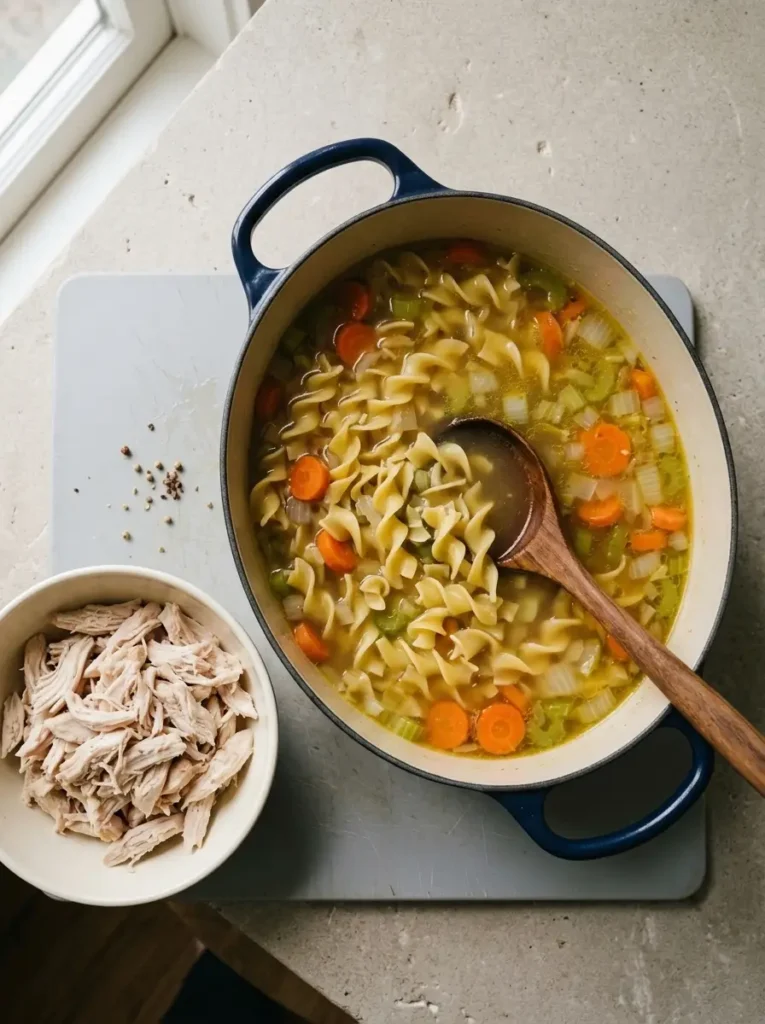
Tips for Clear Broth and Tender Noodles
Do not overcrowd the chicken
Brown the chicken in batches when the pot cannot hold every piece in one layer. Crowding traps steam and prevents the strong golden surface that gives the broth additional flavor.
Keep the broth below a rolling boil
Maintain a bare simmer after the liquid is added. Vigorous boiling can make the broth cloudier, reduce it too quickly, and produce less tender breast meat.
Remove the breast meat first
Do not leave the breast in the pot for the full dark-meat cooking time. Remove it as soon as it reaches the safe internal temperature.
Add the vegetables after the chicken
Waiting until the chicken is removed protects the vegetables from becoming overly soft during the long simmer.
Cook the noodles last
Egg noodles need only a short cooking period. Adding them too early can leave the soup with swollen noodles and very little broth.
Adjust the salt at the end
The amount of salt needed depends on the stock and how much the broth reduces. Taste after the chicken and noodles return to the pot, then add only what is necessary.
Chicken Noodle Soup
Ingredients
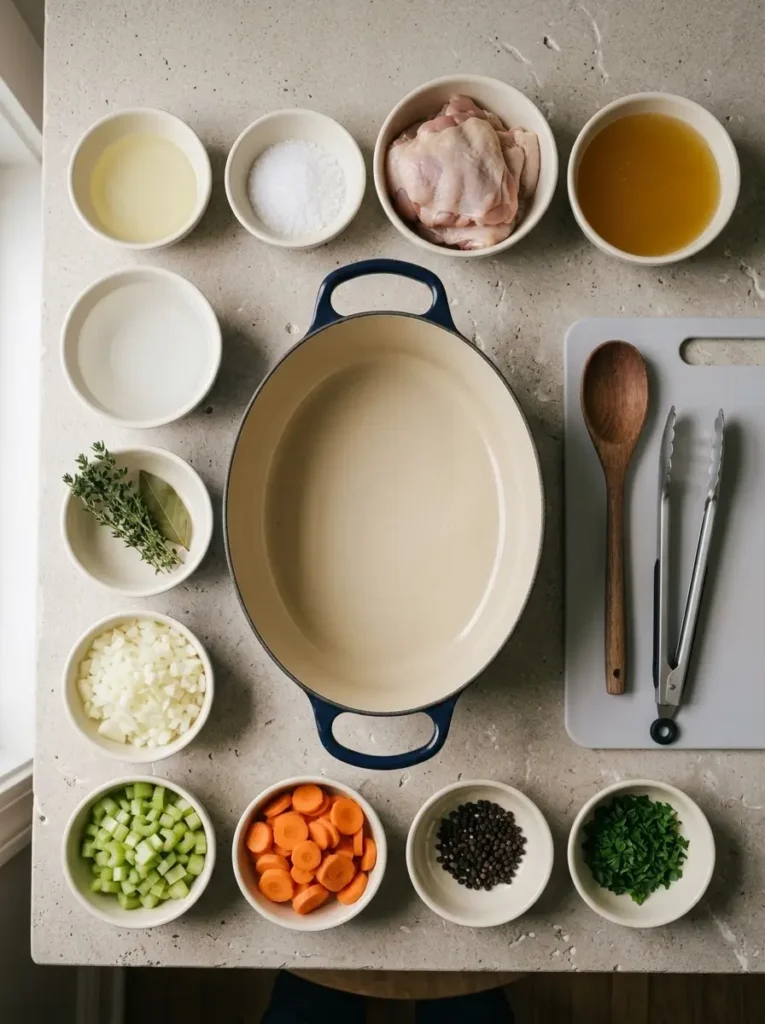
- 2 tablespoons vegetable oil
- 4 teaspoons kosher salt divided
- 2 pounds bone-in skin-on chicken pieces, preferably a mixture of breasts and thighs
- 8 cups low-sodium chicken stock
- 4 cups cold water
- 2 fresh thyme sprigs
- 1 bay leaf
- 1 small yellow onion coarsely chopped
- 2 celery ribs thinly sliced
- 1 large carrot peeled, halved lengthwise, and thinly sliced
- 6 ounces wide egg noodles
- 1 teaspoon freshly ground black pepper plus more for serving
- 1/4 cup finely chopped fresh parsley
Instructions
Brown the chicken:
- Heat the vegetable oil in a large, deep Dutch oven over medium-high heat. Season the chicken on all sides with 2 teaspoons kosher salt. Arrange the pieces skin-side down and cook without moving until golden, about 5 minutes. Turn the chicken and brown the second side for about 5 minutes.
Start the broth:
- Pour in the chicken stock and cold water, then scrape the browned bits from the bottom with a wooden spoon. Add the thyme and bay leaf. Bring the liquid to a bare simmer, then reduce the heat to medium-low.
Remove the breast meat:
- Simmer gently until an instant-read thermometer inserted into the thickest part of the chicken breast reaches 165°F, about 20–30 minutes. Transfer the breast pieces to a cutting board and leave the dark meat in the pot.
Finish and shred the chicken:
- Continue simmering the dark meat for about 40 minutes, or until tender. Transfer it to the cutting board and cool for at least 10 minutes. Remove and discard the skin and bones, then shred all the chicken into bite-size pieces. Remove the thyme and bay leaf from the broth.
Cook the vegetables:
- Add the onion, celery, and carrot to the broth. Maintain a bare simmer and cook, stirring occasionally, until the vegetables are just tender, about 5 minutes.
Add the noodles and chicken:
- Add the egg noodles and cook, stirring occasionally, until just al dente, about 5 minutes. Return the shredded chicken and any juices from the cutting board to the pot.
Season and serve:
- Stir in the black pepper. Taste the broth and add some or all of the remaining 2 teaspoons kosher salt as needed. Divide the soup among bowls and finish with parsley and additional black pepper.
Remove the breast meat as soon as it reaches 165°F; the dark meat requires additional cooking time.
Store planned leftover noodles separately so they do not absorb the broth and become overly soft.
Make It Ahead Without Losing the Noodles
The broth, chicken, and vegetables can be prepared in advance, but the noodles should be left out until the soup is reheated.
Complete the broth and shred the chicken, then cool the soup promptly. Transfer it to shallow airtight containers and refrigerate it.
When you are ready to serve, return the broth, vegetables, and chicken to a large pot. Bring the soup to a simmer, add the noodles, and cook them until al dente.
This approach preserves the broth and prevents the pasta from becoming soft while it sits in storage. It is especially useful when preparing the soup for several dinners or making it one day before a family gathering.
The vegetables can also be cut ahead and stored in a covered container. Keep the parsley separate and chop it close to serving time for the freshest color.
Simple Variations That Keep the Soup Familiar
Use only chicken thighs
Bone-in chicken thighs can replace the mixture of breast and dark meat. They create a rich broth and remain tender during a longer simmer.
Remove the skin and bones after cooking, then return the meat to the pot near the end.
Use leftover cooked chicken
Leftover roasted or poached chicken can shorten the process, although the broth will not receive the same depth from browning and simmering raw bone-in pieces.
Prepare the broth and vegetables first, then add cooked chicken only long enough to heat it through.
Change the noodle shape
Medium egg noodles, rotini, small shells, or another sturdy pasta can replace wide egg noodles.
Cooking times vary, so use the package directions and begin testing the pasta early.
Add another vegetable
Peas, green beans, or spinach can be added near the end. Choose vegetables that cook quickly and do not require a separate long simmer.
Keep the quantity moderate so the soup retains a balanced amount of broth, chicken, noodles, and vegetables.
Brighten individual servings
A small squeeze of fresh lemon juice can be added to individual bowls for a brighter finish.
Add it at serving rather than simmering it in the entire pot, allowing each person to adjust the flavor.
What to Serve With Chicken Noodle Soup
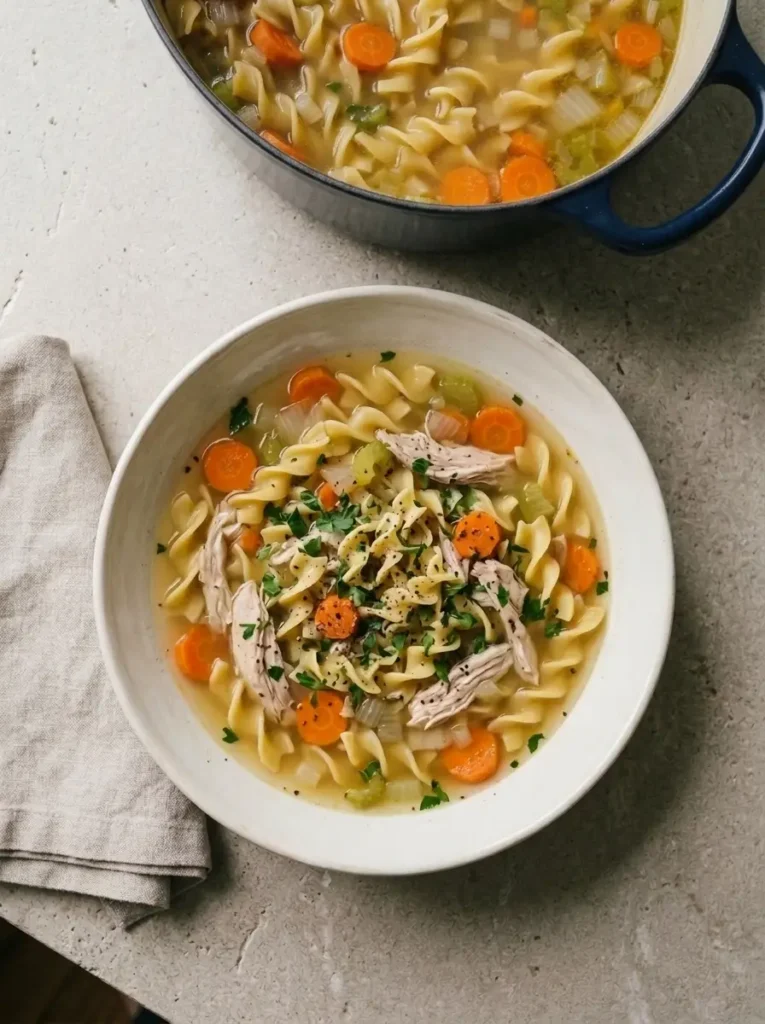
Chicken Noodle Soup can stand alone as a complete dinner when each bowl includes plenty of chicken, vegetables, and noodles.
Warm dinner rolls, biscuits, or crusty bread are useful for soaking up the broth. Choose a simple bread that does not compete with the thyme and chicken flavors.
A crisp green salad adds cool texture and acidity. Lettuce, cucumber, tomatoes, and a light vinaigrette are enough for an uncomplicated side.
Roasted green beans, carrots, or zucchini work when you prefer an additional warm vegetable.
For lunch, serve a smaller bowl beside half a sandwich or a simple vegetable plate.
How to Store and Reheat the Soup
Cool leftover soup promptly and transfer it to shallow airtight containers. Refrigerate it for up to three or four days.
Whenever possible, separate the noodles from the broth before storage. Noodles left in the soup continue absorbing liquid and can become overly soft.
Reheat it on the stovetop
Transfer the broth, vegetables, and chicken to a saucepan or Dutch oven. Bring the soup to a boil, then reduce the heat.
Add separately stored noodles only long enough to heat them. Reheated leftovers should reach 165°F.
Reheat one bowl
Place one portion in a microwave-safe bowl and cover it loosely. Heat in short intervals and stir between each interval.
Check the temperature in more than one place because chicken pieces and noodles may heat at different rates.
Freeze it without the noodles
Freeze the cooled broth, chicken, and vegetables in airtight freezer-safe containers.
Cooked egg noodles can become very soft after freezing and reheating. Prepare fresh noodles when the thawed soup returns to a simmer.
Thaw frozen soup in the refrigerator when possible, then bring it to a boil and reheat it thoroughly before serving.
Frequently Asked Questions
Why should I brown the chicken first?
Browning creates a golden surface and leaves concentrated chicken flavor on the bottom of the pot. The stock and water loosen those browned bits and carry their flavor into the broth.
Can I make Chicken Noodle Soup with boneless chicken?
Yes, but bone-in chicken generally gives the broth a fuller flavor. Boneless chicken also cooks more quickly, so check it early and remove it as soon as it reaches 165°F.
Why are my egg noodles mushy?
The noodles were likely cooked too long or stored in the broth. Cook them only until al dente and store them separately when you expect leftovers.
Can I make this soup the day before?
Yes. Prepare the broth, chicken, and vegetables, then refrigerate them without the noodles. Reheat the soup and add the noodles shortly before serving.
How can I fix broth that tastes too salty?
Add unsalted stock or hot water gradually until the flavor becomes balanced. Avoid adding all the extra liquid at once because you may dilute the chicken and herb flavors too much.