
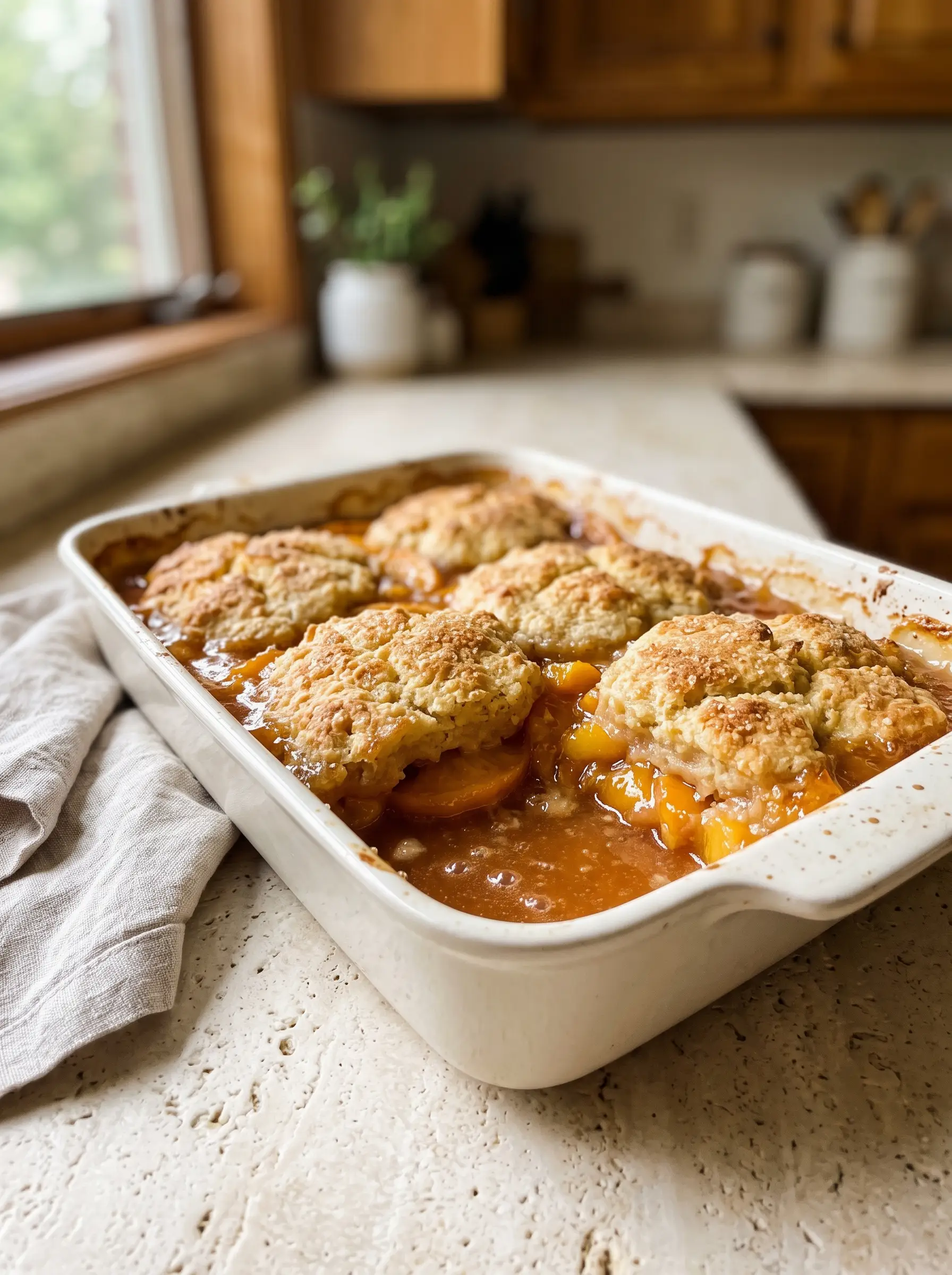
Classic Peach Cobbler pairs juicy peaches with a tender biscuit topping that turns golden as it bakes. The fruit underneath becomes soft and syrupy, while the exposed topping develops lightly crisp edges and a buttery center. This peach cobbler from scratch needs no rolled pie crust or complicated decoration, making it a practical summer dessert for family dinners, cookouts, and casual gatherings.
The Peach-and-Biscuit Texture That Defines This Cobbler
A good Classic Peach Cobbler should deliver two different textures in the same spoonful. The fruit layer needs to be soft and juicy without turning into thin peach soup, while the topping should be golden on the surface and tender underneath.
This recipe uses a dropped biscuit-style topping rather than a cake batter or pie crust. Small portions of dough are placed across the peaches, leaving a few openings where the filling can bubble through. That uneven surface gives cobbler its rustic appearance and creates a mixture of crisp exposed edges and soft sections that absorb some of the peach juices.
The peaches are mixed with two sugars, lemon juice, salt, and enough flour to lightly thicken the liquid released during baking. The source specifically adjusts the flour according to how juicy the peaches are, which is important because ripe summer fruit can vary considerably in moisture.
Buttermilk gives the biscuit topping moisture and a mild tang. Cold butter remains in small pieces throughout the dough, helping the topping bake into tender sections rather than one dense layer.
Turbinado sugar is scattered over the unbaked dough. Its larger crystals add a light crunch and help the high points of the topping develop a caramelized finish. The result is an old fashioned peach cobbler that looks informal but still has a clear contrast between syrupy fruit and buttery biscuit.
Why the Fruit and Biscuit Layers Work Together
The peach filling thickens as it bakes
Fresh peaches release juice when they are mixed with sugar and heated. Flour absorbs part of that liquid, helping the filling become glossy and spoonable as it bubbles around the topping.
The amount of flour is not completely fixed because the peaches determine how much thickening is needed. Firm-ripe fruit that releases less liquid needs less, while extremely juicy peaches may need the higher amount provided in the recipe card.
The filling will still appear loose when the cobbler first leaves the oven. Cooling is part of the recipe, not an optional delay. As the dish rests, the hot fruit stops bubbling and the syrup begins settling around the peach slices.
Lemon keeps the peaches from tasting flat
A small amount of lemon juice sharpens the fruit flavor and balances the combined sweetness of the peaches and sugars.
It should not make the filling taste like lemon. Its purpose is to keep the peach layer bright enough to stand beside the rich biscuit topping.
Cold butter creates a lighter topping
The butter is worked into the dry ingredients until the mixture contains small, visible pieces.
Those pieces soften and melt during baking, leaving tender pockets throughout the biscuit layer. Mixing until the butter disappears completely can produce a more uniform but heavier topping.
Buttermilk brings the dough together
The buttermilk should be stirred in only until a shaggy dough forms. This topping does not need to become smooth, elastic, or perfectly shaped.
A rustic dough is appropriate for cobbler. Overmixing develops more gluten and can make the topping tougher than intended.
Choose Peaches That Hold Their Shape
Ripe peaches should smell fragrant and give slightly when pressed, but they should not feel mushy. Peaches that are already very soft can break down too much during baking and produce a filling with little visible fruit texture.
This version does not require peeling. The thin summer peach skins become tender during baking, so leaving them on saves preparation time.
Peeling is still an option when you prefer an especially smooth filling. A paring knife works for firm-ripe peaches, while a brief blanch-and-cool method can loosen the skins on fully ripe fruit. Allrecipes also notes that cobbler can be made with the skins left on because they soften as the dessert bakes.
Slice the peaches to a similar thickness so they soften at approximately the same rate. Very thin pieces may disappear into the syrup, while thick wedges may remain firmer than the surrounding fruit.
Fresh fruit produces the texture intended by the source recipe. Frozen peaches can be used for a later variation, but they need to be thawed and drained so excess ice does not thin the filling. Canned peaches are softer and should be drained especially well. Other tested cobbler recipes also advise draining canned or thawed fruit before substitution.
What Each Baking Ingredient Contributes
Brown and granulated sugar
Brown sugar adds a light caramel note to the filling, while granulated sugar provides clean sweetness.
Using both keeps the peaches from tasting one-dimensional. The biscuit topping contains its own sugar, so the fruit and pastry remain flavorful separately.
All-purpose flour
Flour performs two jobs in this dessert.
In the peach layer, it thickens the released juice. In the topping, it provides the structure needed to hold the butter and buttermilk in a tender biscuit dough.
Measure flour carefully. Packing too much into the cup can make the topping dry and heavy.
Baking powder
Baking powder lifts the dough as it bakes.
Because the topping is dropped in separate portions, the leavening helps each mound expand and develop a lighter interior.
Kosher salt
Salt balances the sweetness in both the peaches and the topping.
It should not be noticeable as a separate flavor, but omitting it can make the dessert taste flatter and more sugary.
Buttermilk
Buttermilk hydrates the dry mixture and contributes a subtle tang.
It should be cold when added so the butter remains firm until the cobbler enters the oven.
Turbinado sugar
Turbinado sugar is used on the surface rather than mixed into the dough.
Its coarse crystals remain more noticeable after baking than regular granulated sugar, creating small areas of crunch over the golden topping.
Use a Wide Dish and Simple Tools
A rectangular 9×13-inch baking dish provides enough surface area for the peaches to cook in an even layer and for the biscuit portions to spread without forming one overly thick mass.
Use a ceramic, glass, or metal dish of similar capacity. Baking time may vary slightly because different materials heat and retain heat differently.
Grease the baking dish with unsalted butter before adding the fruit. Cover the bottom, corners, and lower sides so the bubbling peach syrup does not stick firmly to the dish.
A large mixing bowl is needed for the peaches. Use a separate medium bowl for the topping so the dry ingredients and butter can be combined without crushing the fruit.
A pastry blender is helpful for cutting the cold butter into the flour, although clean fingertips can also be used. Work quickly if using your hands so their warmth does not soften the butter too soon.
Two ordinary spoons are enough to portion the dough. The topping does not need to be rolled, cut, or arranged in a decorative pattern.
Build the Cobbler in the Right Order
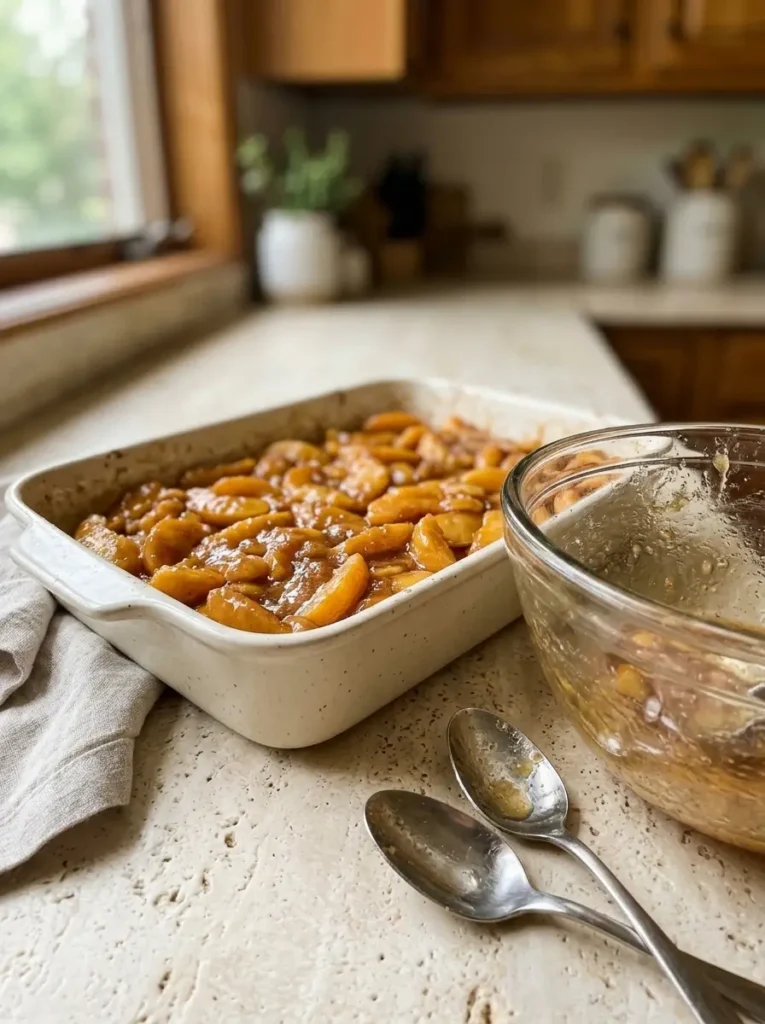
Begin with the baking dish and peach filling. The fruit should be completely coated with the sugars, lemon juice, salt, and flour before it is transferred to the pan.
Spread the peaches from corner to corner so the filling has a relatively even depth. A few overlapping slices are expected, but large piles can cook more slowly than the surrounding fruit.
Next, combine the topping’s dry ingredients. Cut in the cold butter until the mixture resembles coarse crumbs with small butter pieces still visible.
Add the buttermilk and stir with a fork. Stop when no large pockets of dry flour remain and the dough holds together in rough, moist clumps.
Use two spoons to drop the dough across the peach filling. Leave a few small spaces between portions rather than sealing the fruit beneath one solid layer. The source specifically allows some peaches to remain visible through the topping.
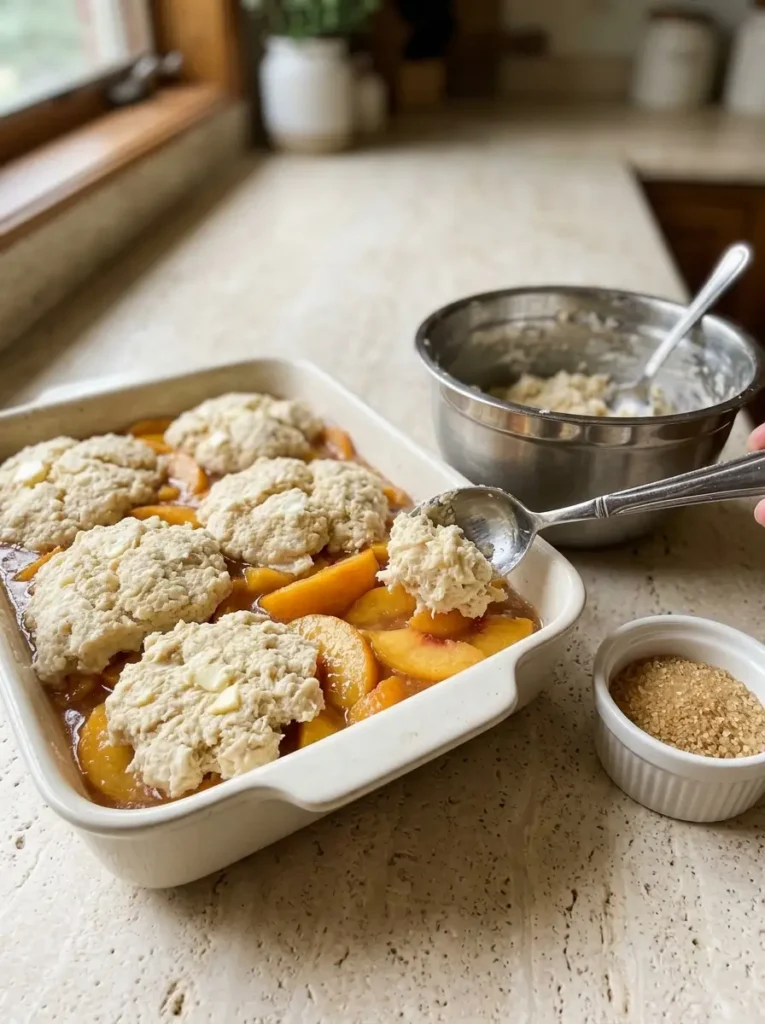
Finish with turbinado sugar and place the dish in the preheated oven. During baking, the biscuit portions expand and brown while the peach filling bubbles through the open areas.
Read the Golden Top and Bubbling Edges
Color is one of the clearest doneness cues. The biscuit topping should be golden rather than pale, particularly across the highest areas.
Look at the spaces around the dough. The peach filling should be bubbling actively at the edges and through some openings in the topping. This method uses both a golden biscuit surface and bubbling filling as the finishing signs.
A pale top may still contain underbaked dough in the center. If the surface is browning quickly but a central biscuit portion remains wet, loosely place foil over the dish and continue baking.
The filling may look thinner than expected while it is extremely hot. Do not add more flour after baking. Allow the cobbler to cool for the full resting period before judging its final consistency.
The topping should feel set when gently pressed. Its top will be lightly crisp, while the underside touching the peaches will remain softer and absorb some syrup.
Keep the Biscuit Topping Tender
Keep the butter cold
Prepare the dry ingredients before taking the butter from the refrigerator.
Cut it into the flour quickly and stop while small pieces remain visible.
Stir only until combined
The dough does not need to look polished.
Stop mixing once the buttermilk has moistened the flour and the dough forms uneven clumps. The source warns against overworking the topping because visible butter pieces help create light biscuits.
Do not spread the dough like batter
Drop the topping in separate portions.
Pressing or smoothing it across the entire dish can compact the dough and block the visual bubbling that helps identify doneness.
Adjust the filling for the peaches
Use the lower flour amount when the fruit is firm-ripe and moderately juicy.
Use the higher amount only when the sliced peaches release a large quantity of juice in the bowl.
Let the cobbler cool
Resting allows the fruit syrup to settle and protects the tender topping from breaking apart immediately.
The cobbler should still be warm when served, but it should no longer be bubbling aggressively.
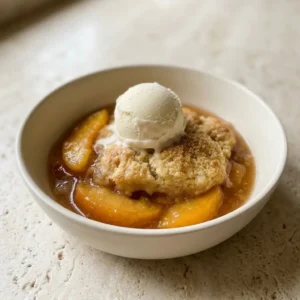
Classic Peach Cobbler
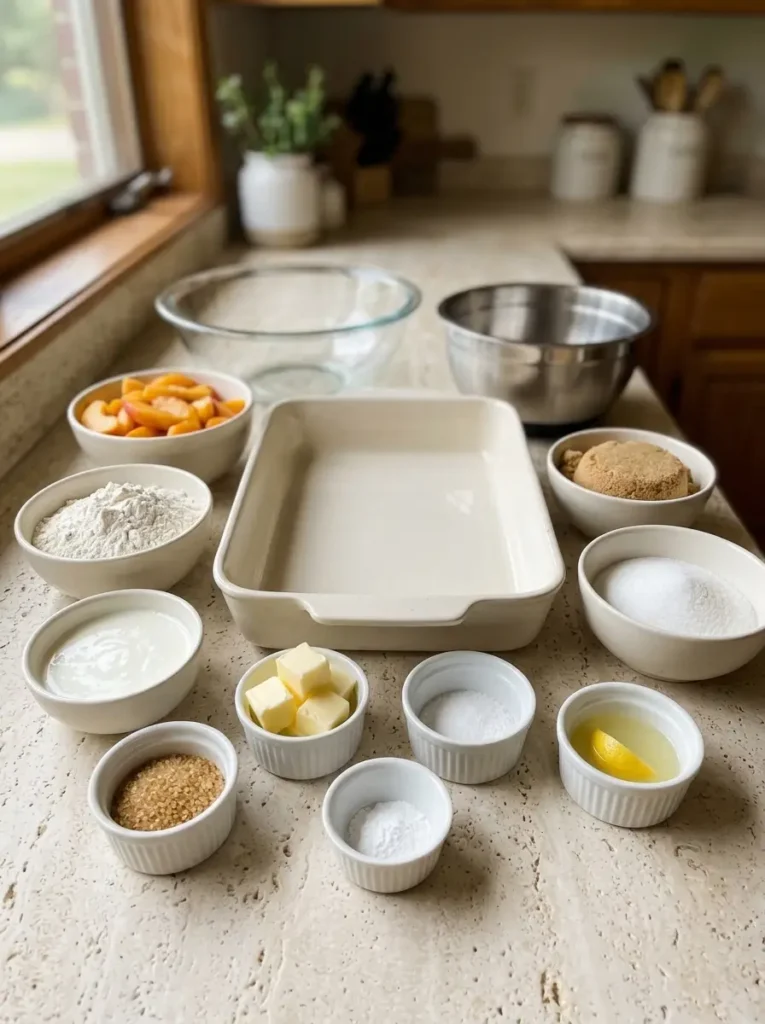
Ingredients
Peach Filling
- Unsalted butter for greasing
- 3 pounds ripe peaches about 6–8 peaches
- 1/2 cup packed light brown sugar
- 1/2 cup granulated sugar
- 1 tablespoon lemon juice
- 1/4 teaspoon kosher salt
- 3 –4 tablespoons all-purpose flour
Biscuit Topping
- 1 3/4 cups all-purpose flour plus more for dusting
- 1/4 cup granulated sugar
- 1 tablespoon baking powder
- 3/4 teaspoon kosher salt
- 1/2 cup cold unsalted butter cut into small cubes
- 3/4 cup buttermilk well shaken
- Turbinado sugar for sprinkling
- Vanilla ice cream or whipped cream for serving
Instructions
Prepare the oven and peaches:
- Preheat the oven to 350°F. Butter the bottom and sides of a 9×13-inch baking dish. Pit the peaches and cut them into thin, evenly sized slices.
Mix the peach filling:
- Place the peaches in a large bowl with the brown sugar, granulated sugar, lemon juice, and salt. Sprinkle with 3 tablespoons flour and toss until evenly coated. Add the remaining tablespoon only when the peaches release a large amount of juice. Spread the filling evenly in the prepared dish.
Combine the topping ingredients:
- Whisk the flour, granulated sugar, baking powder, and salt in a medium bowl. Cut in the cold butter with a pastry blender, fork, or fingertips until the mixture resembles coarse crumbs with pea-size butter pieces.
Finish the biscuit dough:
- Pour in the buttermilk and stir gently with a fork until a shaggy dough forms. Stop mixing as soon as the dry ingredients are moistened.
Top and bake the cobbler:
- Use two spoons to drop the biscuit dough evenly over the peaches, leaving a few small areas of fruit exposed. Sprinkle the surface with turbinado sugar. Bake for about 50 minutes, or until the biscuits are golden and the peach filling bubbles around the edges.
Cool and serve:
- Place the baking dish on a wire rack and cool for at least 20 minutes. Serve the cobbler warm with vanilla ice cream or whipped cream.
Do not overmix the biscuit dough; small visible pieces of cold butter help keep the topping tender.
Flavor Variations and Topping Ideas
Add a little cinnamon
A small amount of ground cinnamon can be tossed with the peaches for a warmer flavor.
Keep it light so the spice does not overpower ripe summer fruit.
Add nutmeg or ginger
Nutmeg adds a familiar old-fashioned dessert note, while ginger gives the peaches a brighter, lightly spicy edge.
Use either in a restrained amount. The source recipe is intentionally simple and does not require additional spices.
Combine peaches with berries
Blueberries, blackberries, or raspberries can replace a portion of the peaches.
Keep the total amount of fruit similar and watch the filling consistency because berries may release a different amount of juice.
Use frozen peaches
Thaw the peaches completely and drain away excess liquid before mixing the filling.
Frozen fruit may soften more quickly than fresh peaches, so avoid cutting or stirring it excessively.
Use canned peaches
Drain canned peaches thoroughly and choose fruit packed in juice rather than heavy syrup when possible.
Because canned peaches are already soft, fold them carefully and expect a more tender filling than one made with fresh fruit.
Change the finishing sugar
Regular granulated sugar can replace turbinado sugar when necessary, although the surface will have a finer, less crunchy finish.
Coarse sparkling sugar can also work, but it may create a sweeter and more decorative appearance.
Serve It Warm Without Losing the Filling
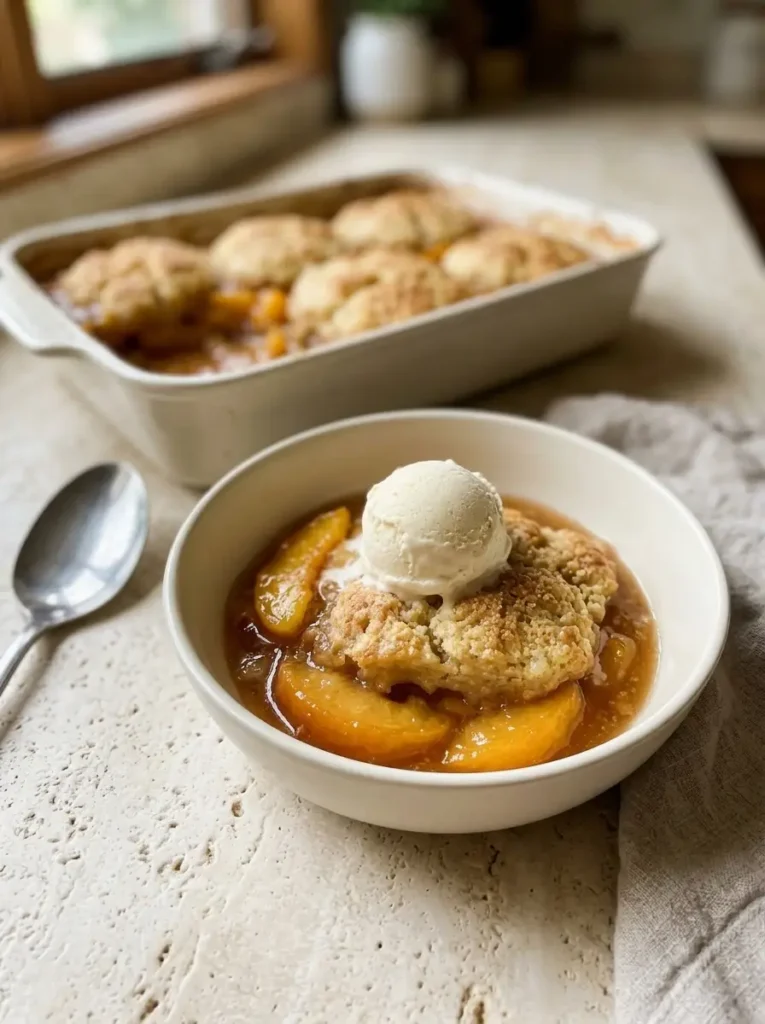
Allow the cobbler to cool before taking the first portion. Cutting into it immediately can cause the hot syrup to run away from the fruit.
Use a broad serving spoon rather than trying to cut rigid squares. Cobbler is intended to be spooned into bowls or onto dessert plates.
A scoop of vanilla ice cream creates a hot-and-cold contrast and melts into the peach syrup. Lightly sweetened whipped cream gives a softer finish without chilling the dessert as quickly.
For a family gathering, place the baking dish on a heat-safe surface and serve directly from the pan. The rustic topping does not need additional decoration.
Divide the cobbler into eight generous servings or ten smaller portions when it is served after a larger meal.
Make Ahead, Store, and Reheat
The topping has its best texture on the day the cobbler is baked.
To prepare ahead, slice the peaches and mix the dry topping ingredients separately. Refrigerate the peaches and keep the dry mixture covered at room temperature. Add the lemon juice, sugars, salt, and flour to the fruit shortly before assembly.
Cut the cold butter into the topping and add the buttermilk only when you are ready to bake. Preparing the completed biscuit dough too early can reduce its lift.
Cool leftovers, cover them, and refrigerate promptly. USDA guidance recommends using most cooked leftovers within three to four days.
Reheat in the oven
Place the desired portion in an oven-safe dish and warm it at 350°F until heated through.
Cover loosely at first if the topping is already deeply browned, then uncover near the end to refresh the surface.
Reheat in the microwave
Microwave individual portions in short intervals.
The filling will heat more quickly than the topping, so allow the serving to stand briefly before eating.
Freeze the baked cobbler
Cool the cobbler completely and divide it into freezer-safe portions.
The peach filling freezes better than the biscuit topping, which may become softer after thawing. Reheat in the oven to restore as much surface texture as possible.
Frequently Asked Questions
Do I have to peel peaches for Classic Peach Cobbler?
No. Leave the skins on, and thin peach skins become tender during baking.
Peel them when you prefer an especially smooth filling or when the skins are unusually thick.
Can I make this cobbler with frozen or canned peaches?
Yes, but thaw and drain frozen peaches and drain canned peaches thoroughly.
Both alternatives are softer and may release different amounts of liquid, so judge the flour by the moisture in the bowl. Allrecipes reports successful cobblers made with both properly drained frozen and canned peaches.
How do I know when the cobbler is finished?
The biscuit topping should be golden, and the peach filling should bubble visibly around the edges and through the gaps in the dough.
If the top is pale or the center of a biscuit portion looks wet, continue baking.
Why is my peach filling runny?
The peaches may have been exceptionally juicy, the lower flour amount may have been insufficient, or the cobbler may have been served before it cooled.
Let the dish rest for at least 20 minutes. The syrup thickens as the temperature drops.