
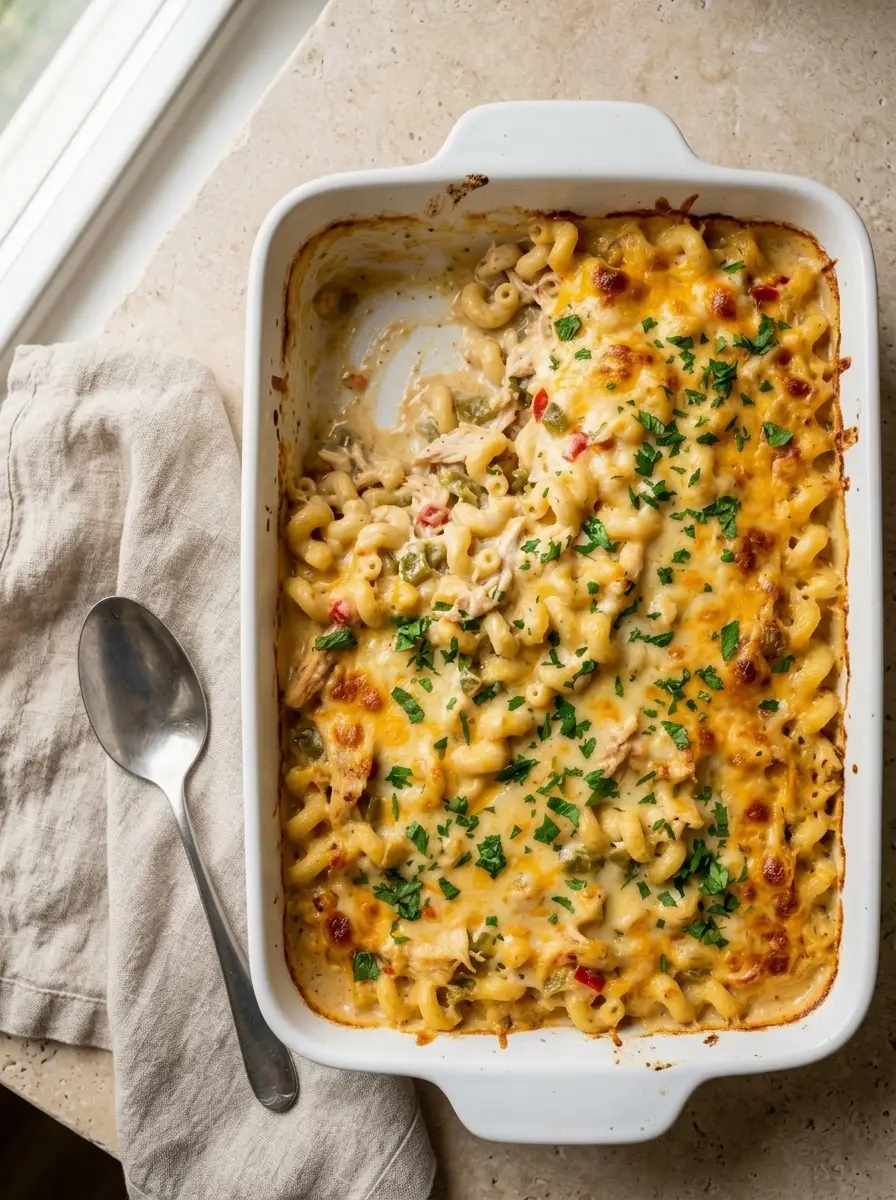
Disappearing Chicken Casserole brings shredded chicken, cavatappi pasta, mild green chiles, pimientos, and sharp cheddar together in a rich, creamy sauce. Using rotisserie chicken keeps the active preparation short, while the pasta makes every serving satisfying enough for dinner. Bake it in one family-size dish and serve it with a crisp salad or simple green vegetable to balance the creamy filling.
Why This Casserole Disappears So Quickly
The playful name suggests a casserole that does not remain on the table for long. Its appeal comes from familiar ingredients presented in a generous, easy-to-serve form: tender pasta, shredded chicken, creamy sauce, melted cheese, and small pieces of mild peppers.
Unlike a casserole based on condensed soup, this recipe builds its sauce with four creamy ingredients. Cream cheese provides thickness, sour cream contributes a light tang, mayonnaise keeps the mixture smooth, and evaporated milk makes it loose enough to coat the pasta.
Taco seasoning, green chiles, black pepper, and pimientos keep that rich base from tasting flat. The seasoning is noticeable without making the casserole strongly Tex-Mex, while the peppers add gentle flavor and visible color throughout the pale sauce.
Cavatappi gives the filling structure. Its curves, ridges, and hollow center collect the sauce, helping every serving contain both creamy filling and pasta. The sturdy shape also holds up better during folding and baking than a delicate noodle.
Rotisserie chicken turns the casserole into a realistic busy-night dinner. Because the meat is already cooked, there is no separate chicken-preparation stage. The assembled dish only needs enough oven time to heat through before the peppers and final cheese layer are added.
The full casserole provides eight servings, which makes it useful for a larger family dinner, casual gathering, meal train, or potluck. It can be transported in the same dish used for baking and divided with one broad serving spoon.
This recipe became its most-saved casserole in January 2026, reflecting the appeal of its short active preparation, creamy texture, and rotisserie-chicken shortcut.
Four Shortcuts Behind the Easy Preparation
Start with cooked chicken
The recipe uses shredded cooked chicken from a large rotisserie chicken. This removes the need to handle and cook raw poultry before assembling the casserole.
Remove the skin and bones before shredding the meat. Small, loose shreds distribute more evenly than large chunks and are easier to fold through the thick sauce.
A combination of breast and thigh meat gives the filling a moist texture. Plain leftover roasted, baked, or poached chicken may also be used when it is not covered with a strongly flavored glaze or sauce.
Use one bowl for the sauce and filling
The cream cheese, sour cream, mayonnaise, evaporated milk, seasonings, and first portion of cheddar are mixed in one large bowl. The chicken and cooked pasta are then folded into that same mixture.
Using a sufficiently large bowl matters. The pasta needs room to move through the sauce without spilling over the sides or breaking under aggressive stirring.
Choose a sauce that needs no stovetop cooking
The creamy ingredients are whisked together without preparing a separate roux or cheese sauce on the stove.
Fully softened cream cheese is essential. When it remains cold and firm, small lumps can persist even after the other ingredients are added.
Cut the cream cheese into cubes and allow it to soften evenly. Whisking it first with the evaporated milk can make the base smoother before the sour cream, mayonnaise, seasonings, and cheddar are incorporated.
Finish the cheese under direct heat
Most of the casserole cooks at 350°F, but the final cheddar layer receives a brief broiler finish. This melts the cheese quickly and creates lightly browned areas without requiring a long second baking period.
The broiling stage requires close attention. The cheese can change from melted to overly dark within a short period, especially when the baking dish sits close to the heat source.
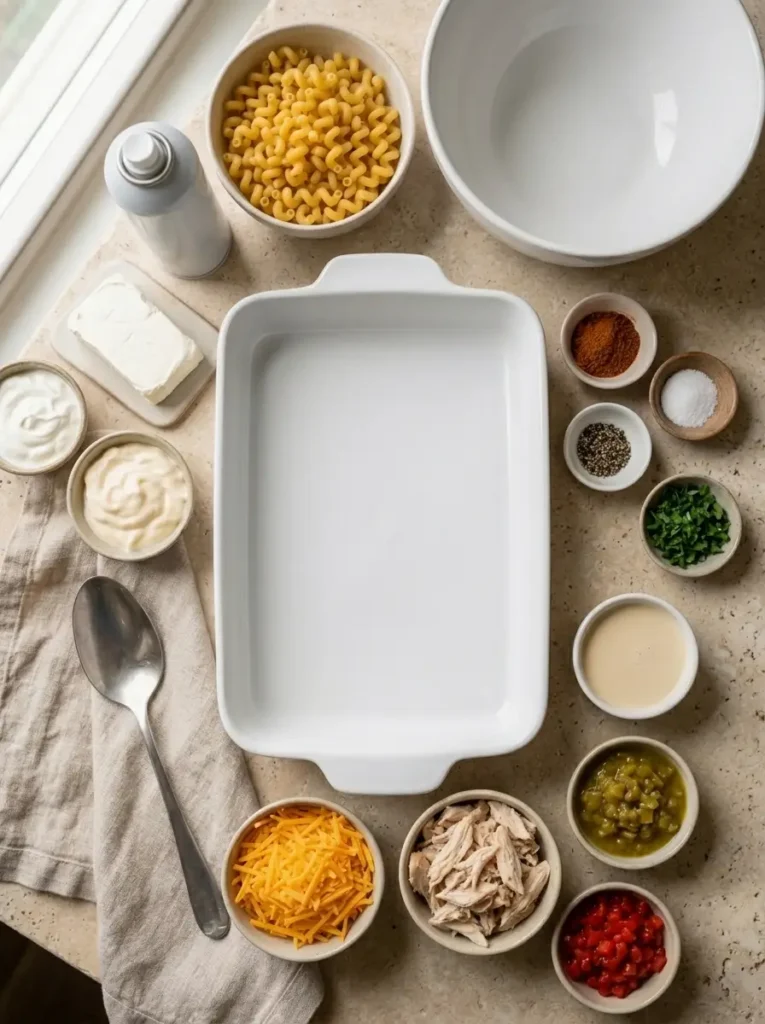
The Ingredients That Create the Creamy Filling
Cavatappi pasta
Cavatappi is a short, curled pasta with a hollow center. It catches the sauce inside and around each piece, making it well suited to a creamy chicken pasta bake.
Cook the cavatappi only until al dente. It should be flexible and cooked through most of the way while retaining slight firmness in the center.
The pasta continues absorbing moisture during baking and again during storage. Starting with very soft pasta may produce a casserole that becomes swollen or loses its shape.
Penne, rotini, rigatoni, or medium shells can replace cavatappi. Select a sturdy, short shape that is easy to coat and serve from a baking dish.
Rotisserie chicken
Rotisserie chicken makes this a convenient family dinner without requiring raw meat preparation.
Choose a plainly seasoned chicken when possible. Sweet barbecue glaze, strong smoke flavor, or intense spice can compete with the taco seasoning, peppers, and cheddar.
Shred the meat into small pieces and remove any cartilage or large areas of skin. Keep enough texture that the chicken remains visible among the pasta.
Cream cheese
Cream cheese gives the sauce body and helps it remain thick enough to cling to the pasta.
Use fully softened cubes. If the cream cheese is still cold, whisk it with a small amount of evaporated milk first and continue until the largest lumps disappear.
Full-fat cream cheese gives the most predictable texture. Reduced-fat cream cheese may create a slightly looser sauce.
Sour cream
Sour cream adds richness and a mild acidic contrast.
That slight tang balances the mayonnaise, cream cheese, evaporated milk, and cheddar. Full-fat sour cream produces the creamiest and most stable result.
Mayonnaise
Mayonnaise contributes smoothness and savory flavor.
Its flavor becomes less distinct after it is combined with the dairy ingredients, taco seasoning, chicken, pasta, peppers, and cheese.
Avoid replacing all of it with a thin ingredient. A partial substitution may work, but the sauce should remain thick enough to coat the cavatappi before baking.
Evaporated milk
Evaporated milk loosens the thick creamy ingredients without making the filling watery.
It is unsweetened and is different from sweetened condensed milk. Sweetened condensed milk contains added sugar and cannot be used in this savory recipe.
The source suggests that an additional cup can be added for a looser, creamier result. Because additional milk changes the consistency, it should be added only when a thinner casserole is intentionally desired.
Sharp cheddar
Sharp cheddar provides enough flavor to remain noticeable against the rich sauce.
Half is mixed into the filling, and the rest is reserved for the surface. This creates cheese throughout the casserole as well as a melted top.
Shredding the cheese from a block generally produces the smoothest melt. Pre-shredded cheese remains a useful shortcut when faster preparation is the priority.
Green chiles
Canned diced green chiles add mild pepper flavor. The source uses them undrained, allowing their liquid to enter the casserole during the final stage.
Choose a can labeled mild when serving people who prefer gentle flavors. Medium or hot chiles will noticeably change the casserole’s heat.
Pimientos
Pimientos are mild red peppers that provide small bursts of color and subtle sweetness.
Unlike the green chiles, the pimientos should be drained before they are stirred into the casserole.
Taco seasoning
Taco seasoning adds savory spices that balance the creamy sauce without dominating it.
Salt levels vary between brands. Check the label and avoid adding significantly more salt until the full mixture has been evaluated.
Fresh parsley
Parsley is added after broiling. Its green color gives the casserole a fresher appearance and contrasts with the orange cheddar and red pimientos.
Dry it well before chopping so it scatters evenly across the surface.
Build the Filling Without Breaking the Pasta
Start by preheating the oven and bringing a large pot of salted water to a boil.
Cook the cavatappi until al dente, then drain it thoroughly without rinsing. Rinsing would remove the surface starch that helps the sauce cling to the pasta.
Prepare the sauce while the pasta drains. Begin with softened cream cheese and evaporated milk when you want the smoothest possible base, then add the sour cream, mayonnaise, seasoning, salt, pepper, and the first portion of cheddar.
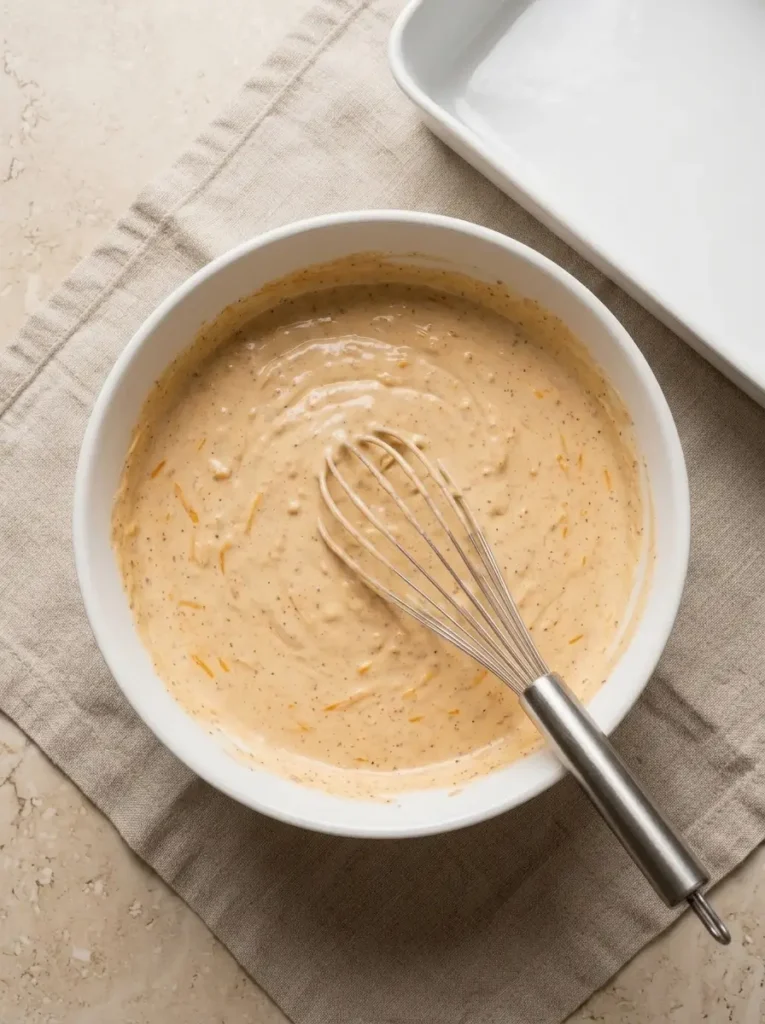
The sauce should be thick, smooth, and easy to fold. It does not need to be pourable, but it should coat a spoon without appearing dry or stiff.
Fold in the shredded chicken before adding the pasta, or add them together when the bowl is large enough. Use a flexible spatula and turn the mixture from the bottom rather than stirring in tight circles.
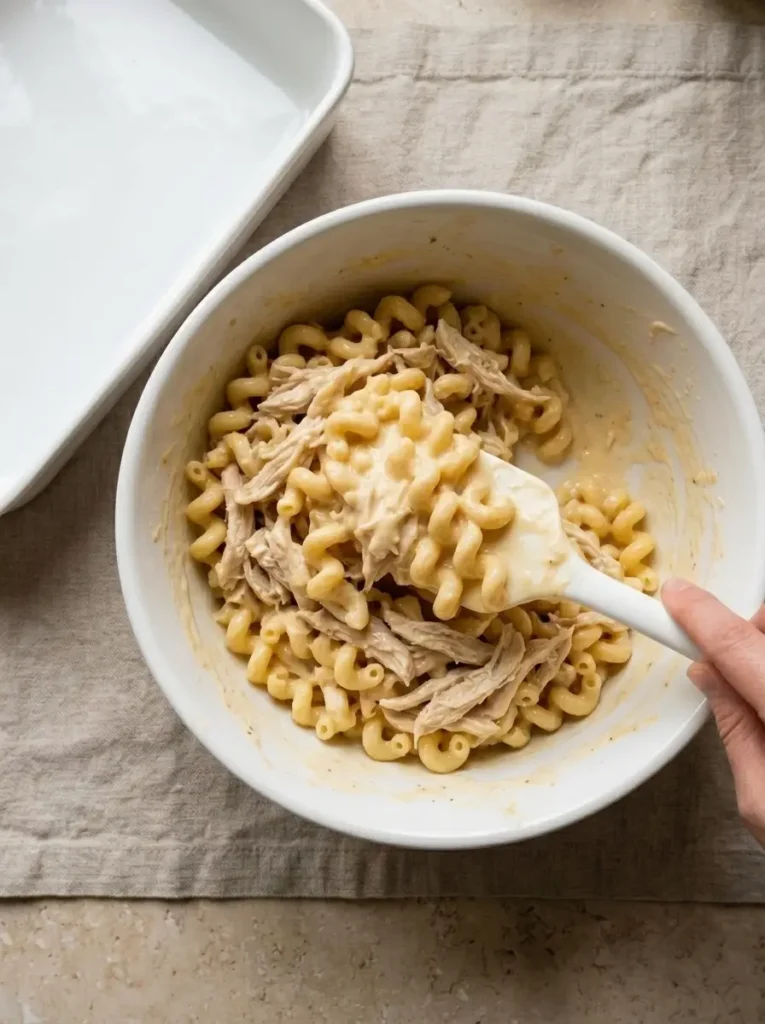
Once the chicken and cavatappi are evenly coated, transfer the filling to a lightly greased 13×9-inch baking dish. Spread it into a level layer so the center and edges heat at a similar rate.
Bake the casserole uncovered until it is thoroughly heated. Because the chicken and pasta are already cooked, this stage primarily warms the filling and brings the sauce together.
A casserole containing poultry should reach 165°F in the center before serving. Check the temperature in the middle of the dish rather than only testing the hot edges.
Why the Peppers Are Added Near the End
The green chiles and pimientos are stirred in after the first baking period rather than mixed into the cold filling.
This unusual timing helps the small pepper pieces remain visible and keeps their flavor more distinct. It also allows the cook to stir the hot casserole before smoothing the surface and adding the final cheddar layer.
Fold them in gently so the cavatappi does not break. Work from the edges toward the center until the green and red pieces appear evenly distributed.
After stirring, level the surface again. An uneven top can produce patches of cheese that brown faster than others.
Create a Melted, Lightly Golden Top
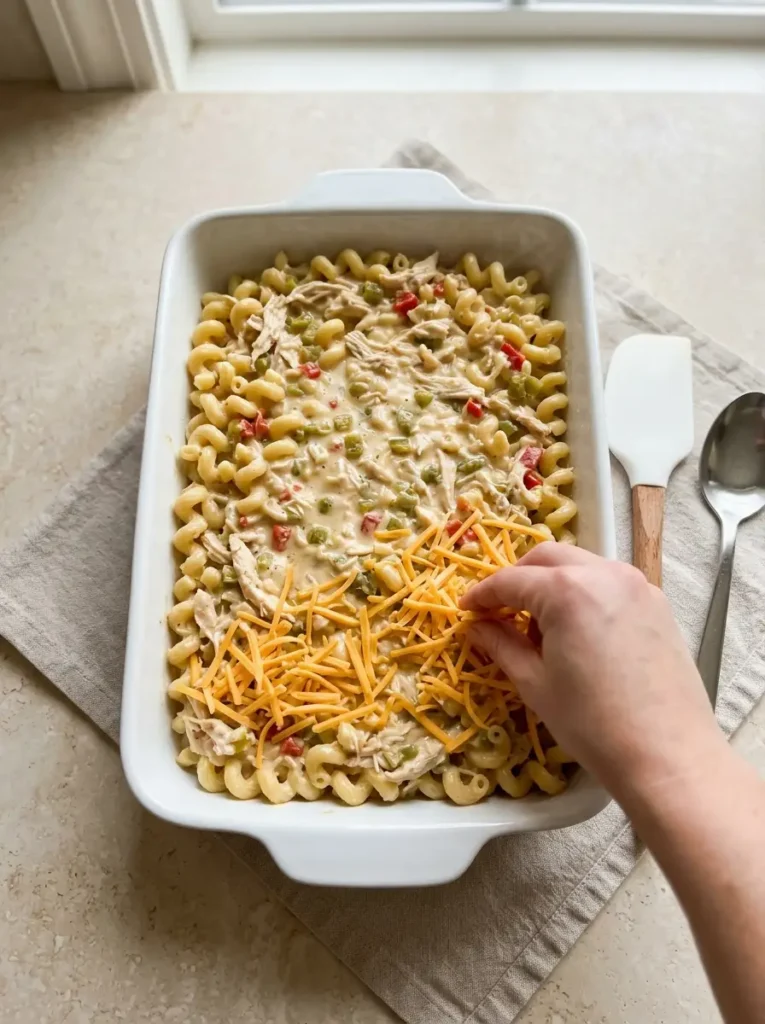
Sprinkle the remaining cheddar evenly across the casserole.
Large piles of cheese may remain thick and oily while areas with very little cheese become dry. Distribute it to the edges for consistent coverage.
Switch the oven to broil and return the casserole for approximately three to four minutes. Keep the oven light on and watch the topping continuously. The source finishes the casserole when the cheese has melted and browned lightly.
When the baking dish is not broiler-safe, leave the oven at its regular temperature and continue baking until the cheese melts. The top will be less browned but will still be finished.
Add the parsley and additional black pepper after the casserole leaves the oven. Allow it to rest briefly so the sauce settles before the first portion is removed.
Serving Details That Make a Difference
Use a broad serving spoon instead of a narrow pasta fork. This helps each portion contain cavatappi, chicken, peppers, sauce, and melted cheese.
Allow the casserole to rest for approximately five minutes. The filling will be extremely hot immediately after broiling, and the short rest makes the sauce cling more firmly to the pasta.
For eight equal servings, divide the dish visually into two rows of four portions. Smaller servings can be offered when bread, salad, and vegetables are also on the table.
Keep the parsley separate when transporting the casserole. Add it shortly before serving so it remains bright instead of wilting against the hot cheese.
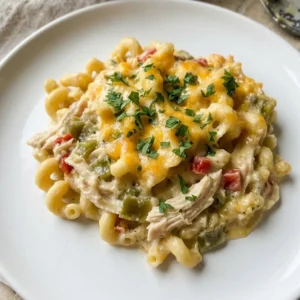
Disappearing Chicken Casserole
Ingredients
- Nonstick cooking spray for greasing
- 1 16-ounce box uncooked cavatappi pasta
- 1 8-ounce package cream cheese, softened and cubed
- 1 cup sour cream
- 1 cup mayonnaise
- 1 12-ounce can evaporated milk
- 1 1/2 tablespoons taco seasoning
- 1/2 teaspoon kosher salt
- 1/2 teaspoon black pepper plus more for serving
- 8 ounces sharp cheddar cheese shredded and divided, about 2 cups
- 4 cups shredded cooked chicken about 1 pound
- 1 4-ounce can diced green chiles, undrained
- 1 4-ounce jar diced pimientos, drained
- 1 tablespoon finely chopped fresh parsley
Instructions
Prepare the oven and baking dish:
- Preheat the oven to 350°F. Lightly grease the bottom and sides of a 13×9-inch baking dish with nonstick cooking spray.
Cook the cavatappi:
- Bring a large pot of salted water to a boil over high heat. Add the cavatappi and cook according to the package directions until al dente, approximately 8 minutes. Drain thoroughly without rinsing.
Mix the creamy sauce:
- Place the softened cream cheese and evaporated milk in a large mixing bowl and whisk until mostly smooth. Add the sour cream, mayonnaise, taco seasoning, kosher salt, black pepper, and 1 cup shredded cheddar. Whisk until evenly combined.
Coat the chicken and pasta:
- Add the shredded cooked chicken and drained cavatappi to the sauce. Fold gently with a flexible spatula until the chicken and pasta are evenly coated.
Fill and bake the casserole:
- Transfer the mixture to the prepared baking dish and spread it into an even layer. Bake uncovered for approximately 20 minutes, or until the filling is thoroughly heated and the center reaches 165°F.
Add the peppers:
- Remove the casserole from the oven. Gently fold in the undrained green chiles and drained pimientos until the pepper pieces are distributed throughout the filling.
Add and broil the cheese:
- Smooth the surface and sprinkle the remaining 1 cup cheddar evenly over the top. Set the oven to broil and cook for 3–4 minutes, or until the cheese is melted and lightly browned. Watch it continuously.
Garnish and rest:
- Remove the casserole from the oven. Sprinkle it with chopped parsley and additional black pepper, then let it rest for approximately 5 minutes before serving.
Cook the cavatappi only until al dente because it continues softening in the oven.
Confirm that the baking dish is broiler-safe and that the casserole reaches 165°F in the center.
Prepare It Before the Dinner Rush
The casserole can be assembled in advance through the first filling stage.
Cook and drain the cavatappi, mix the sauce, fold in the chicken and pasta, and transfer everything to the greased baking dish. Allow the filling to cool before covering and refrigerating it.
The original source says the assembled dish can be prepared up to three days in advance. For the best pasta texture, preparing it one day ahead is a more conservative approach because the cavatappi continues absorbing sauce during refrigeration.
Keep the green chiles, pimientos, and final cheddar layer separate when possible. Stir and add them during the finishing stage so the peppers remain distinct and the topping tastes freshly melted.
A refrigerated casserole will need longer than the original 20-minute baking period. Check the center with a thermometer and continue heating until it reaches 165°F.
When using a glass or ceramic baking dish, follow its manufacturer’s instructions before moving it directly from a cold refrigerator into a hot oven.
Carry and Serve It Neatly
Use a casserole dish with a fitted lid when the meal is being taken to another home or a potluck.
Let the casserole rest briefly after broiling before securing the cover. Keep the dish flat in an insulated carrier and carry the serving utensil separately.
Add the parsley at the destination for the freshest appearance. You can also carry the final black pepper in a small container and add it immediately before serving.
Perishable foods should not remain at room temperature for more than two hours, or more than one hour when the temperature is above 90°F. Place leftovers in shallow containers for faster cooling.
Flexible Changes for Different Tables
Replace the cavatappi
Penne, rotini, rigatoni, fusilli, or medium shells can replace cavatappi.
Cook the chosen pasta only until al dente. Avoid delicate noodles that may break when they are folded through the thick sauce.
Use leftover cooked chicken
Plain roasted, baked, grilled, or poached chicken can replace rotisserie chicken.
Remove heavily seasoned skin or sauce before shredding the meat so the casserole retains its intended flavor.
Use shredded turkey
Cooked turkey can be substituted for the chicken, making the casserole useful after a holiday dinner.
Fold lean turkey breast thoroughly into the sauce so it remains moist during baking.
Change the cheese
Monterey Jack creates a mild, smooth topping, while Colby Jack provides a slightly stronger flavor and more color.
A mixture of cheddar and Monterey Jack gives the casserole a balanced melt. Pepper Jack can be used for extra heat.
Adjust the peppers
Use mild green chiles for a family-friendly casserole.
Medium or hot chiles can replace them when more heat is desired. Keep the pimientos for color, or omit them when their mild sweet-pepper flavor is not preferred.
Add a vegetable
Cooked broccoli, peas, spinach, or sautéed mushrooms can be folded into the filling.
Drain vegetables thoroughly and avoid adding a large volume. Excess moisture can thin the sauce and overcrowd the baking dish.
Add a crunchy topping
Seasoned breadcrumbs or crushed crackers can be sprinkled over the final cheddar.
Watch the casserole carefully under the broiler because crumbs can brown more quickly than cheese.
Use gluten-free pasta
A sturdy short gluten-free pasta may replace the cavatappi.
Cook it according to its package instructions and stop while it remains firm. Some gluten-free pasta softens more quickly during baking and reheating.
Bright Sides That Balance the Sauce
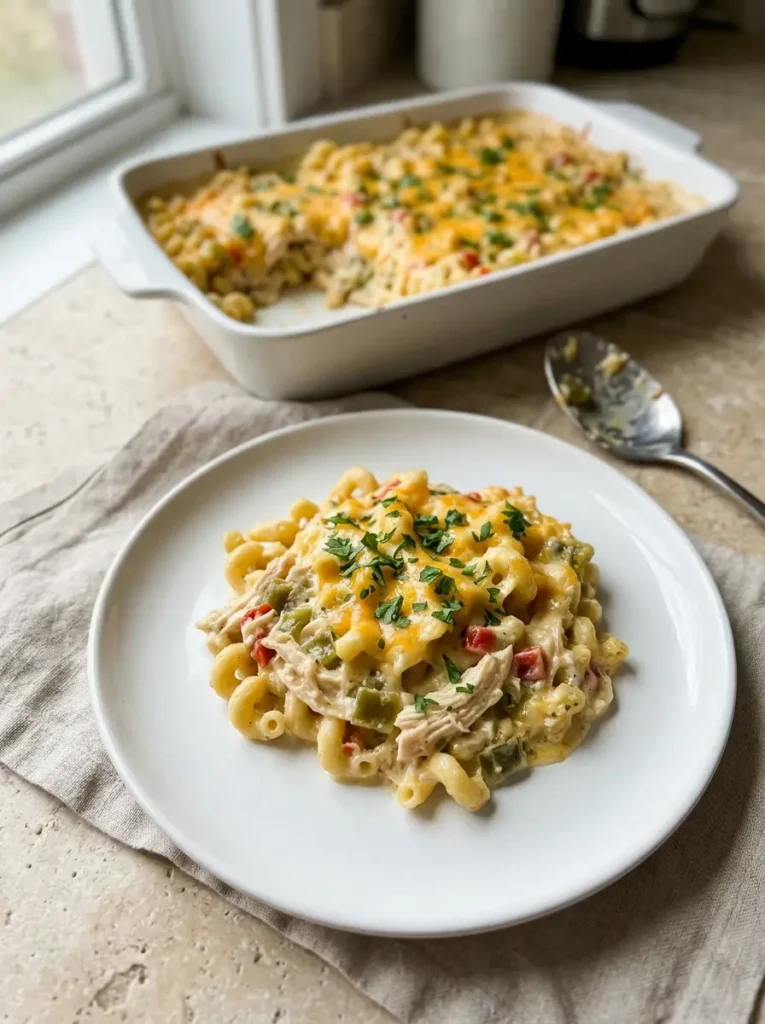
Disappearing Chicken Casserole is rich, creamy, and pasta-based, so simple vegetables provide the best contrast.
Steamed broccoli or green beans can turn it into a complete meal without adding another complicated dish. We recommend these vegetables as easy accompaniments.
A crisp salad with lettuce, cucumber, tomatoes, and a tangy vinaigrette offers cool texture and acidity. The vinaigrette helps balance the cream cheese, mayonnaise, sour cream, and cheddar.
Roasted asparagus, Brussels sprouts, carrots, or zucchini are suitable alternatives when you prefer a warm vegetable.
Dinner rolls or garlic bread make the meal more generous for a gathering, although the cavatappi already provides a substantial base.
Fresh berries, melon, or fruit salad offer a light finish after the creamy casserole.
Keep the Leftover Sauce Smooth
Cool the casserole briefly and transfer leftovers to shallow airtight containers.
USDA guidance recommends refrigerating most cooked leftovers for three to four days and reheating them to 165°F.
The pasta continues absorbing sauce in the refrigerator. Add a small splash of regular milk or evaporated milk before reheating when the filling appears dry.
Reheat in the oven
Place the desired amount in an oven-safe dish and add a small amount of milk.
Cover loosely and heat in an oven set to at least 325°F until the center reaches 165°F. Remove the cover near the end if the surface appears too moist.
Reheat one portion
Place one serving in a microwave-safe dish and cover it loosely.
Heat in short intervals and stir between intervals when possible. Check more than one area because microwave ovens can leave cold spots.
Freeze the casserole
Freeze cooled individual portions in airtight freezer-safe containers.
Smaller portions thaw and reheat more evenly than one full casserole. USDA storage guidance lists four to six months as a general freezer-quality range for leftover casseroles containing chicken.
Thaw the casserole overnight in the refrigerator when possible. Add a small amount of milk during reheating to help restore the sauce.
Reader Questions About This Pasta Bake
Are canned green chiles very spicy?
Cans labeled mild usually provide gentle pepper flavor rather than strong heat.
Check the label before purchasing because medium and hot varieties are also available.
What are pimientos?
Pimientos are mild red peppers with a subtle sweet flavor.
They are used mainly for color and gentle pepper flavor rather than heat.
Can I use cold rotisserie chicken?
Yes. Cold shredded rotisserie chicken can be folded directly into the sauce.
The casserole may need a few additional minutes in the oven because all the ingredients begin at a lower temperature.
Can I divide the recipe in half?
Yes. Divide all the ingredient quantities evenly and use a smaller baking dish.
Begin checking the casserole earlier because a shallower or smaller quantity may heat more quickly.
Why did the sauce look separated after reheating?
The pasta may have absorbed too much moisture, or the casserole may have been heated too aggressively.
Add a small splash of milk and reheat more gradually, stirring when possible to bring the creamy ingredients back together.