
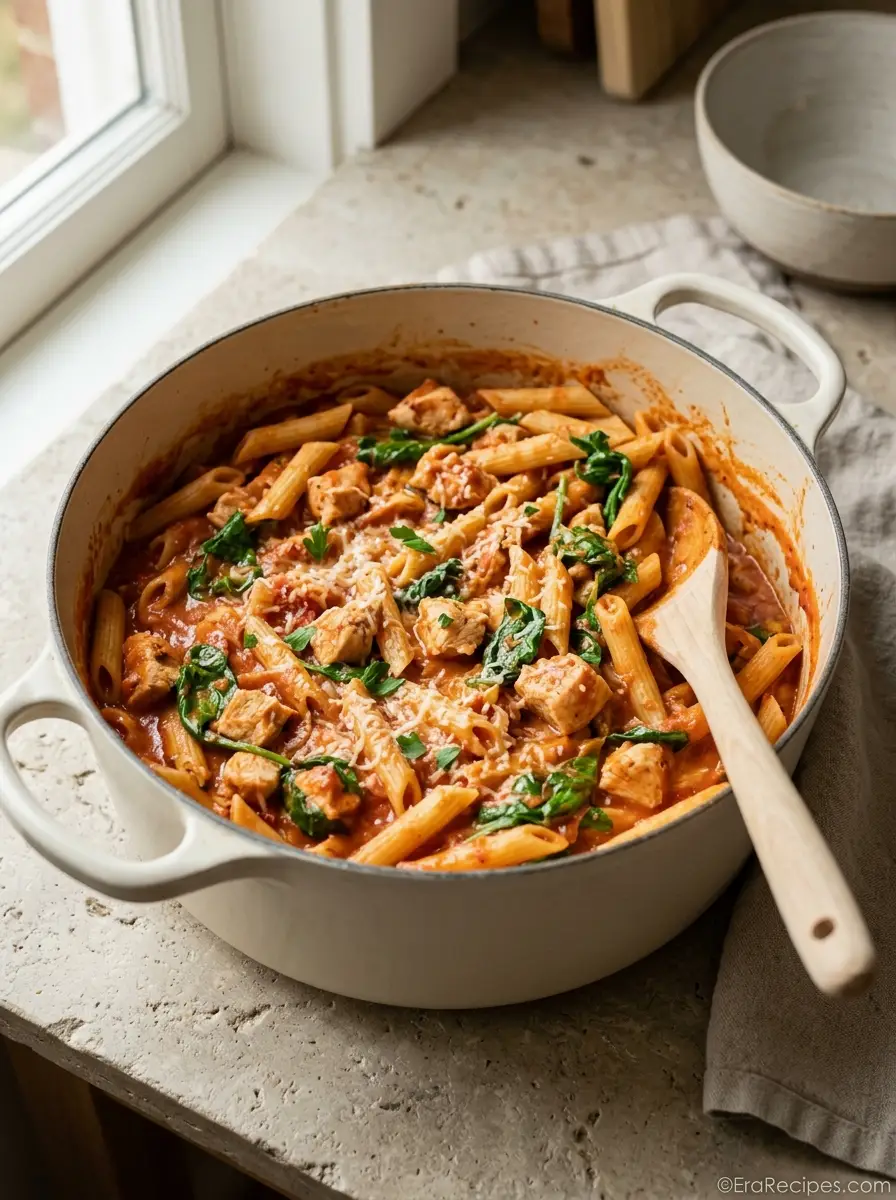
One-Pot Chicken Spinach Pasta combines tender penne, bite-size chicken, marinara, cream cheese, spinach, and Parmesan in one pot for a creamy dinner with very little cleanup. The pasta and chicken cook together first, then the tomato and cream-cheese sauce comes together directly around them before fresh spinach is folded in at the end.
The streamlined method is what makes this recipe useful on busy evenings. There is no separate pasta pot to drain, no second skillet for the chicken, and no sauce saucepan waiting on another burner. Instead, the pasta absorbs flavor while it cooks and releases starch into the liquid, helping the finished sauce cling naturally to every piece.
The verified cooking method takes about 20 minutes, so the 30-minute positioning leaves comfortable room for gathering ingredients, cutting the chicken, and normal differences between kitchens. The result is a warm, creamy pasta that works especially well when you need a practical family dinner without turning the kitchen into a cleanup project.
A One-Pot Pasta Built for Busy Dinner Hours
The biggest advantage of One-Pot Chicken Spinach Pasta is not simply speed. It is the way the cooking method reduces the number of separate jobs involved in making dinner.
A conventional chicken pasta dinner might require boiling pasta, draining it, browning chicken in another skillet, making a sauce, and finally combining everything. Here, the pasta and chicken begin together in the same cooking liquid.
Once they are cooked, marinara and cream cheese turn that remaining liquid into the sauce. Spinach then needs only a minute or two to wilt before Parmesan finishes the pot.
This makes the recipe a true easy one-pot pasta rather than a pasta recipe whose separate components happen to be combined in one pan at the end.
It is also useful when cooking for a family because penne, chicken, tomato sauce, and mild cream cheese create familiar flavors. The spinach adds color and vegetables without becoming the dominant flavor of the meal.
The Ingredients That Make the One-Pot Method Work
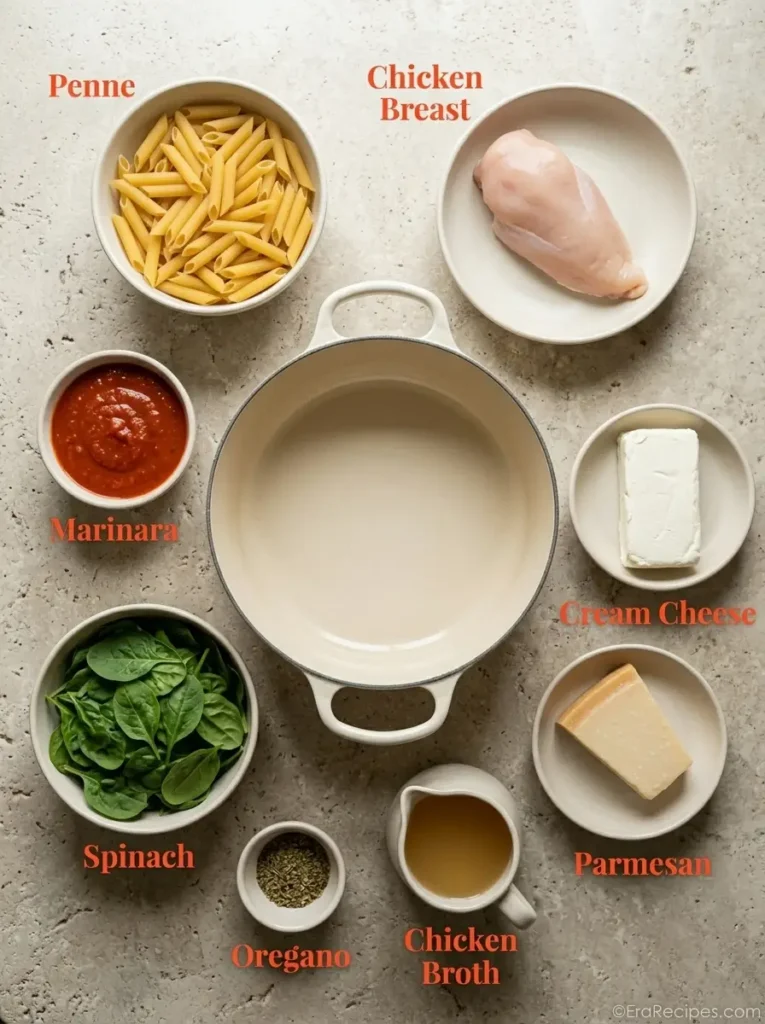
Short pasta cooks evenly without draining
Penne is a good choice for this method because its short shape fits easily inside a Dutch oven and can be stirred thoroughly while cooking.
The pasta cooks directly in water and chicken broth rather than in a large pot of salted water that will later be discarded.
As the penne softens, it releases starch into the cooking liquid. That starch remains in the pot and later helps bind the marinara and cream cheese into a cohesive sauce.
The pasta should finish al dente rather than excessively soft because it remains in the hot sauce while the final ingredients are added.
Small chicken pieces match the pasta cooking time
Chicken breast is cut into small, evenly sized pieces before cooking.
This is essential to the one-pot method. A whole chicken breast would take much longer to cook than the penne, while small pieces can cook safely during the same general time period as the pasta.
Try to keep the pieces similar in size so they finish at approximately the same time.
Chicken should reach an internal temperature of 165°F before the sauce ingredients are added. USDA recommends 165°F as the safe minimum temperature for poultry. See the USDA safe-temperature guidance.
Marinara provides the tomato base instantly
Using marinara keeps the sauce stage short because the tomato base is already seasoned and developed.
It enters the pot after the pasta and chicken have cooked rather than from the beginning. This prevents the thick tomato sauce from interfering with the pasta as it absorbs its cooking liquid.
Once stirred in, the marinara gives the dish its familiar tomato flavor and red-orange color.
Cream cheese makes the sauce smooth
Cream cheese turns the tomato sauce creamy without requiring heavy cream or a separate white sauce.
Reduce the heat before adding it and stir until no visible white pieces remain.
As it melts, the cream cheese combines with the marinara and starchy pasta liquid to create a sauce that feels creamy while still tasting clearly tomato-forward.
Spinach needs only a short cooking time
Fresh spinach goes into the pot at the very end.
It needs only enough heat to wilt. Cooking spinach for the entire pasta-cooking period would leave it dull, overly soft, and much less appealing.
Adding it at the end keeps the leaves bright green and gives this chicken spinach dinner a fresher contrast to the creamy sauce.
Parmesan adds the final savory layer
Parmesan is added after the spinach rather than simmered for a long time.
Its salty, nutty flavor strengthens the creamy tomato sauce without turning the dish into an extremely cheesy pasta.
Freshly grated Parmesan melts especially well because the fine pieces distribute quickly through the hot pasta.
Cook the Pasta and Chicken in the Same Pot
Add the penne, water, chicken broth, bite-size chicken pieces, dried oregano, and salt to a deep Dutch oven or heavy pot.
Stir before turning up the heat so the pasta pieces are separated and the chicken is distributed rather than sitting in one large cluster.
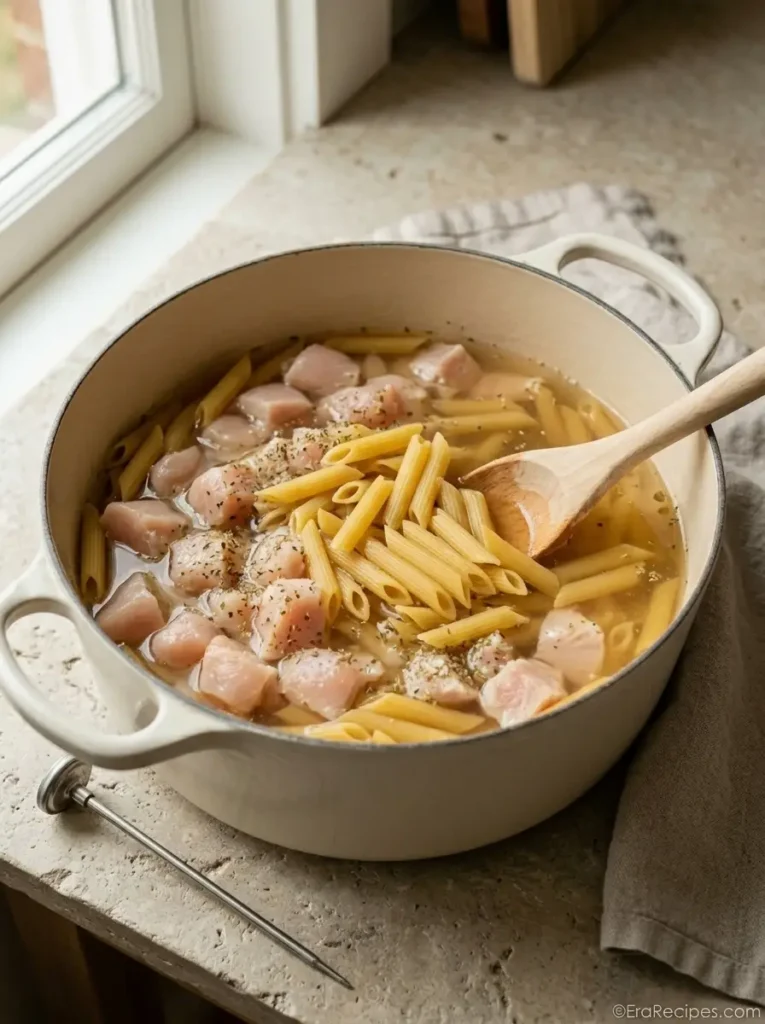
Bring the liquid to a boil.
Once boiling, maintain enough heat to cook the pasta steadily without creating a violent boil that causes liquid to disappear too quickly.
This stage looks very different from the finished dish. The liquid is relatively clear, the pasta is still firm, and none of the creamy tomato ingredients have been added yet.
That is intentional. The first job of the pot is simply to cook the penne and chicken safely and evenly.
Stir Often While the Pasta and Chicken Cook Together
One-pot pasta requires more attention than pasta floating in a large stockpot of water.
Because there is less liquid, the penne can settle against the bottom and begin sticking. Stir frequently and scrape gently across the bottom of the Dutch oven.
The chicken pieces also need to remain distributed so they cook evenly.
After roughly 10 minutes, begin checking both the pasta and chicken.
The pasta should be tender but still slightly firm in the center. The chicken should be completely opaque and reach 165°F internally.
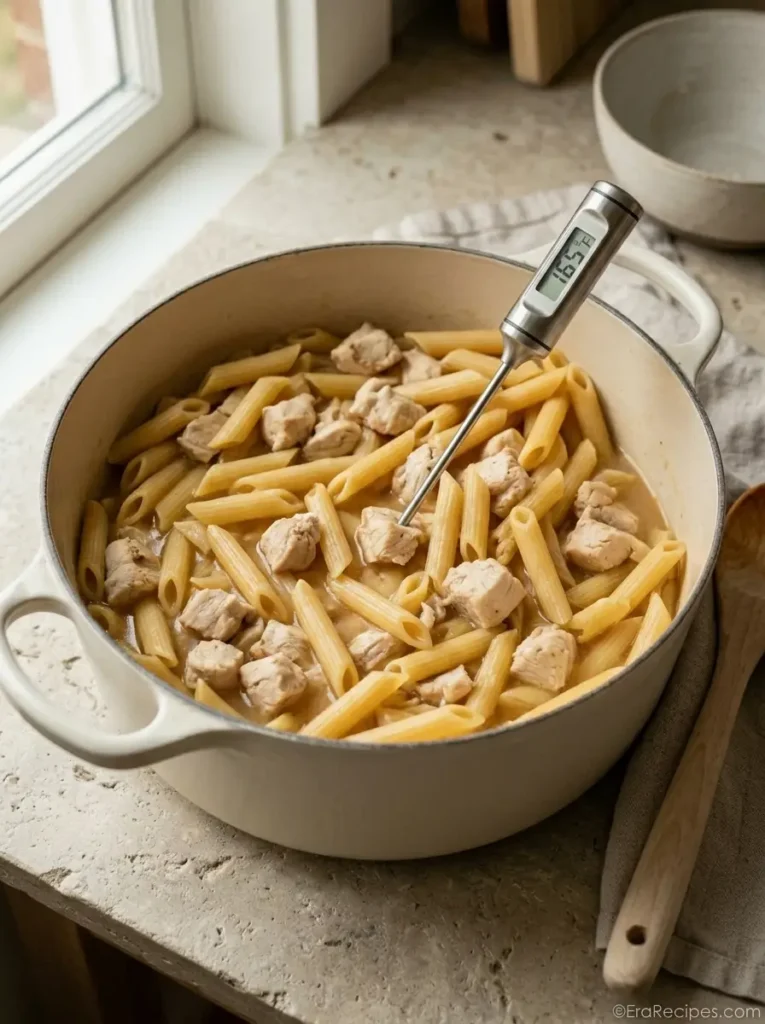
Do not expect all the cooking liquid to disappear. Some should remain because it becomes part of the final sauce.
If the pasta is still firm but the pot looks unusually dry, add a small splash of hot water or chicken broth and continue cooking.
If there is too much liquid once the penne is cooked, let it simmer briefly while stirring before moving to the sauce stage.
Turn the Cooking Liquid Into a Creamy Tomato Sauce
Once the chicken and pasta are cooked, lower the heat.
Add the marinara, cream cheese, black pepper, and optional red pepper flakes.
Stir continuously as the cream cheese melts.
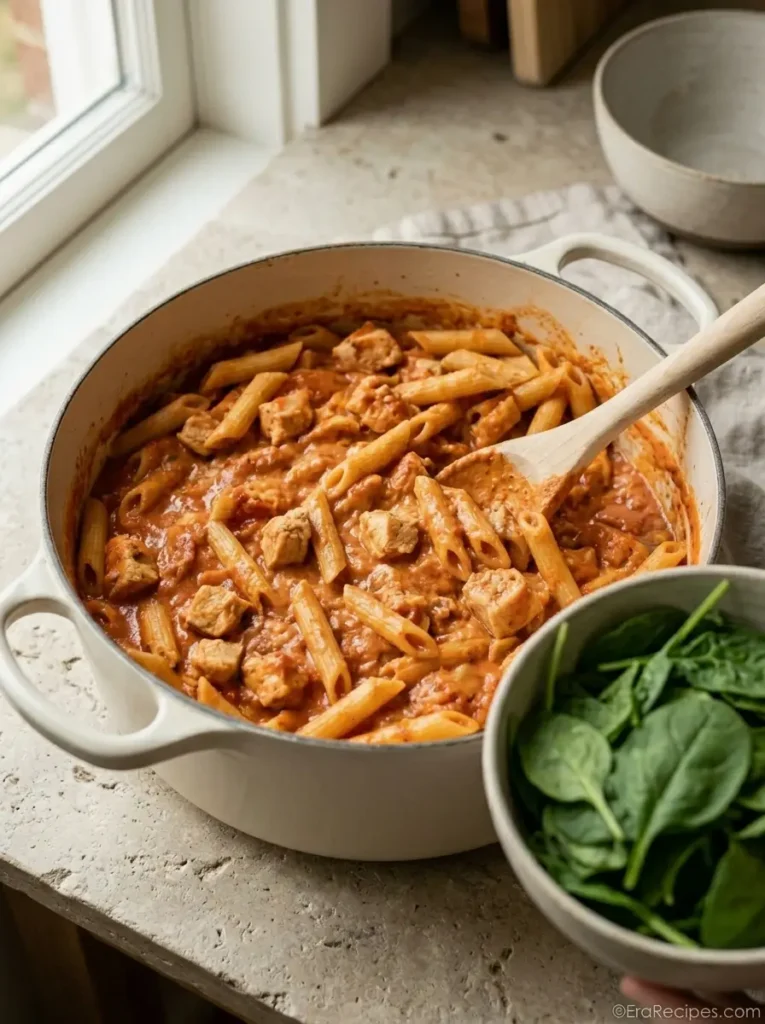
At first, you may see white streaks of cream cheese against the red sauce. Continue stirring until those streaks disappear and the sauce looks evenly creamy.
The starchy liquid remaining from the pasta helps everything combine rather than separating into tomato sauce and melted cheese.
This is the step that transforms a simple pasta-and-chicken pot into a comforting family chicken meal.
The sauce should coat the penne rather than sit as a large pool around it. At the same time, avoid cooking it until completely dry because the pasta continues absorbing moisture as it rests.
Fold the Spinach In at the Very End
Add the fresh spinach after the cream cheese has completely melted into the marinara.
The pot may initially look very full of greens, but spinach loses volume rapidly as it wilts.
Fold the leaves gently through the hot pasta for about one to two minutes.
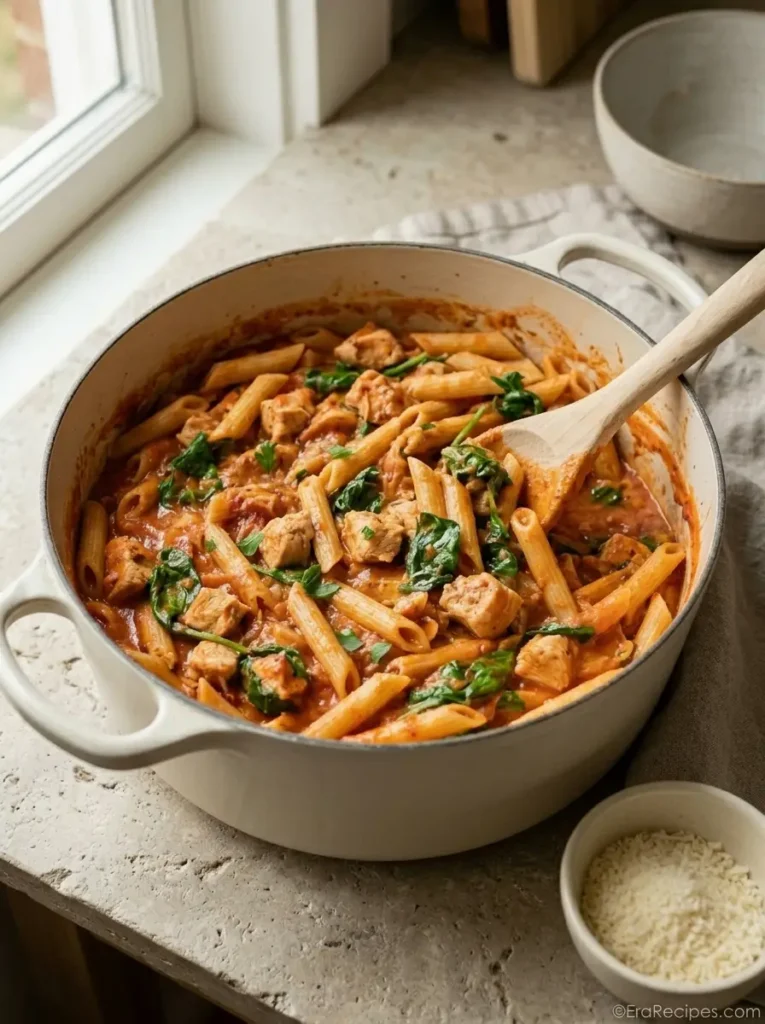
Stop cooking once the spinach has softened and turned bright green.
There is no benefit to continuing until the leaves become very dark and limp.
Remove the pot from the heat and add the Parmesan.
Stir once more, taste, and adjust the black pepper or salt only if needed. Marinara, chicken broth, cream cheese, and Parmesan can all contribute salt, so final seasoning is easier to judge at the end.
How to Keep the Pasta Creamy Instead of Dry
Do not boil away all the cooking liquid
A little liquid should remain when the pasta reaches al dente. That liquid combines with marinara and cream cheese to form the sauce.
Lower the heat before adding cream cheese
Gentler heat gives the cream cheese time to melt smoothly into the tomato mixture.
Serve reasonably soon after cooking
Pasta continues absorbing sauce as it sits. One-Pot Chicken Spinach Pasta will naturally become thicker after several minutes.
Keep a little broth available
If the pasta becomes thicker than you prefer, stir in a small amount of warm chicken broth or water.
Add only a little at a time so the sauce stays creamy rather than becoming thin.
One-Pot Chicken Spinach Pasta
Ingredients
- 12 ounces penne pasta
- 2 cups water
- 1 cup chicken broth
- 1 pound boneless skinless chicken breast cut into 1/2-inch pieces
- 1 teaspoon dried oregano
- 1 teaspoon salt
- 1/4 teaspoon black pepper
- 12 ounces marinara sauce
- 4 ounces cream cheese
- 1/4 teaspoon red pepper flakes optional
- 2 cups fresh baby spinach
- 1/2 cup freshly grated Parmesan cheese
Instructions
Start the pasta and chicken:
- Add the penne, water, chicken broth, chicken pieces, oregano, and salt to a deep Dutch oven. Stir well so the chicken and pasta are evenly distributed.
Cook until tender and safe:
- Bring to a boil and cook for about 10 minutes, stirring frequently, until the penne is al dente and the chicken reaches an internal temperature of 165°F.
Make the creamy tomato sauce:
- Reduce the heat. Stir in the marinara, cream cheese, black pepper, and optional red pepper flakes until the cream cheese melts completely and the sauce becomes smooth.
Wilt the spinach:
- Add the fresh spinach and cook for 1–2 minutes, folding gently until the leaves are just wilted and still bright green.
Finish with Parmesan:
- Remove from the heat. Stir in or sprinkle with the Parmesan, taste, adjust the seasoning if needed, and serve while creamy.
If the sauce becomes too thick, add a small splash of warm chicken broth, water, or milk.
Refrigerate leftovers for up to 3–4 days and reheat to 165°F.
Why This One-Pot Technique Works
The key difference between this method and ordinary pasta cooking is that the pasta starch stays in the meal.
When penne is boiled in a large pot and drained, much of the starch released into the water goes down the sink.
In this recipe, the smaller amount of cooking liquid remains around the pasta. Once marinara and cream cheese are added, that starch helps the sauce cling.
This is also why the pasta needs frequent stirring. The same starch that makes the sauce creamy can cause the penne to stick to the bottom if it remains undisturbed.
The method creates the convenience people expect from a 30-minute pasta while still building a sauce in the pot rather than relying only on bottled sauce poured over separately cooked noodles.
Easy Ways to Change the Dinner
Use chicken thighs
Boneless skinless chicken thighs can replace chicken breast.
Cut them into similarly sized small pieces so they cook in the same general time frame as the pasta, and verify they reach 165°F.
Use another short pasta shape
Fusilli, rotini, or macaroni can work, although exact liquid needs and cooking times may vary.
Use the package timing as a guide and monitor the amount of liquid in the pot.
Add gentle heat
Red pepper flakes can be stirred into the sauce when you want a little warmth.
Start with a small amount so the spice does not overwhelm the creamy tomato flavor.
Use additional spinach
If you want more greens, add another handful once the first spinach has started wilting.
Add it gradually so you can still fold everything through the pasta evenly.
Use a little extra Parmesan
Additional Parmesan can be served at the table rather than mixed entirely into the pot.
This lets each person adjust the cheese flavor without making the complete sauce too thick.
What to Serve With Chicken Spinach Pasta
Because the meal already contains chicken, pasta, spinach, tomato sauce, and cheese, simple sides are usually enough.
A crisp green salad with a light vinaigrette adds freshness and acidity.
Roasted green beans or broccoli also work when you want more vegetables.
Garlic bread or warm crusty bread can be served for anyone who wants something to catch the remaining creamy tomato sauce.
For an especially busy evening, the pasta can simply be served on its own. That is one of the advantages of treating it as a complete one-pot dinner.
Storage and Reheating
Allow leftovers to cool briefly, then transfer them to shallow airtight containers and refrigerate promptly.
USDA guidance recommends using cooked leftovers within three to four days and reheating them to 165°F. The exact-match recipe similarly recommends refrigerating leftovers for up to three days.
Reheat on the stovetop
Place the pasta in a saucepan or skillet over low heat.
Add a small splash of chicken broth, water, or milk and stir gently as it warms.
The extra liquid is important because refrigerated pasta absorbs more of its sauce.
Reheat in the microwave
Place an individual portion in a microwave-safe dish and add a spoonful of liquid.
Heat in short intervals, stirring between each one, until the pasta and chicken are hot throughout.
Frequently Asked Questions
Does One-Pot Chicken Spinach Pasta really cook the chicken and pasta together?
Yes. Bite-size chicken pieces and penne cook together in the same liquid. Cutting the chicken evenly and checking for a safe 165°F internal temperature are important.
Why is my one-pot pasta too thick?
Pasta continues absorbing liquid as it cooks and rests. Stir in a small amount of warm chicken broth, water, or milk until the sauce loosens.
Can I use a different pasta shape?
Yes, but choose another relatively short pasta and expect the cooking time or amount of liquid to change slightly.
Can I make this chicken spinach dinner ahead?
Yes, although the texture is creamiest right after cooking. When reheating, add a small amount of liquid to restore the sauce.
Can frozen spinach replace fresh spinach?
It can, but thaw and drain it thoroughly first so excess water does not dilute the creamy tomato sauce.