
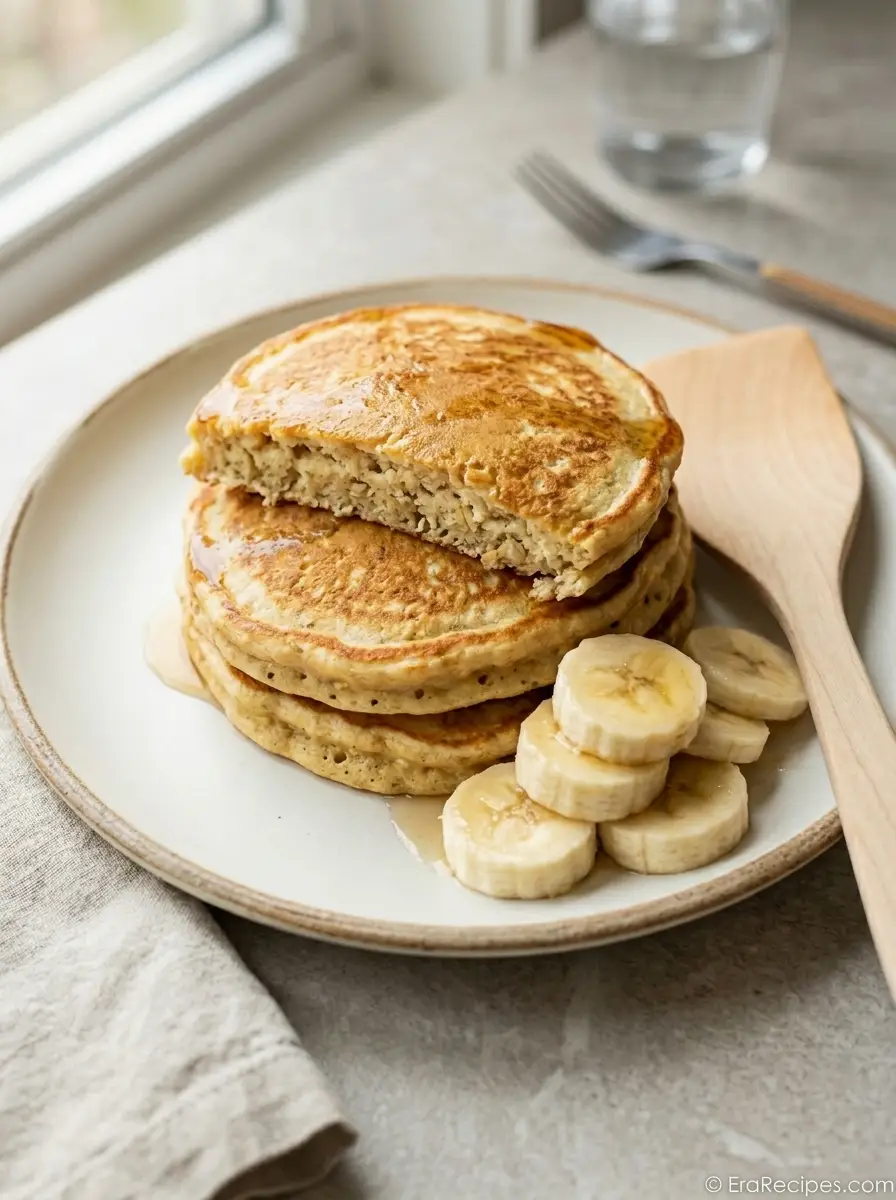
Cottage Cheese Banana Oatmeal Protein Pancakes turn rolled oats, ripe banana, cottage cheese, and egg into a thick blender batter that cooks into soft, fluffy pancakes in about 15 minutes. There is no traditional flour, no separate bowl for dry ingredients, and no complicated mixing method.
The technique is especially simple: place everything in the blender, process until completely smooth, then cook small portions over medium-low heat. The banana naturally sweetens the batter, cottage cheese adds moisture and structure, and the rolled oats create the hearty base.
The finished pancakes should be thicker than standard pancake batter might suggest. That thickness is intentional. Cooking them over moderate heat gives the centers enough time to set while the outside becomes evenly golden.
Technique Snapshot for Thick Blender Pancakes
The entire recipe depends on four simple technique points.
First, use a ripe banana. A ripe banana blends more easily, contributes natural sweetness, and provides moisture that helps the batter come together.
Second, blend the batter until it is completely smooth. Rolled oats, cottage cheese, banana, and egg all begin with different textures, so sufficient blending is what turns them into one cohesive pancake batter.
Third, expect the batter to be thick. These blender protein pancakes are designed to cook into compact, fluffy rounds rather than spread widely across the skillet.
Finally, use medium-low heat and wait for visible bubbles before flipping. A lower cooking temperature allows the thick center to cook without burning the first side.
What the Finished Pancakes Should Look and Feel Like
Properly cooked Cottage Cheese Banana Oatmeal Protein Pancakes should have golden-brown surfaces, soft rounded edges, and a tender interior.
They should be thicker than crepes and slightly heartier than pancakes made only with wheat flour, but they should not feel wet, gummy, or heavy in the center.
The banana gives them a mild banana-bread flavor, while cinnamon and vanilla add warmth without needing a large amount of added sweetener.
The cottage cheese should not remain visible. Once thoroughly blended, it disappears into the batter and contributes to the soft texture rather than creating obvious curds.
The source recipe reports about 20 grams of protein in the full serving, which is why these are often described as cottage cheese protein pancakes. The cottage cheese and egg are the main contributors.
Key Ingredients for Thick Blender Pancakes
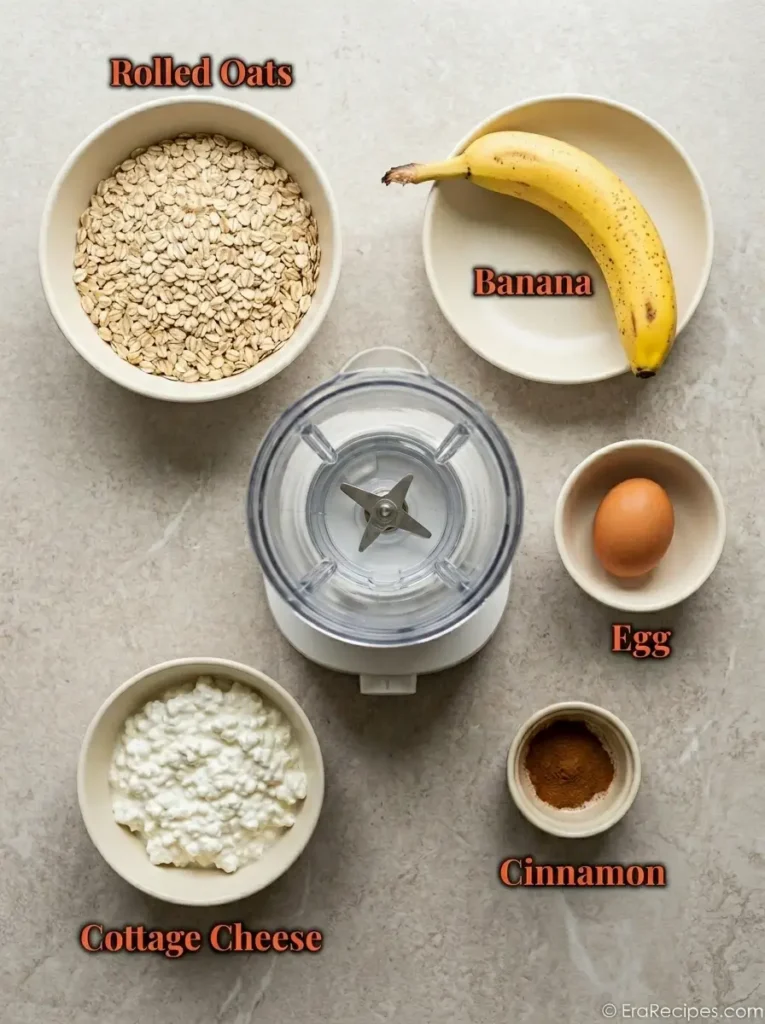
Rolled oats create the flourless base
Old-fashioned rolled oats replace traditional flour in this recipe.
Unlike recipes where oats are ground separately into oat flour, these pancakes blend the oats at the same time as the banana, egg, cottage cheese, and other ingredients. A reasonably powerful blender breaks everything down into a smooth batter in one step.
The oats also give these banana oatmeal pancakes a little more body than very light buttermilk pancakes.
If you need the recipe to remain gluten-free, use rolled oats specifically labeled gluten-free.
Ripe banana provides sweetness and moisture
Banana is more than a flavoring ingredient here. It contributes moisture, sweetness, and body to the batter.
A ripe banana is preferable to a firm green banana because it is softer and naturally sweeter. It also blends more smoothly with the cottage cheese and oats.
The recipe uses banana as an essential part of the batter rather than an optional topping, so replacing it would significantly change the texture.
Cottage cheese makes the batter creamy
Low-fat cottage cheese blends directly into the batter.
Although the cheese begins with visible curds, the blender removes that texture. Once smooth, it helps create a tender pancake without making the finished breakfast taste strongly of cottage cheese.
This is what makes the recipe particularly useful for a high-protein breakfast while still keeping the preparation very simple.
Egg gives the pancakes structure
The egg helps bind the oat-and-banana batter as it cooks.
Because the batter is thick and contains no standard flour, the egg is important for helping each pancake become stable enough to flip.
Cinnamon and vanilla create banana-bread flavor
Cinnamon provides warm spice while vanilla softens the flavor of the oats and cottage cheese.
Neither ingredient should dominate. Together with banana, they create a familiar breakfast flavor that works with simple toppings such as berries, nut butter, or maple syrup.
Blend Everything Until Completely Smooth
Add the rolled oats, banana, vanilla, baking powder, cinnamon, egg, and cottage cheese directly to the blender.
There is no need to mash the banana beforehand or process the oats separately.
Blend until the batter becomes completely smooth, which should take about 30 seconds in a capable blender.
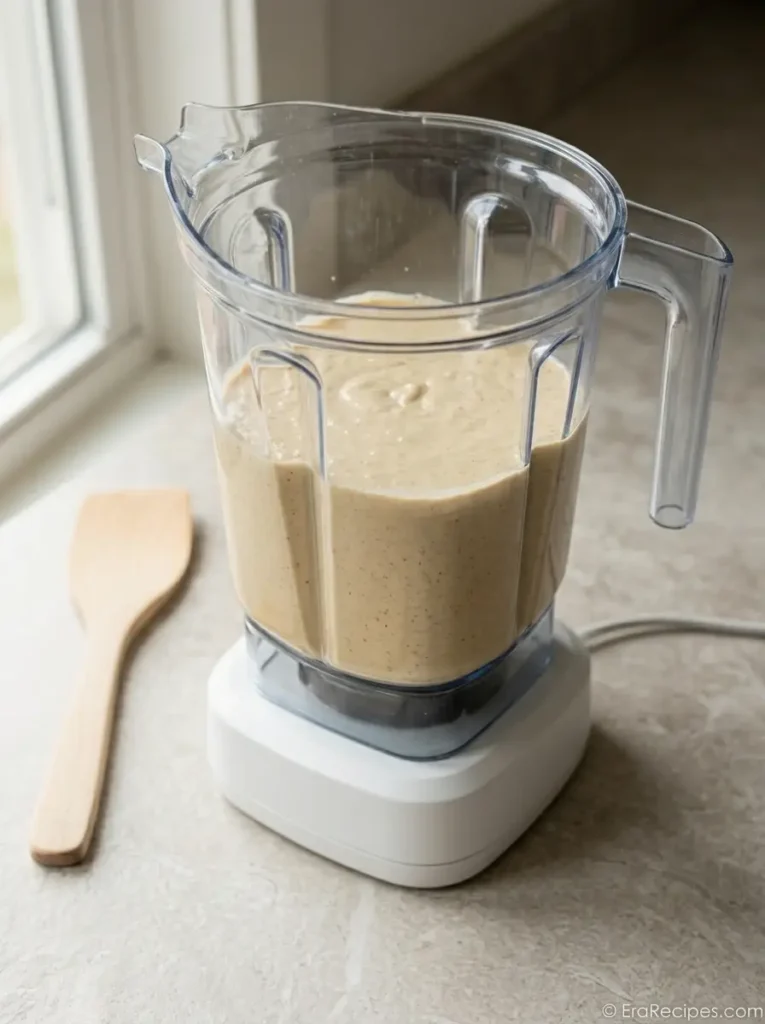
Stop the blender and look closely at the texture. You should not see obvious cottage-cheese curds, chunks of banana, or large pieces of rolled oats.
The batter will look thicker than many conventional pancake batters. Do not automatically add milk simply because it does not pour quickly.
The source specifically describes the batter as thick, and that thickness helps the pancakes cook up fluffy rather than spreading thinly across the pan.
Use the Batter While It Is Thick and Fresh
Cook the pancakes soon after blending.
Rolled oats continue absorbing moisture as they sit, which means the batter can become even thicker over time.
This is also why making the raw batter the night before is less convenient than cooking the pancakes ahead. A refrigerated oat batter can thicken considerably and become harder to portion consistently.
If you want breakfast ready in advance, cook the full batch first, cool the pancakes, then refrigerate or freeze the finished pancakes instead.
Cook Over Medium-Low Heat
Lightly coat a large nonstick skillet or griddle with cooking spray and place it over medium-low heat.
A moderate temperature is essential for this thicker batter.
If the pan is too hot, the bottom can become dark while the center remains too soft. If the heat is too low, the pancakes may take unnecessarily long to set and can dry out.
Portion the batter into small rounds. Keeping the pancakes compact makes them easier to cook through and easier to flip.
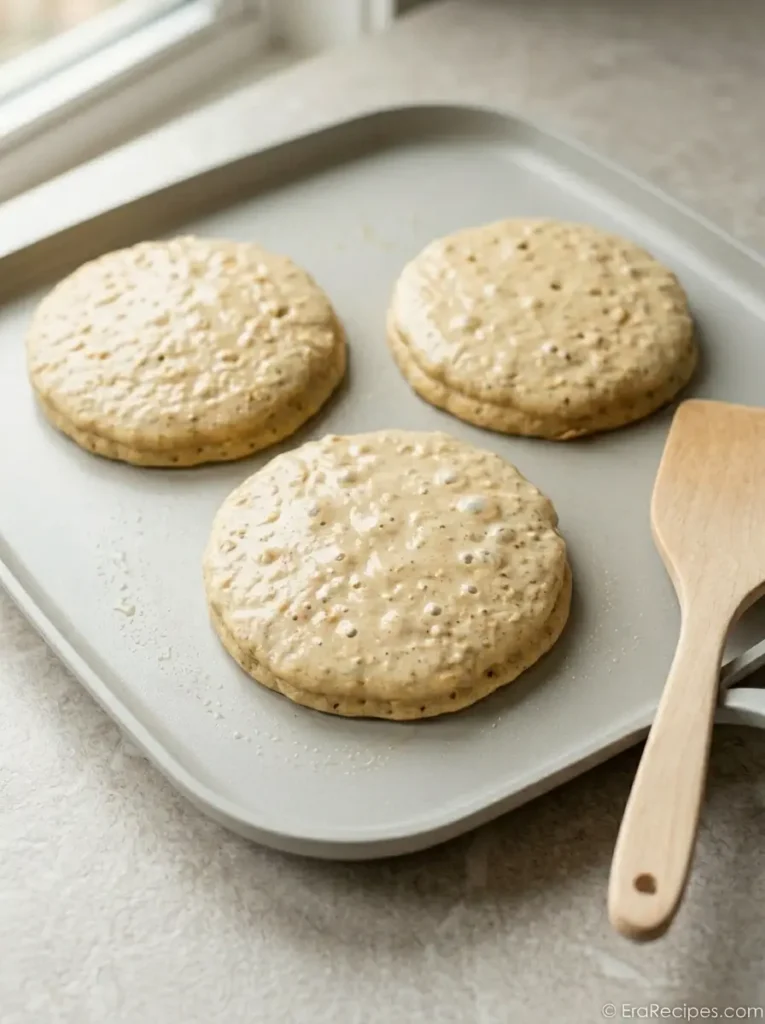
The batter should spread only slightly after it reaches the griddle.
Give each pancake enough room that the spatula can reach underneath without disturbing another one.
Wait for Bubbles Before You Flip
The most useful doneness cue is the surface of the pancake.
As the first side cooks, small bubbles begin appearing on top and the outer edge looks less wet.
Those signs tell you that the underside has developed enough structure to support the pancake during flipping.
Slide a thin spatula fully underneath and turn the pancake in one confident motion.
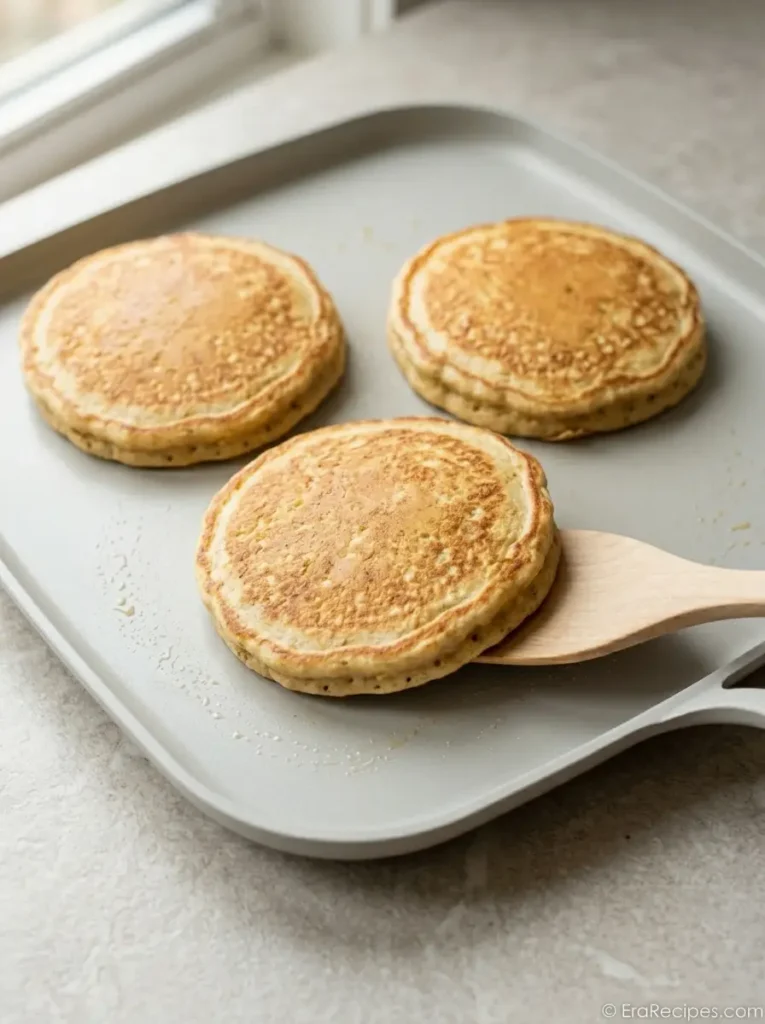
Cook the second side until it becomes golden brown.
The second side typically needs less time because the center is already partly cooked.
Avoid repeatedly pressing the pancake with the spatula. Compression can flatten the soft interior and make the finished texture denser.
Why This Blender Method Works
A single blender solves several texture problems at once.
It breaks the rolled oats into much smaller particles, smooths the cottage cheese curds, distributes the egg evenly, and incorporates the banana through the entire mixture.
That gives the batter a consistent texture without requiring oat flour or a separate mixing bowl.
It also means these Cottage Cheese Banana Oatmeal Protein Pancakes can move from pantry ingredients to the griddle very quickly.
The banana supplies much of the moisture normally provided by milk in a traditional pancake recipe, while the cottage cheese adds additional moisture and body.
Baking powder supplies lift, and the egg helps the structure set around the air created during cooking.
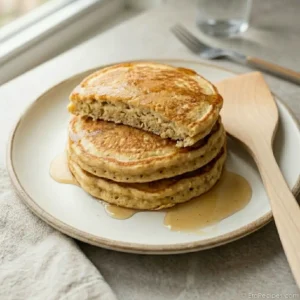
Cottage Cheese Banana Oatmeal Protein Pancakes
Ingredients
- 1/2 cup old-fashioned rolled oats
- 1/2 medium ripe banana
- 1/2 teaspoon vanilla extract
- 1 teaspoon baking powder
- 1/2 teaspoon ground cinnamon
- 1 large egg
- 1/4 cup low-fat cottage cheese
- Nonstick cooking spray for the griddle
- Optional Add-Ins and Toppings
- Fresh berries
- Chocolate chips
- Peanut butter
- Maple syrup
Instructions
Blend the pancake batter:
- Add the rolled oats, banana, vanilla, baking powder, cinnamon, egg, and cottage cheese to a blender. Blend for about 30 seconds, or until completely smooth with no visible oat flakes, banana pieces, or cottage-cheese curds.
Prepare the griddle:
- Lightly coat a large nonstick skillet or griddle with cooking spray and heat it over medium-low heat.
Portion the pancakes:
- Pour about 1/4 cup of batter onto the hot griddle for each pancake. Add optional berries or chocolate chips to the top of the uncooked batter if desired.
- Cook until bubbles appear:
- Let the pancakes cook until small bubbles form on the surface and the outer edges begin to look set.
Flip and finish:
- Turn each pancake carefully and cook the second side until golden brown and cooked through. Wipe the skillet clean as needed, apply another light coating of cooking spray, and repeat with the remaining batter.
Use a ripe banana for easier blending and better natural sweetness.
Cooked pancakes can be frozen for up to 3 months for make-ahead breakfasts.
Mistakes That Affect the Result
Using a banana that is not ripe enough
A firm banana is less sweet and more difficult to blend smoothly. Use a ripe banana for better flavor and easier blending.
Expecting a thin pancake batter
The batter is intentionally thick. Adding unnecessary liquid can make the pancakes spread too much and become harder to flip.
Cooking over high heat
High heat browns the surface before the thick center has time to cook.
Medium-low heat gives the batter time to become stable and fluffy throughout.
Flipping before bubbles appear
If the first side has not developed enough structure, the pancake can tear or fold when lifted.
Use bubbles and set edges as your cue rather than relying only on the clock.
Making oversized pancakes
Very large pancakes take longer to cook through and are more difficult to turn cleanly. Smaller rounds are much easier to manage with this thick batter.
Troubleshooting and Corrections
The batter will not move in the blender
Stop the blender and scrape ingredients away from the sides toward the blades. Because this is a small, thick batch, ingredients can occasionally sit above the blending zone.
Pulse again rather than immediately adding liquid.
The pancakes are dark outside but soft inside
Lower the heat. This usually indicates that the griddle is cooking the surface faster than the thick center.
The pancakes break when flipped
Give the first side more time. Wait until bubbles appear and the edges look visibly set.
The batter became much thicker while sitting
This happens because oats absorb moisture. Cook the batter shortly after blending for the most consistent results.
Easy Mix-In and Topping Variations
The basic batter is deliberately simple, which makes it easy to change the final presentation without changing the core technique.
Fresh berries
Add fresh berries on top after cooking, or place a few berries onto each pancake while the first side is cooking.
Chocolate chips
A small amount of chocolate chips can be added to the uncooked surface of each pancake before flipping.
Nut butter
Peanut butter or another nut butter works well as a topping and complements the banana flavor.
Maple syrup
A light drizzle of maple syrup adds sweetness at the table while allowing the naturally sweet banana batter to remain the main flavor.
Yogurt
Plain or vanilla yogurt can add a cool creamy contrast to the warm pancakes.
How to Make These Pancakes Ahead
Cooked pancakes are better suited to make-ahead preparation than the raw batter.
If you need several servings, prepare multiple batches and keep the finished pancakes warm on an oven-safe plate or baking sheet in a low oven while you finish cooking.
For breakfasts later in the week, allow the pancakes to cool before storing them.
Place them in a covered container in the refrigerator and reheat only the amount you need.
FoodSafety.gov recommends refrigerating cooked leftovers promptly and using them within about three to four days. See the FoodSafety.gov leftovers guidance.
Freezing and Reheating
These pancakes also freeze well.
Arrange completely cooled pancakes on a baking sheet so they are not touching and freeze them until firm. Once frozen, transfer them to a freezer-safe container or bag.
The reference recipe recommends freezer storage for up to three months.
Microwave reheating
Place the number of pancakes you need on a microwave-safe plate and heat briefly until warm.
Toaster or toaster oven
A toaster or toaster oven can give the exterior a slightly drier finish while warming the center.
Keeping a batch warm
When serving several people, keep finished pancakes in a 200°F oven while the remaining batches cook.
Frequently Asked Questions
Can you taste the cottage cheese?
The cottage cheese is blended completely into the batter, so there should not be visible curds. Banana, cinnamon, and vanilla are the more noticeable flavors.
Do I need to grind the oats first?
No. Add the old-fashioned rolled oats directly to the blender with the other ingredients and blend until the entire batter becomes smooth.
Why is the batter so thick?
The recipe uses oats, banana, egg, and cottage cheese without added milk, so a thick batter is expected. That thickness helps create the fluffy texture.
Can I make Cottage Cheese Banana Oatmeal Protein Pancakes ahead?
Yes. Cook the pancakes first, cool them, and refrigerate or freeze them. The raw batter becomes thicker as the oats absorb moisture during storage.
How many pancakes does one batch make?
One batch makes approximately three to four pancakes, depending on the exact size of each portion.