
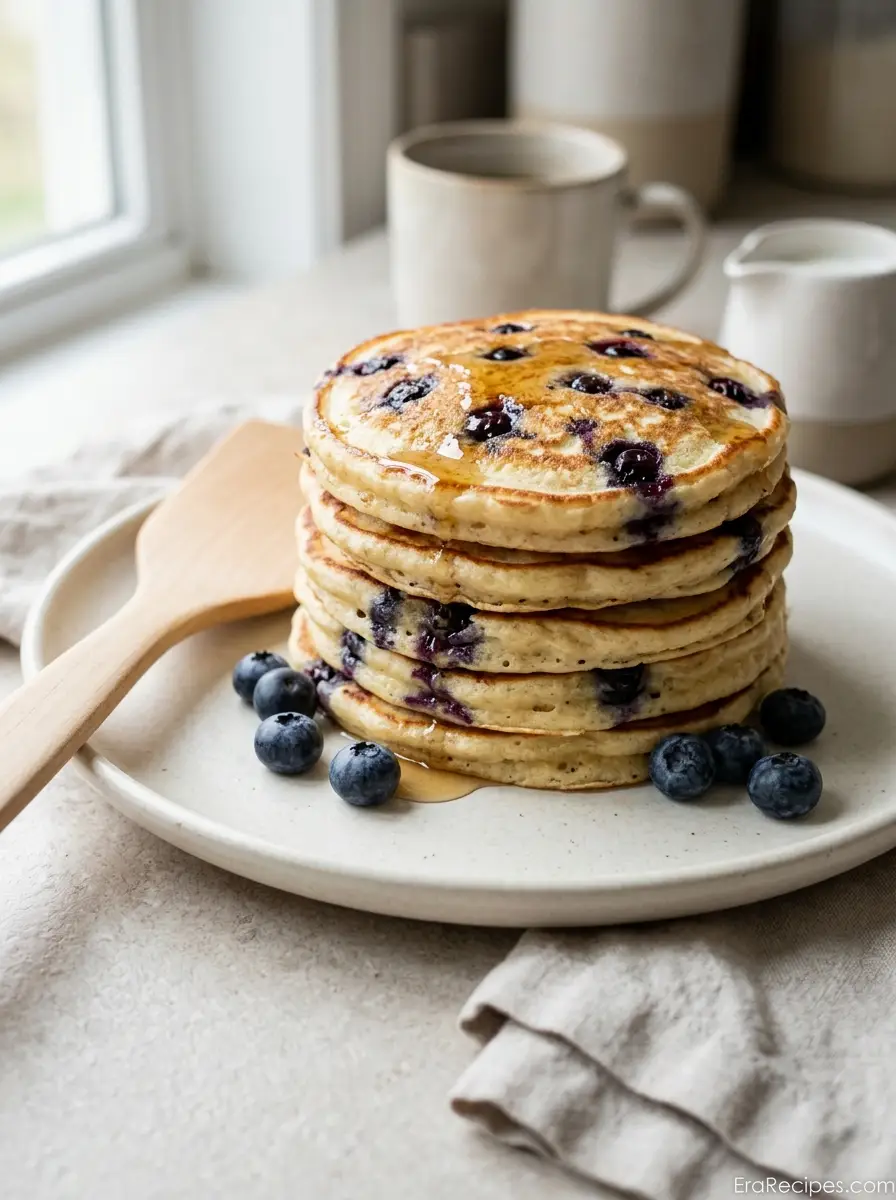
Blueberry Cottage Cheese Pancakes combine rolled oats, cottage cheese, eggs, milk, maple syrup, and juicy blueberries in a smooth blender batter that cooks into soft, tender pancakes. The cottage cheese blends completely into the mixture, so the finished pancakes have a familiar texture rather than noticeable cheese curds.
These pancakes are especially practical when you want breakfast to feel substantial without adding protein powder or preparing several separate components. Cottage cheese and eggs naturally contribute protein, while rolled oats replace traditional all-purpose flour and give the pancakes a soft, slightly hearty structure.
The most important part of the method is not the ingredient list but the order in which everything is combined. The oats are blended into a fine flour first, the wet ingredients are added and blended until smooth, and the blueberries are stirred in only after the blender stops. That sequence keeps the berries whole and prevents the batter from becoming purple or overly wet.
Why These Pancakes Work for Busy Breakfasts
A good weekday pancake recipe needs to cook quickly without requiring a large collection of bowls, mixers, and measuring tools. Blueberry Cottage Cheese Pancakes solve that problem by using the blender for most of the preparation.
The rolled oats become the flour directly in the blender. The cottage cheese, milk, eggs, maple syrup, and vanilla are then added to the same container, so there is no separate dry bowl and wet bowl to combine later.
This also makes these high-protein pancakes practical for meal prep. One batch can be cooked during the weekend, cooled, and stored for breakfasts later in the week.
The recipe also avoids the dense texture that can sometimes happen with oat-based pancakes. Finely processing the oats and fully blending the cottage cheese creates a smoother batter with a texture closer to traditional pancakes.
Blueberries provide moisture and sweetness in individual pockets rather than throughout the entire batter. Because they are folded in at the end, the batter remains pale while the fruit stays recognizable.
The Principal Ingredients Behind the Batter
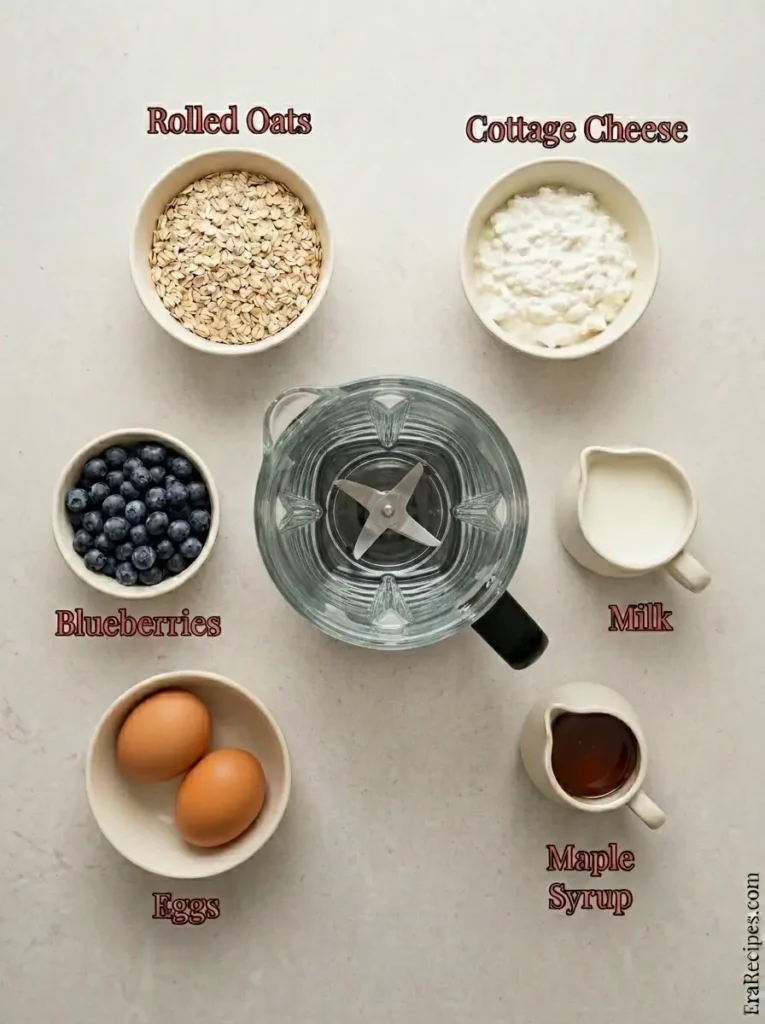
Rolled oats become the flour
Old-fashioned rolled oats replace conventional flour in these pancakes. Instead of buying oat flour separately, the oats are processed in the blender until very fine.
This step matters because coarse oat pieces produce a heavier, more rustic pancake. A fine oat flour creates a smoother batter and a softer finished texture.
These are essentially oatmeal blueberry pancakes with the oats transformed into flour before the wet ingredients are added.
Cottage cheese provides moisture and structure
Cottage cheese is blended until its curds disappear into the batter. Once completely smooth, it contributes moisture and richness without leaving a noticeable cottage cheese texture.
This is one reason cottage cheese blueberry pancakes can still look and feel much like conventional blueberry pancakes.
The cottage cheese should be blended thoroughly rather than stirred into the finished batter by hand. Visible curds can create uneven areas and make individual pancakes more fragile.
Eggs help the pancakes hold together
Eggs provide structure and help the oat-based batter set as it cooks. They are especially important because rolled oats do not behave exactly like wheat flour.
Blending the eggs with the cottage cheese and milk distributes them evenly before the blueberries enter the mixture.
Milk controls the batter consistency
Milk loosens the cottage cheese and oat mixture enough for the batter to spread naturally on the griddle.
The batter should remain thick enough that each portion forms a round pancake instead of running rapidly across the pan.
Maple syrup lightly sweetens the batter
A small amount of maple syrup adds sweetness without overpowering the blueberries. Additional maple syrup can always be added at the table.
Fresh blueberries create juicy pockets
Fresh blueberries stay whole particularly well during mixing. Once the pancakes cook, the berries soften and create small juicy pockets throughout each serving.
Frozen blueberries can also work, but they should be added directly from frozen instead of thawed first. Thawed berries release more juice and can turn the batter purple.
Blend the Oats Into a Fine Flour First
Add the rolled oats, baking powder, baking soda, and salt to a high-speed blender or food processor before any wet ingredients are introduced.
Blend until the oats resemble a fine flour. This usually takes less than a minute in a powerful blender.
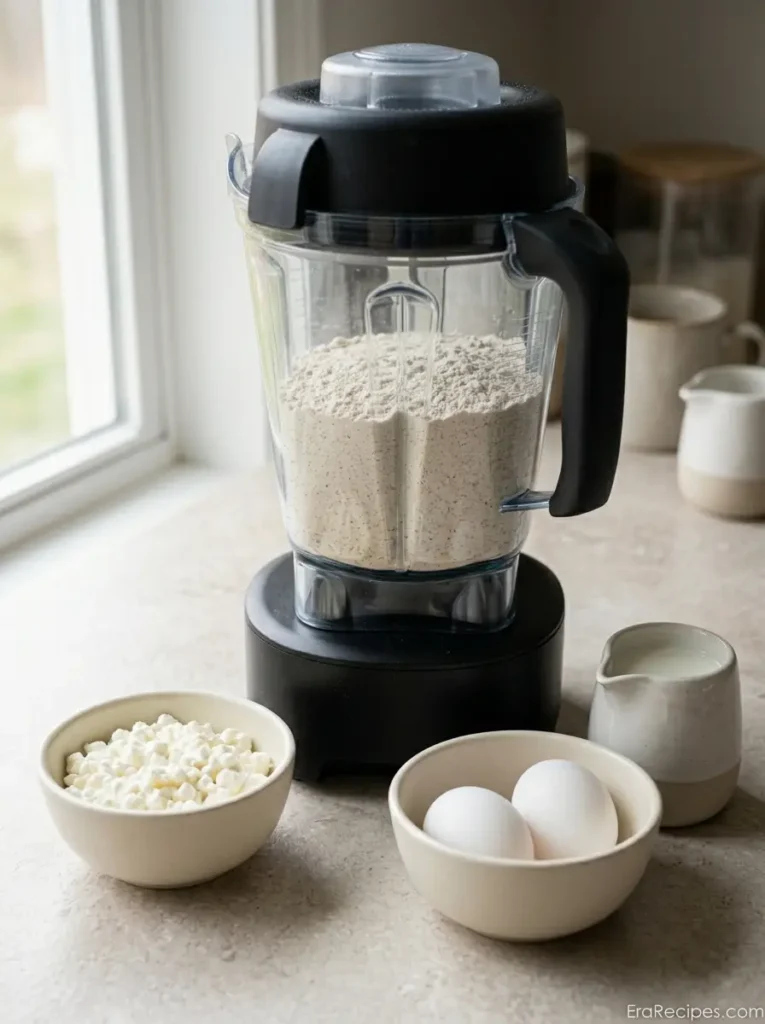
Check the texture before moving on. If large flakes are still visible, blend for a little longer.
This dry blending stage is one of the most important differences between soft oat pancakes and pancakes with a coarse, chewy texture.
Processing the oats separately also prevents the wet ingredients from slowing down the grinding action before the oats are fine enough.
Blend the Wet Ingredients Into a Smooth Batter
Once the oat flour is fine, add the cottage cheese, milk, eggs, maple syrup, and vanilla directly to the blender.
Blend again until the batter looks smooth and uniform.
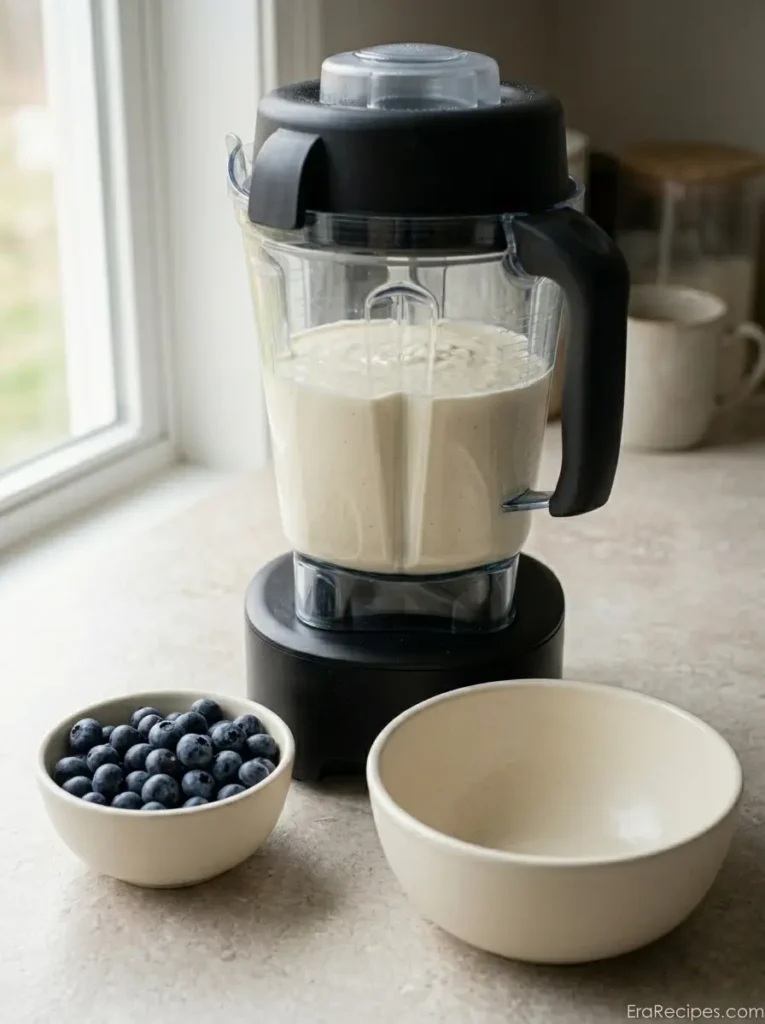
Stop and scrape down the blender jar if dry oat flour remains around the sides. Then blend again briefly.
The finished batter should not show obvious cottage cheese curds or large pieces of oats.
Avoid blending much longer than necessary after the batter becomes smooth. The goal is simply to distribute the ingredients completely.
If the batter appears slightly thick, remember that it only needs to spread into small pancakes. A batter that is too thin can make the pancakes difficult to flip.
Fold the Blueberries In After Blending
Do not blend the blueberries with the rest of the ingredients.
Instead, add them after the smooth batter is finished and fold them through gently with a spatula.
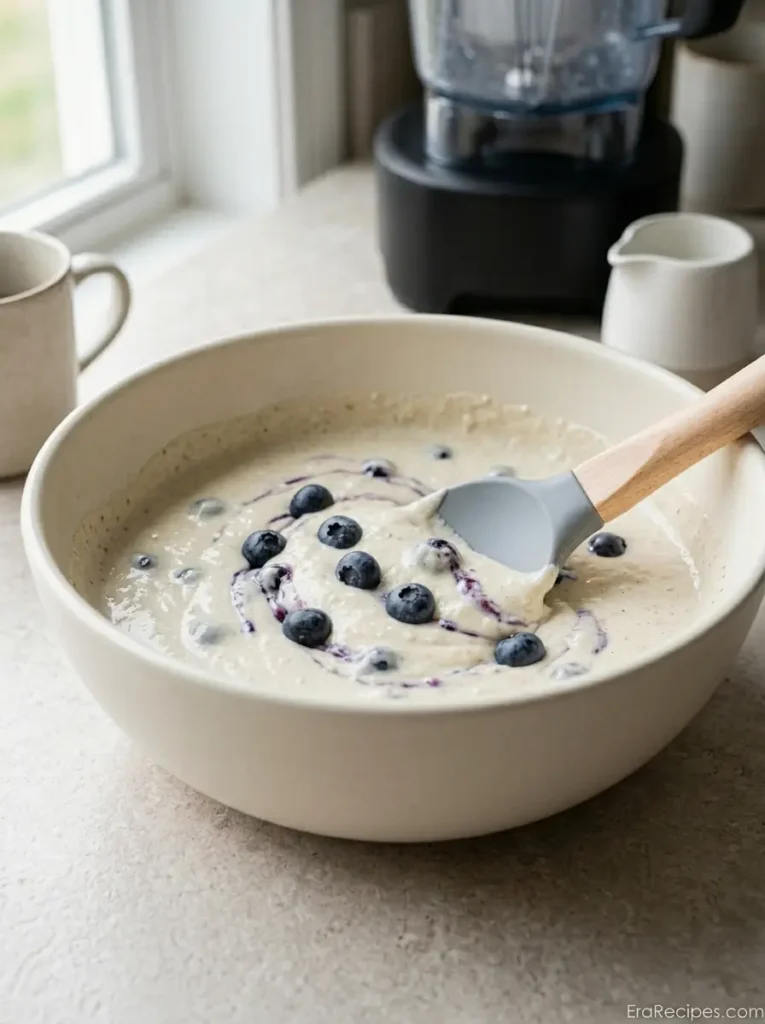
This keeps the berries whole and prevents their juice from being distributed through the entire mixture.
You can stir them directly into the blender jar after removing it from the base, but transferring the batter to a mixing bowl usually makes gentle folding easier.
Use only a few turns of the spatula. Once the blueberries are reasonably distributed, stop stirring.
Overmixing can crush the berries and produce streaks of juice that may burn slightly when they reach the hot pan.
Cook Over Medium Heat for Soft Centers and Golden Edges
Heat a nonstick griddle or large frying pan over medium heat and apply a very light coating of butter or neutral oil.
Use about one-quarter cup of batter for each pancake. Keeping the portions relatively consistent helps them finish cooking at approximately the same time.
Cook the first side for a few minutes. Small bubbles should begin forming at the surface, the edges should look more set, and the underside should become golden.
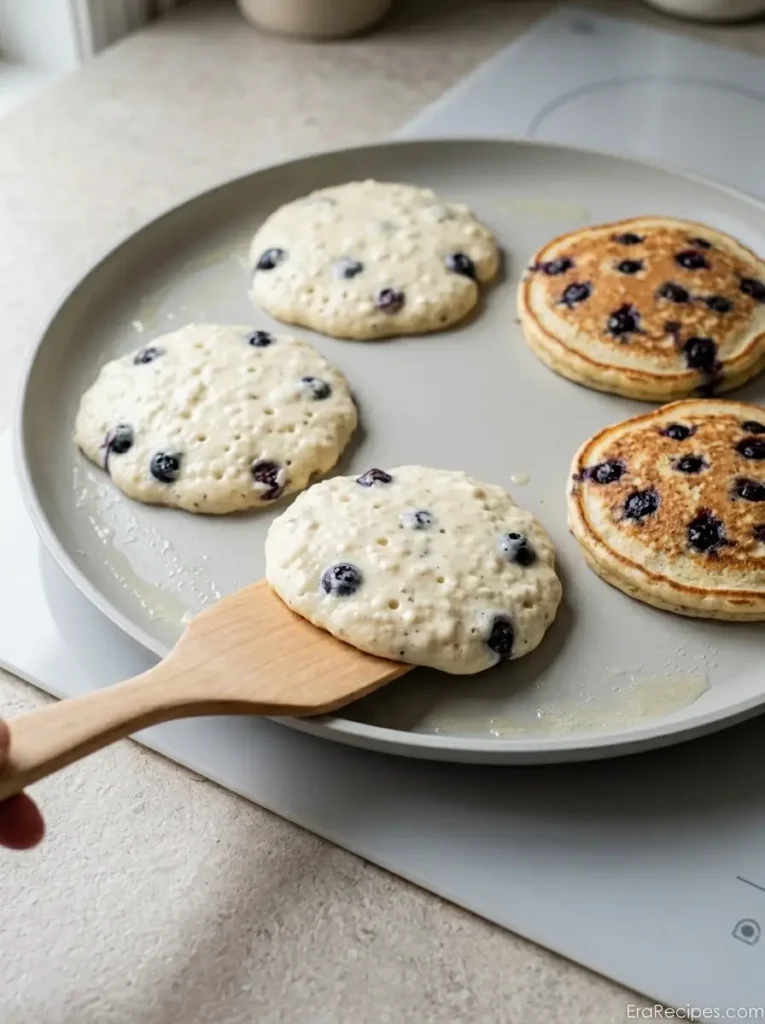
Flip only when the pancake feels stable enough to lift with a spatula. Turning too early can cause the center to break apart.
After flipping, the second side needs less time because the pancake is already mostly cooked.
Medium heat is important. A very hot griddle may brown the outside before the oat-and-cottage-cheese center has enough time to set.
If blueberries burst and leave juice on the pan, wipe the griddle carefully between batches. Burned blueberry juice can create dark spots on the next pancakes.
How to Keep the Pancakes Soft and Fluffy
Blend the oats completely
Fine oat flour makes the batter smoother. Leaving large flakes intact creates a more noticeable oatmeal texture.
Blend the cottage cheese until smooth
The batter should not contain visible curds. Thorough blending distributes the cottage cheese throughout the mixture and gives the pancakes an even texture.
Add blueberries last
Whole blueberries create better pockets of fruit and avoid turning the complete batter purple.
Keep the heat moderate
These pancakes need enough time for the center to cook before the outside becomes too dark.
Wait before flipping
Look for bubbles and set edges rather than flipping based only on time. The exact timing can vary slightly with your pan and stove.
Blueberry Cottage Cheese Pancakes
Ingredients
- 2 cups old-fashioned rolled oats
- 2 teaspoons baking powder
- 1/2 teaspoon baking soda
- 1/2 teaspoon salt
- 1 cup cottage cheese
- 2/3 cup milk
- 2 large eggs
- 1 teaspoon vanilla extract
- 1 tablespoon maple syrup
- 1/2 to 3/4 cup fresh blueberries
- Butter or neutral oil for lightly coating the pan
Instructions
Blend the oats into flour:
- Add the rolled oats, baking powder, baking soda, and salt to a high-speed blender or food processor. Blend for 30–60 seconds, or until the oats become a fine flour.
Make the smooth batter:
- Add the cottage cheese, milk, eggs, maple syrup, and vanilla. Blend until completely smooth, stopping to scrape down the sides as needed.
Fold in the blueberries:
- Transfer the batter to a mixing bowl if desired. Gently fold in the blueberries by hand so they remain whole.
Prepare the griddle:
- Heat a large nonstick griddle or frying pan over medium heat. Lightly coat the surface with butter or neutral oil.
Cook the pancakes:
- Add about 1/4 cup of batter for each pancake. Cook for 2–3 minutes, or until the pancakes begin to puff, bubbles form, and the underside is golden. Flip and cook for another 1–2 minutes until golden and cooked through.
Wipe away cooked blueberry juice between batches if needed so later pancakes do not develop burned spots.
Store cooled pancakes refrigerated for up to 4 days or freeze for up to 3 months.
Serving Ideas for Blueberry Cottage Cheese Pancakes
These pancakes are flavorful enough to serve with a simple drizzle of maple syrup and a few fresh blueberries.
For additional creaminess, add a spoonful of plain Greek yogurt beside the stack. The slight tang works well with the sweet berries and maple syrup.
Nut butter can make the breakfast feel more substantial. Almond butter is especially good with blueberries because its flavor is mild enough not to cover the fruit.
A little fresh lemon zest can also brighten the blueberry flavor. Use only the finely grated outer peel so the topping adds aroma without bitterness.
Warm butter is another simple option. A small amount melting over the top pancake gives the stack a familiar breakfast flavor without requiring another sauce.
Why These Easy Breakfast Pancakes Work for Meal Prep
These easy breakfast pancakes reheat well because the cottage cheese and oats help the centers stay tender after refrigeration.
Allow freshly cooked pancakes to cool before placing them into an airtight storage container. Stacking them while they are still releasing steam can create excess condensation.
For a few days of breakfasts, keep them refrigerated and remove only the portions you plan to reheat.
For longer storage, freezing is more practical. Arrange the cooled pancakes in a single layer until firm, then transfer them into a freezer-safe container or bag.
Placing parchment paper between pancakes prevents them from freezing together and makes it easier to remove one or two at a time.
Fresh vs. Frozen Blueberries
Fresh blueberries are the easiest option because they remain firm during folding and usually release less juice before cooking.
Frozen blueberries work too, particularly outside fresh blueberry season.
Do not thaw them first. Add frozen berries directly to the batter and fold them in gently.
The pancakes may show slightly more purple coloring around frozen berries, but the overall method remains the same.
If frozen berries are very large, avoid aggressively stirring the batter in an attempt to distribute them perfectly. Gentle mixing is more important than having exactly the same number of berries in every pancake.
Storage and Reheating
Store cooled leftover pancakes in an airtight container in the refrigerator for up to four days.
Egg-containing cooked foods should be refrigerated promptly rather than left sitting at room temperature for extended periods.
Microwave reheating
Place one serving on a microwave-safe plate and heat briefly until warmed through. Short intervals help prevent the pancakes from becoming rubbery.
Toaster or toaster oven
A toaster or toaster oven can produce slightly drier, crisper edges while warming the center.
Freezer storage
Freeze cooled pancakes in a single layer first, then transfer them to a freezer-safe container. They can be stored frozen for up to three months.
Reheat only the number you need and add fresh blueberries or maple syrup after warming.
Frequently Asked Questions
Can you taste the cottage cheese in the pancakes?
When the cottage cheese is blended thoroughly with the oats and other wet ingredients, the curds disappear into the batter and the finished pancakes have a smooth texture rather than a noticeable cottage cheese flavor.
Can I make Blueberry Cottage Cheese Pancakes with frozen blueberries?
Yes. Add the frozen blueberries directly to the finished batter without thawing them first. Fold them in gently so they do not release excessive juice.
Why are my oatmeal blueberry pancakes dense?
The oats may not have been blended finely enough, or the pan may have been too cool. Blend the rolled oats until they resemble fine flour and cook the pancakes over steady medium heat.
Can I freeze these high-protein pancakes?
Yes. Cool the pancakes completely, freeze them in a single layer until firm, and then transfer them to a freezer-safe container with parchment between layers.