
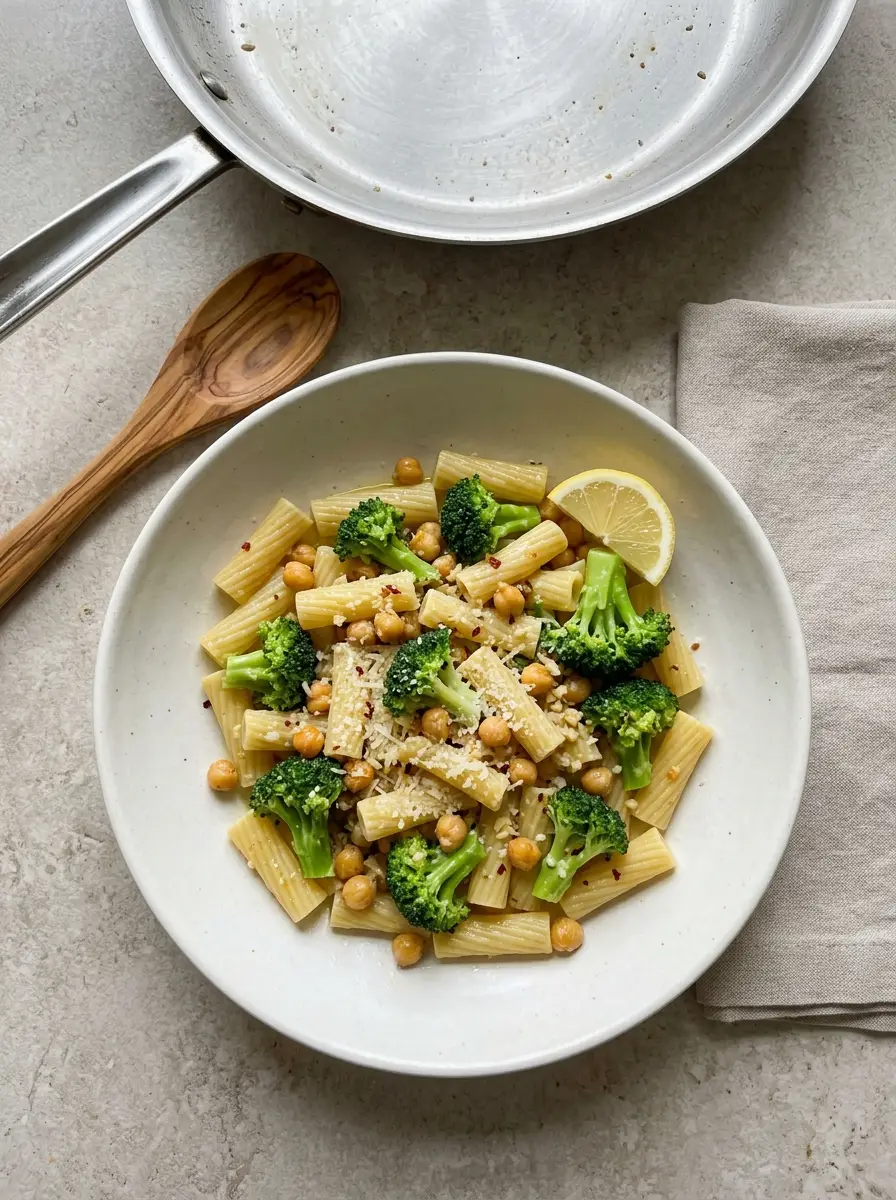
Broccoli Chickpea Pasta combines tender short pasta, golden chickpeas, bright broccoli, fresh garlic, lemon, and a small amount of red pepper heat in one practical meatless dinner. The light sauce comes together with olive oil, vegetable broth, and reserved pasta water, giving the pasta a silky coating without relying on a heavy cream sauce.
This quick dinner uses familiar pantry and refrigerator ingredients and comes together in about 25 minutes. The pasta and broccoli share one pot, while the chickpeas, garlic, and sauce cook in a large skillet. Bringing the components together at the end keeps the broccoli crisp-tender, the chickpeas substantial, and the lemon flavor fresh.
Optional Parmesan adds a savory finish, but the pasta remains satisfying without it. The combination of chickpeas, pasta, and broccoli gives each bowl a balance of soft, crisp, creamy, and lightly chewy textures that works well for weeknight dinners and make-ahead lunches.
Why This 25-Minute Pasta Works
A useful weeknight pasta should have a short preparation list, an efficient cooking order, and a sauce that can be finished in the time it takes to boil the noodles. Broccoli Chickpea Pasta meets those needs without requiring a separate saucepot or a long simmer.
The pasta provides the main base, while chickpeas make the dinner more substantial. Broccoli adds color, texture, and freshness, preventing the meal from feeling like a plain bowl of noodles.
Garlic and red pepper flakes cook briefly in olive oil, creating the aromatic foundation of the sauce. Vegetable broth adds savory flavor and gives the broccoli enough moisture to finish cooking in the skillet.
Reserved pasta water is the final element that connects the oil, broth, lemon juice, chickpeas, broccoli, and pasta. Its starch helps the liquid cling to the noodles rather than collecting separately at the bottom of the pan.
Fresh lemon juice is added near the end. This preserves its brightness and balances the olive oil, garlic, chickpeas, and optional Parmesan.
The recipe also uses the pasta pot efficiently. Broccoli is briefly cooked in the same boiling water used for the pasta, reducing the number of pots and helping the vegetable remain vivid and crisp-tender.
Ingredients That Build the Bright Lemon-Garlic Flavor
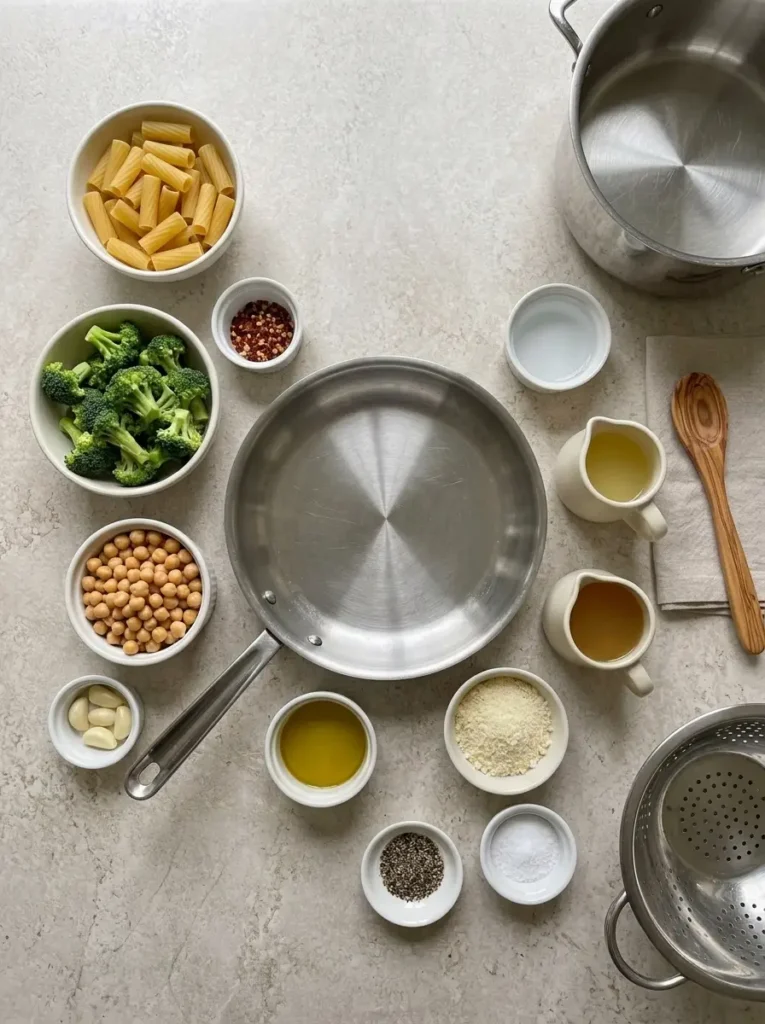
Short pasta
Penne, rotini, fusilli, or another short pasta shape gives the light sauce more places to cling. Ridges, curves, and hollow centers catch small pieces of garlic, softened chickpea edges, and the olive-oil-based sauce.
Long noodles can work, but short pasta is easier to combine evenly with broccoli florets and whole chickpeas. It also makes the finished meal simpler to portion into bowls or meal-prep containers.
Cook the pasta only until al dente. It will spend another minute or two in the skillet, where it continues absorbing moisture from the broth and reserved pasta water.
Broccoli florets
Broccoli gives this pasta its main vegetable component and a fresh contrast to the creamy chickpeas. Cut the florets into similar bite-size pieces so they cook evenly and mix naturally with the pasta.
Fresh broccoli generally provides the firmest texture, but frozen florets are a convenient option. Frozen broccoli may require a few additional minutes because it releases more moisture and begins at a lower temperature.
The broccoli should be tender enough to pierce easily while retaining some structure. Overcooked florets can break apart when the pasta is tossed and may lose their bright color.
Chickpeas
Canned chickpeas make the recipe fast and pantry-friendly. Draining and rinsing removes the canning liquid and gives you better control over the seasoning.
Pat the chickpeas dry before placing them in the skillet. Surface moisture creates steam and makes it more difficult for their edges to develop a lightly golden texture.
The chickpeas do not need to become completely crisp. A brief sauté gives them a firmer exterior while keeping their centers soft and creamy.
Fresh garlic
Garlic provides the strongest aromatic flavor in the dish. Freshly minced cloves release their flavor quickly into the warm olive oil.
Keep the heat moderate and watch the garlic closely. It needs only a short cooking period before it becomes fragrant. Deeply browned garlic can taste bitter and may overpower the lemon and broccoli.
Extra-virgin olive oil
Olive oil carries the garlic and red pepper flavor throughout the skillet. It also provides the main richness in a pasta that does not depend on butter or cream.
Measure the oil rather than pouring freely. Too little can leave the pasta dry, while too much can create a greasy layer that the pasta water cannot fully incorporate.
Vegetable broth
Vegetable broth adds savory flavor and enough liquid to finish cooking the broccoli in the skillet. A low-sodium broth makes it easier to season the pasta gradually.
Reserved pasta water can replace some or all of the broth when necessary, although the final flavor will be slightly lighter.
Lemon juice
Lemon juice brings acidity and keeps the dish tasting bright. Add it after the pasta and vegetables are nearly finished rather than allowing it to simmer for a long period.
A small amount is enough to balance the garlic and olive oil. Additional lemon can be offered at the table for diners who prefer a sharper citrus flavor.
Red pepper flakes
Red pepper flakes provide gentle background heat. Toasting them briefly with the garlic helps release their flavor into the oil.
The amount can be reduced or omitted for a mild family dinner. Additional flakes can be added to individual portions instead of making the entire skillet spicy.
Parmesan
Parmesan is optional but adds salty, savory flavor and helps the sauce feel slightly fuller. Stir it in after removing the skillet from the heat.
Adding cheese away from direct heat helps it melt into the pasta water and olive oil without becoming grainy or collecting in firm clumps.
Use One Pot and One Skillet Efficiently
Begin by filling a large pot with water and bringing it to a boil. Starting the water first is important because it usually takes longer than preparing the garlic, draining the chickpeas, or cutting the broccoli.
While the water heats, rinse and dry the chickpeas, mince the garlic, cut the broccoli into even florets, grate the Parmesan when using it, and measure the broth, lemon juice, olive oil, and red pepper flakes.
Once the water boils, season it and add the pasta. The pasta cooking time creates the window for preparing the skillet components.
The broccoli can be briefly cooked in the pasta water during the final few minutes or blanched separately before the pasta is drained. Using the same water reduces cleanup and gives the broccoli a head start before it enters the skillet.
Before draining the pasta, reserve at least one cup of the cloudy cooking water. It is much easier to save more than you expect to use than to discover that the pasta has been drained without any cooking water available.
Keep the skillet close to the pasta pot. The drained pasta and broccoli should move into the skillet while they are still warm so they can absorb the garlic, broth, lemon, and olive oil mixture.
Build the Skillet Flavor in the Right Order
Warm the garlic and red pepper gently
Heat the olive oil in a large skillet over medium heat. Add the minced garlic and red pepper flakes once the oil is warm but not smoking.
Stir continuously for about 30–60 seconds. The garlic should smell fragrant and may turn lightly golden around the edges, but it should not become dark brown.
If the garlic colors too quickly, remove the skillet from the heat for a moment. The hot oil continues cooking the garlic even after the burner is lowered.
Give the chickpeas time to develop texture
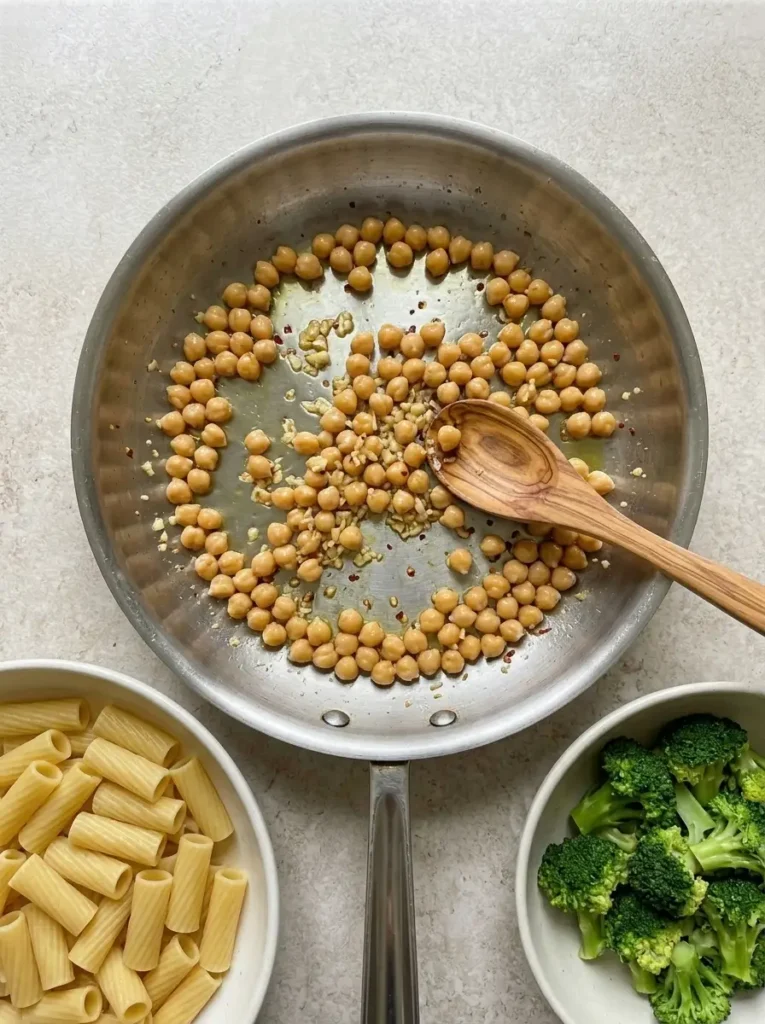
Add the drained and dried chickpeas to the flavored oil. Spread them into a relatively even layer rather than leaving them in a pile.
Cook for several minutes, stirring occasionally, until the chickpeas are hot and lightly golden around some edges. Season them with salt and black pepper during this stage.
They do not need to become crunchy throughout. The goal is to create a little surface texture while keeping their centers soft.
Add the broccoli and broth
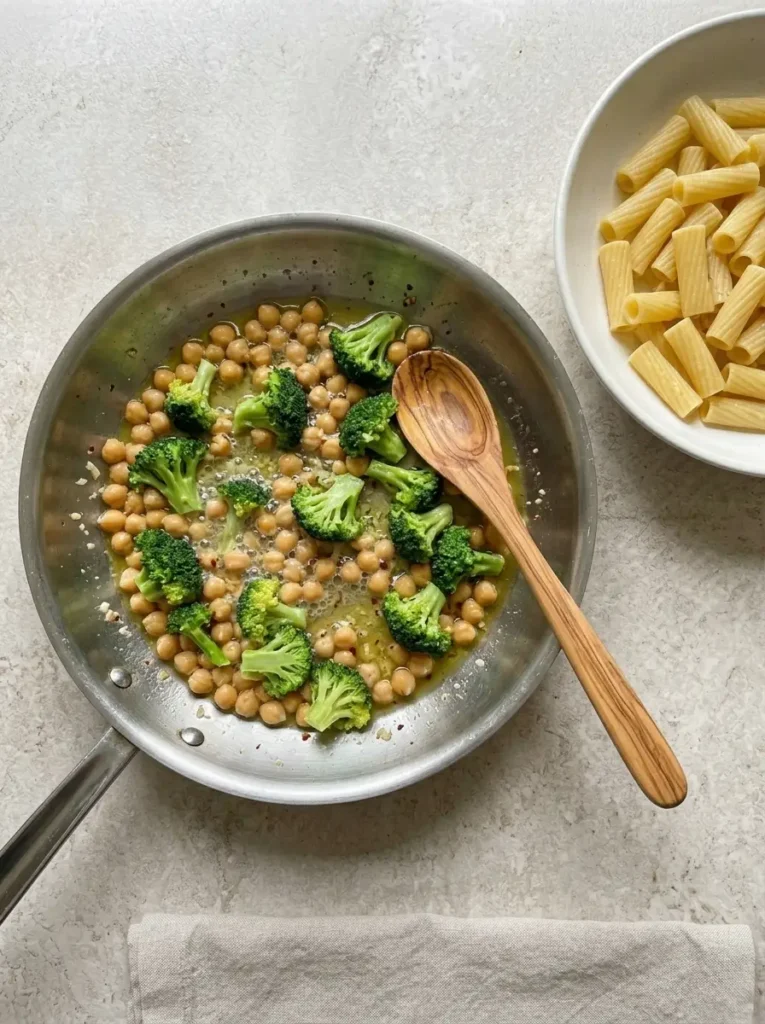
Pour in the vegetable broth and add the broccoli. Bring the liquid to a gentle simmer and stir so the garlic, oil, chickpeas, broth, and broccoli are evenly distributed.
Cook until the broccoli is bright and crisp-tender. Fresh florets need less time than frozen broccoli, so begin checking them early.
The broth should reduce slightly but should not disappear completely. A small amount of liquid is needed to combine with the pasta water during the final toss.
Add the pasta, lemon, and pasta water
Transfer the drained pasta into the skillet and add the fresh lemon juice. Begin with a small splash of reserved pasta water.
Toss continuously over medium or medium-low heat. The starch in the cooking water helps the broth and olive oil form a light sauce that coats the pasta.
Add more pasta water only when needed. The sauce may appear slightly loose at first, but it thickens as the pasta rests and absorbs the liquid.
Season with salt and black pepper after everything is combined. The pasta water, broth, and optional Parmesan all contribute seasoning, so the final adjustment should happen at the end.
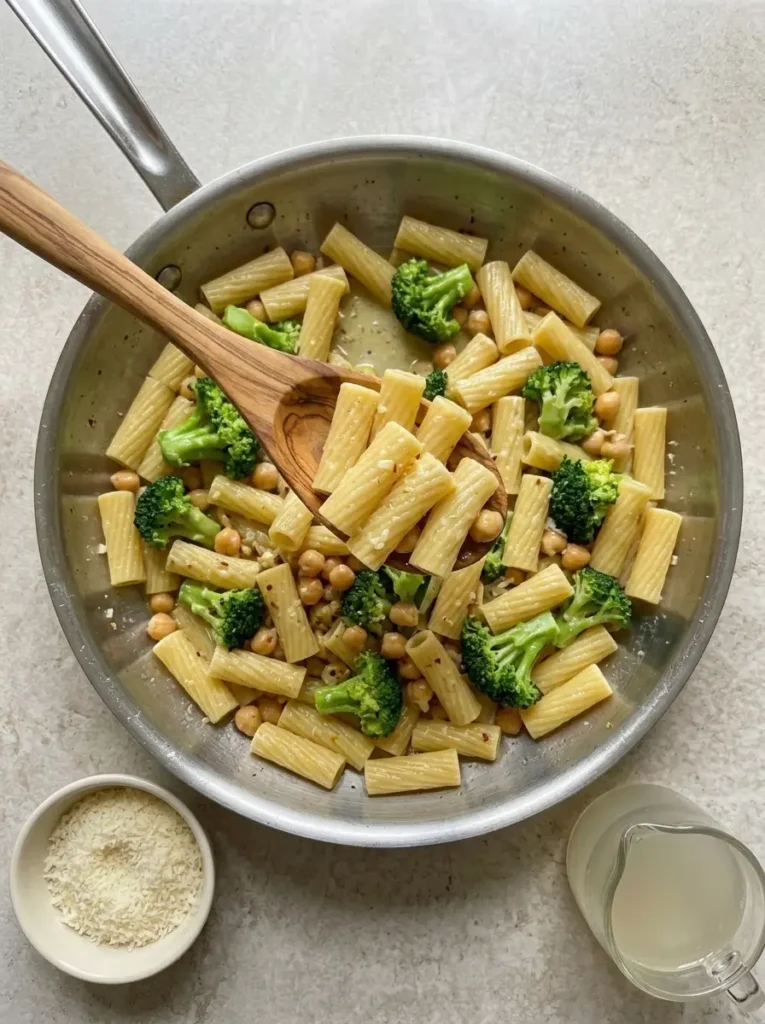
How to Keep the Broccoli Bright and the Pasta Silky
Cut the broccoli evenly
Similar-size florets finish cooking at approximately the same time. Large pieces may remain firm while small pieces become too soft.
Dry the chickpeas thoroughly
Wet chickpeas steam in the skillet and can dilute the flavored oil. Pat them dry with a clean towel before cooking.
Do not brown the garlic deeply
Garlic changes from fragrant to bitter quickly. Add the chickpeas as soon as the garlic becomes aromatic and lightly golden.
Reserve pasta water before draining
The starchy cooking liquid is one of the most useful ingredients in the recipe. Save a full cup even though only a few tablespoons may be needed initially.
Add the lemon near the end
Fresh lemon juice tastes brightest when it is not simmered for an extended period. Add it as the pasta enters the skillet.
Finish Parmesan away from direct heat
Remove the skillet from the burner before adding the optional cheese. Toss until it melts into the warm sauce.
Serve the pasta promptly
The light sauce is silkiest immediately after tossing. As the pasta stands, it continues absorbing the broth and cooking water.
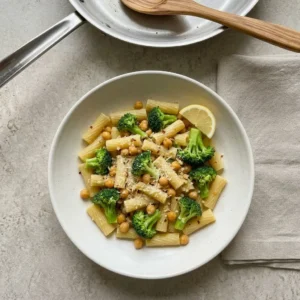
Broccoli Chickpea Pasta
Ingredients
- 9 ounces penne rotini, fusilli, or another short pasta
- Kosher salt for the pasta water and seasoning
- 3 cups broccoli florets fresh or frozen
- 1 15-ounce can chickpeas, drained, rinsed, and patted dry
- 4 –5 garlic cloves minced
- 1/4 cup extra-virgin olive oil
- 1/4 teaspoon red pepper flakes or less to taste
- 1/4 cup low-sodium vegetable broth
- 1 cup reserved pasta water as needed
- 1 tablespoon freshly squeezed lemon juice
- 1/3 cup finely grated Parmesan cheese optional
- Freshly ground black pepper to taste
- Lemon wedges and additional olive oil for serving, optional
Instructions
Cook the pasta:
- Bring a large pot of generously salted water to a boil. Add the pasta and cook until al dente according to its package directions. Reserve 1 cup of pasta water before draining.
Blanch the broccoli:
- During the final 2–3 minutes of the pasta cooking time, add the broccoli florets to the boiling water. Cook until bright and crisp-tender, then drain the pasta and broccoli together. When using frozen broccoli, allow a little additional cooking time as needed.
Warm the garlic and chickpeas:
- Heat the olive oil in a large skillet over medium heat. Add the garlic and red pepper flakes and cook for 30–60 seconds, stirring constantly, until fragrant. Add the chickpeas, season lightly with salt and black pepper, and cook for 3–4 minutes until hot and lightly golden around the edges.
Simmer the broccoli:
- Pour in the vegetable broth and add the drained broccoli. Bring the liquid to a gentle simmer and cook for 2–3 minutes, stirring occasionally, until the broccoli is tender and the broth has reduced slightly.
Toss the pasta:
- Add the drained pasta, lemon juice, and 2 tablespoons reserved pasta water. Toss over medium-low heat for 1–2 minutes until the sauce coats the noodles. Add additional pasta water one tablespoon at a time when needed.
Finish and serve:
- Remove the skillet from the heat. Stir in the Parmesan when using it, then taste and adjust the salt, black pepper, lemon, and red pepper flakes. Serve immediately with optional lemon wedges and a light drizzle of olive oil.
Add Parmesan away from direct heat to help it melt smoothly into the light sauce.
Make-Ahead Options for a Faster Dinner
Several components can be prepared in advance without assembling the complete pasta.
Cut the broccoli into florets, mince the garlic, rinse and dry the chickpeas, grate the Parmesan, and measure the broth and seasonings earlier in the day. Keep the prepared ingredients covered and refrigerated where necessary.
The broccoli can also be blanched briefly, cooled, and refrigerated for up to one day. Reduce its skillet cooking time because it has already been partially cooked.
Pasta can be cooked ahead, but it should be left slightly firmer than usual. Drain it, toss it with a small amount of olive oil, cool it promptly, and refrigerate it in a covered container.
When ready to serve, warm the garlic, red pepper flakes, chickpeas, broth, and broccoli in the skillet. Add the cooked pasta with a splash of water and toss until hot.
Fresh lemon juice and Parmesan should still be added near the end so their flavors and textures remain clear.
Easy Variations and Substitutions
Use frozen broccoli
Frozen broccoli can go directly into the skillet. Allow additional cooking time and expect it to release more moisture than fresh florets.
Avoid thawing it until very soft because fragile florets may break apart during tossing.
Change the bean
Cannellini beans or butter beans can replace chickpeas. They have a softer, creamier texture and should be stirred more gently to prevent breaking.
Use gluten-free pasta
A short gluten-free pasta can be used. Follow its package directions closely because some varieties soften quickly and release a different amount of starch.
Reserve the cooking water as usual, but add it gradually because its thickening effect may vary.
Make the pasta dairy-free
Omit the Parmesan or use a suitable dairy-free savory topping. Taste the pasta after the lemon and seasoning are added because the cheese normally contributes salt.
Use broccolini or cauliflower
Broccolini or small cauliflower florets can replace broccoli. Adjust the cooking time so the vegetables become tender without losing all structure.
Add more lemon flavor
Finely grated lemon zest can be added with the juice for a stronger citrus aroma. Use only the yellow outer layer and avoid the bitter white pith.
Increase the heat
Add additional red pepper flakes at the table rather than increasing the entire skillet when diners have different spice preferences.
Serving Ideas for a Complete Meatless Dinner
Broccoli Chickpea Pasta can serve as a complete meatless dinner because it combines pasta, chickpeas, vegetables, and an olive-oil-based sauce.
Serve it in shallow bowls so the broccoli, chickpeas, and sauce remain distributed rather than settling beneath a deep pile of pasta.
A crisp green salad with a lemon-based dressing complements the bright flavor without adding another heavy component.
Roasted tomatoes, a cucumber salad, or simple mixed greens also work well. Keep side dishes lightly seasoned so they do not compete with the garlic and lemon.
Warm bread can be added for a larger family dinner, although the pasta already provides a generous starch.
Offer extra Parmesan, black pepper, red pepper flakes, and lemon wedges at the table so each person can adjust their bowl.
Storage and Reheating
Cool leftovers promptly and transfer them to shallow airtight containers. Refrigerate the pasta for up to three or four days.
The broccoli becomes softer during storage, and the pasta absorbs part of the sauce. This is expected and can be improved during reheating by adding a little liquid.
Reheat it in a skillet
Place the desired amount in a skillet over low to medium-low heat. Add a small splash of vegetable broth, water, or reserved pasta water.
Toss gently until the pasta is hot and the sauce loosens. Finish with fresh lemon juice and Parmesan after reheating.
Reheat it in the microwave
Place one portion in a microwave-safe bowl and add a teaspoon or two of water or broth. Cover loosely and heat in short intervals.
Stir between intervals so the chickpeas, pasta, and broccoli heat evenly.
Freezing
The pasta and chickpeas can be frozen, but broccoli becomes noticeably softer after thawing. For the best texture, freeze the pasta and chickpea mixture with less broccoli and add freshly cooked broccoli when reheating.
Leave out the Parmesan before freezing. Add it after the thawed pasta has been reheated and removed from direct heat.
Frequently Asked Questions
Can I use frozen broccoli?
Yes. Add frozen florets directly to the skillet and allow a few additional minutes of cooking. Watch the texture because frozen broccoli can soften more quickly once heated through.
Do I need to reserve the pasta water?
Yes. The starch in the pasta water helps the olive oil and broth coat the noodles. Save a full cup before draining, then add only the amount needed.
What pasta shape works best?
Penne, rotini, fusilli, small shells, or another short ridged shape works well because it holds the light sauce and mixes easily with chickpeas and broccoli.
How can I make the chickpeas crispier?
Dry them thoroughly and cook them in the garlic oil before adding the broth. For a firmer result, roast them separately and add them to the pasta shortly before serving.