
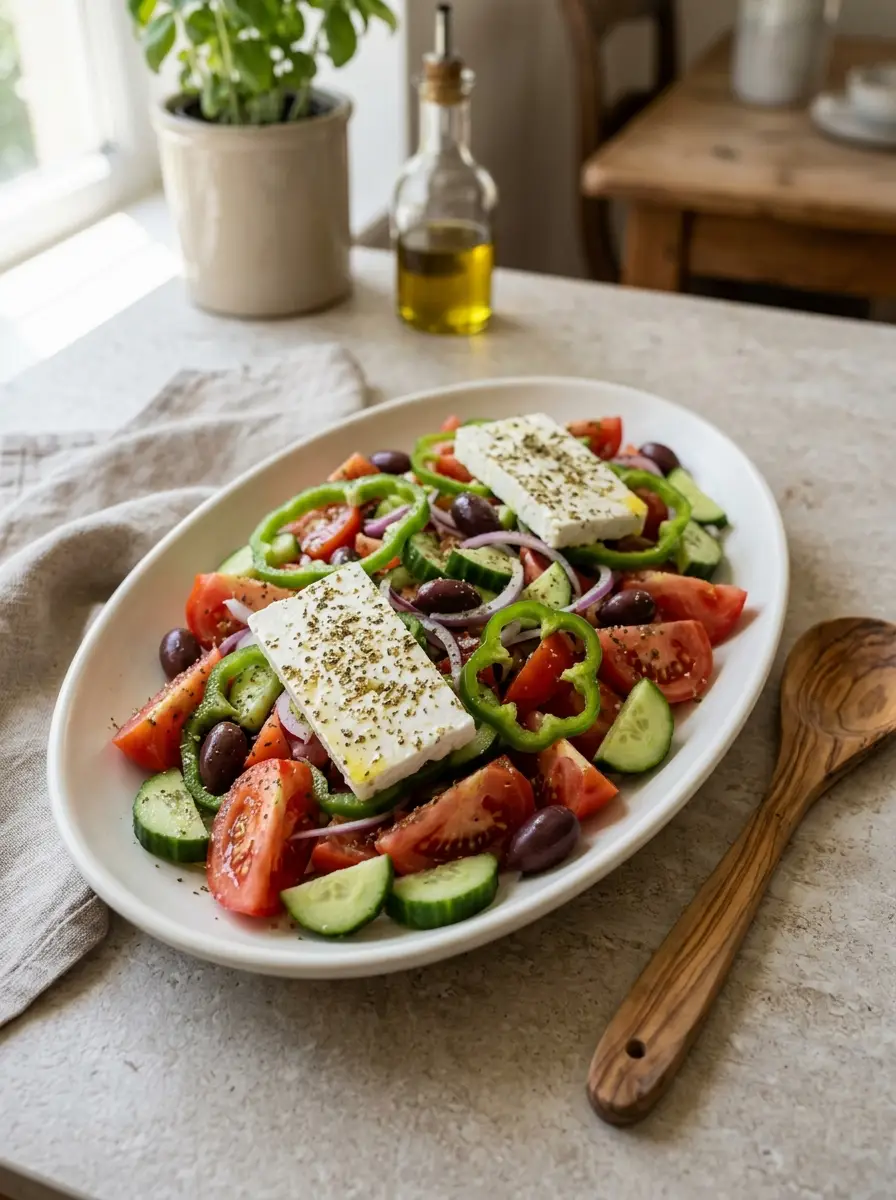
Mediterranean Greek Salad with Feta & Olives combines juicy tomatoes, crisp cucumber, green bell pepper, red onion, briny Kalamata olives, and creamy feta in one refreshing no-cook dish. Extra-virgin olive oil, red wine vinegar, dried oregano, and a little salt create a simple dressing that allows the vegetables to remain the main attraction.
This colorful salad is especially useful during summer because it requires no oven or stovetop. It can be prepared for family lunches, cookouts, picnics, and casual dinners without adding more heat to the kitchen. The vegetables provide plenty of fresh texture, while the feta and olives give the salad enough savory flavor to accompany simple main dishes.
The key is to use ripe produce, cut the vegetables into generous pieces, and combine everything gently. Keeping the feta in substantial slabs or pieces rather than mixing it aggressively through the vegetables gives the finished platter a more traditional appearance and prevents the cheese from disappearing into the dressing.
Why This Salad Belongs on a Summer Table
Warm-weather meals often benefit from a cool dish that can be prepared without cooking. This Mediterranean Greek Salad with Feta & Olives comes together entirely through slicing, seasoning, and gentle tossing, making it practical when the oven is already occupied or when you want to avoid heating the kitchen.
The ingredients are also naturally suited to summer. Ripe tomatoes become sweeter and juicier during their peak season, cucumbers provide a clean crunch, and green bell pepper adds a fresh grassy flavor. Red onion contributes sharpness, while the olives and feta provide the salty contrast that brings the vegetables together.
The salad can work as a first course, a side dish, or part of a larger Mediterranean-style spread. It is substantial enough to accompany grilled or roasted proteins but fresh enough to balance rich casseroles, sandwiches, and picnic foods.
Unlike lettuce-based salads, it does not wilt immediately after dressing. The tomatoes and cucumber release some juice as they stand, but those juices combine with the olive oil, vinegar, oregano, feta, and olive brine to form a flavorful liquid at the bottom of the serving dish.
The salad is still best served relatively soon after assembly. Its texture is most appealing when the cucumber and bell pepper remain crisp and the tomatoes hold their shape.
Plan the Salad Around the Rest of the Meal
Because this is a no-cook recipe, it can be prepared while another dish is baking, grilling, or resting. That flexibility makes it useful for cookouts and family meals where several components need attention at the same time.
When serving the salad with a hot main dish, prepare the vegetables first but wait to add the olive oil, vinegar, salt, and feta until closer to mealtime. This prevents the vegetables from releasing too much liquid while the rest of the dinner cooks.
For a casual lunch, the salad can be placed in the center of the table with bread, hummus, cooked beans, rice, or a simple protein. Guests can serve themselves directly from the platter and spoon some of the tomato and olive-oil juices over their plates.
For a cookout, keep the salad chilled until shortly before serving. Place it on the table after the hot food is ready rather than leaving it outdoors while grilling is still in progress.
When transporting it to a picnic or gathering, pack the dressing, feta, and oregano separately. Combine them with the vegetables after arrival so the salad stays crisp and visually fresh.
Choose Ingredients That Carry the Whole Dish
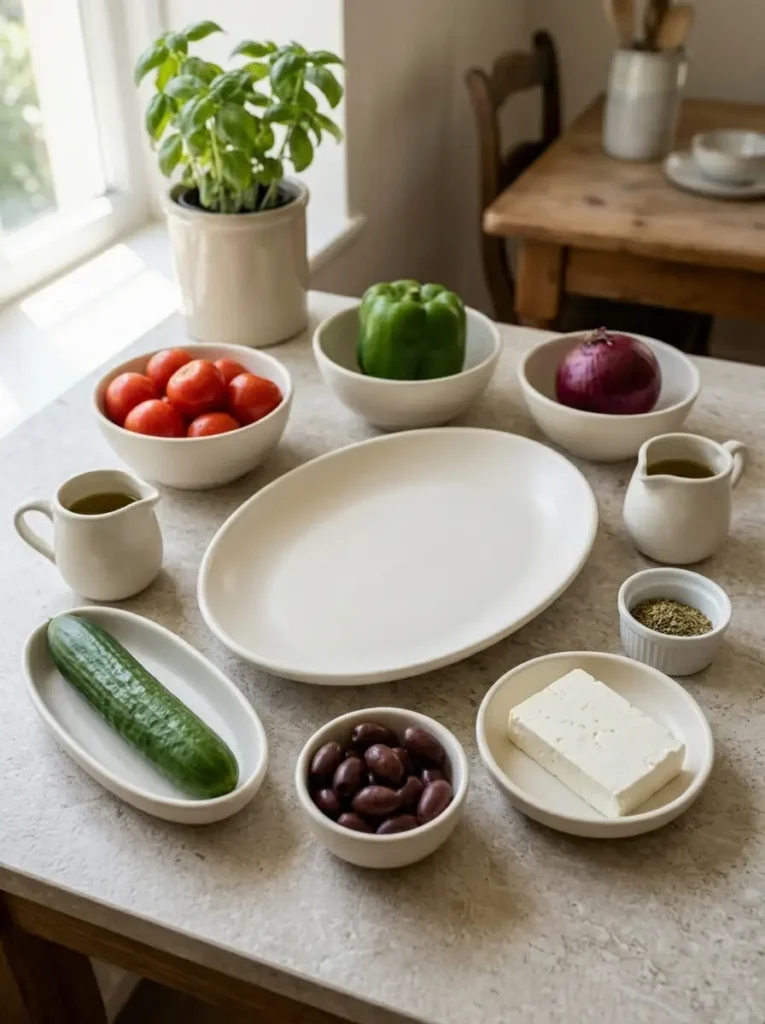
Ripe but firm tomatoes
Tomatoes create most of the salad’s volume and provide the juices that mix with the olive oil and vinegar. They should be ripe enough to taste sweet and fragrant but firm enough to hold their shape after cutting.
Roma tomatoes and vine-ripened tomatoes both work well. Avoid tomatoes that feel extremely soft or have watery, damaged areas because they can collapse during tossing.
Cut them into generous bite-size pieces or wedges rather than tiny cubes. Larger pieces retain more structure and create the rustic appearance expected from this kind of salad.
A crisp cucumber
An English cucumber is particularly useful because its skin is relatively thin and its seeds are small. It can be partially peeled to create alternating strips of dark and light green.
A standard cucumber can also be used, but a thick or waxed skin may need to be removed completely. Large watery seeds can be scooped out when necessary.
The cucumber should remain visibly crisp after cutting. Avoid very thin slices, which soften quickly once the dressing and salt are added.
Green bell pepper
Green bell pepper gives the salad a fresh, slightly bitter contrast to the sweet tomatoes. Its firm texture also adds another type of crunch beside the cucumber and onion.
Remove the stem, seeds, and white interior ribs before cutting. Rings or thin strips both work, provided the pieces are easy to eat with the other vegetables.
Green pepper is the classic choice for this flavor profile. A different color can be used, but red or yellow pepper will make the salad sweeter.
Red onion
Red onion contributes sharpness and a vivid purple color. Slice it thinly so it spreads through the salad without overpowering individual bites.
When the onion tastes especially strong, soak the slices briefly in ice water. A small amount of vinegar can be added to the water to soften the raw edge further.
Drain the onion thoroughly before adding it. Extra water can dilute the olive oil and vinegar dressing.
Kalamata olives
Kalamata olives add a concentrated briny flavor that balances the fresh vegetables. Pitted olives are easier to serve and safer for a shared platter.
Drain them well before adding them to the salad. A little olive brine flavor is welcome, but too much liquid can make the dressing excessively salty.
Leave the olives whole so they remain recognizable and provide a distinct burst of flavor.
A whole block of feta
Feta gives the salad its creamy and salty element. A block packed in brine generally stays moist and can be broken into substantial slabs or large pieces.
Place the feta over the vegetables after they have been dressed. This keeps the cheese visible and prevents it from becoming completely crumbled during tossing.
The feta and olives already contribute salt, so taste the finished salad before adding more seasoning.
Extra-virgin olive oil and vinegar
The dressing is intentionally simple. Extra-virgin olive oil coats the vegetables and carries the oregano throughout the platter, while red wine vinegar provides acidity.
Use an olive oil with a flavor you enjoy because it remains uncooked and noticeable. A harsh or stale-tasting oil cannot be hidden by the other ingredients.
Add the vinegar gradually. The tomatoes provide natural acidity, so the exact balance may change depending on their ripeness.
Dried oregano and salt
Dried oregano provides the main herbal flavor. Rub it lightly between your fingers as you sprinkle it to release more aroma.
Some oregano seasons the vegetables before the dressing is added, while the remaining amount finishes the feta on top.
Salt draws moisture from tomatoes and cucumber. Add only a modest amount shortly before serving so the vegetables do not become watery too early.
Prepare the Vegetables for the Best Texture
Mellow the onion when necessary
Begin with the red onion because it can soak while the other vegetables are prepared. Thin slices soften more effectively than thick wedges.
Place the onion in a small bowl of ice water when you want a milder flavor. Drain it thoroughly and pat away excess moisture before adding it to the serving dish.
Cut the vegetables into generous pieces
Slice the tomatoes into wedges or large bite-size pieces. Partially peel the cucumber and cut it into sturdy half-moons. Remove the seeds from the green bell pepper and cut it into rings or thin strips.
The vegetables should be similar enough in size that a serving spoon can collect several components at once. They do not need to be perfectly uniform.
A rustic cut is appropriate. Very small pieces release more juice and can make the salad resemble a chopped salsa rather than a substantial summer side.
Season before adding the liquid ingredients
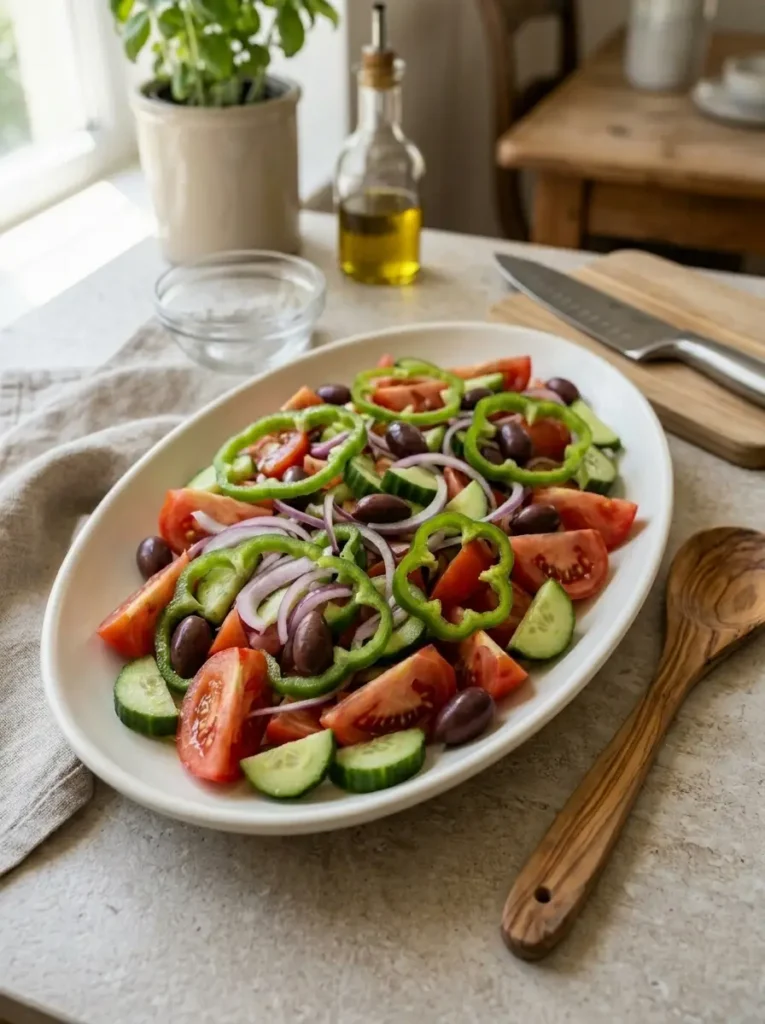
Place the tomatoes, cucumber, green bell pepper, red onion, and Kalamata olives in a wide serving dish.
Sprinkle the vegetables with some of the dried oregano and a small pinch of salt. Distributing the seasoning before the oil helps it reach more of the vegetable surfaces.
Add the olive oil and vinegar
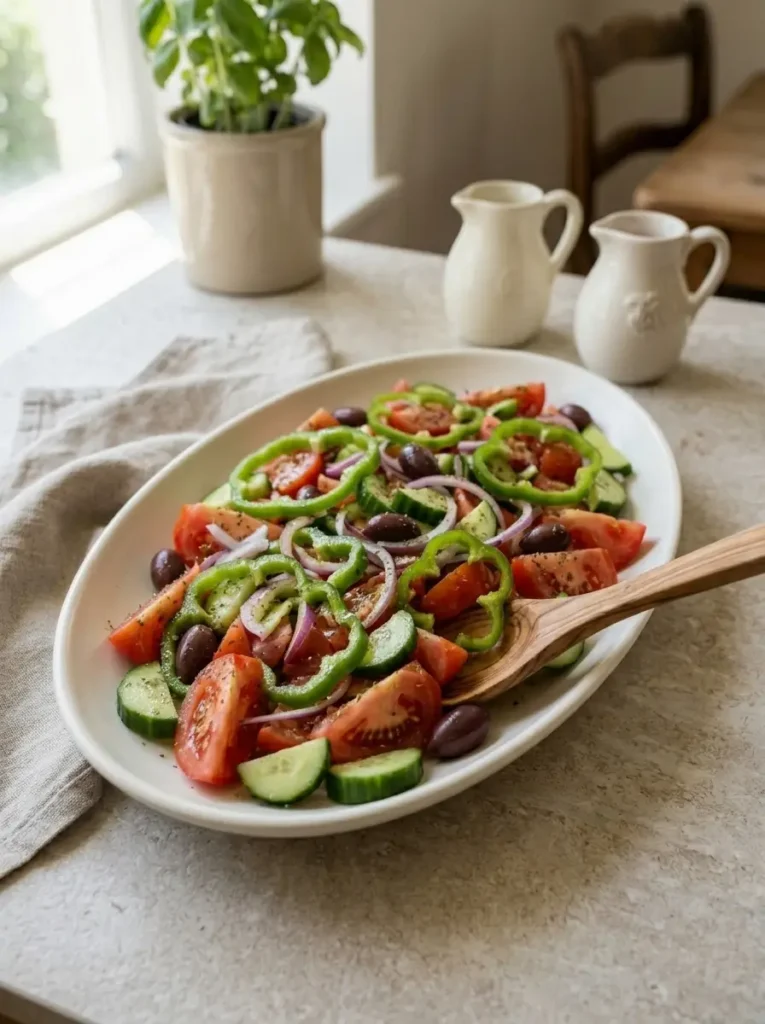
Drizzle the extra-virgin olive oil over the vegetables, followed by the red wine vinegar.
Use a large serving spoon or clean hands to turn the ingredients gently from the bottom. Avoid stirring in tight circles, which can crush the tomatoes and break the cucumber.
The vegetables should appear lightly glossy rather than submerged in dressing. Some liquid will collect naturally as the tomatoes release their juices.
Finish with feta and oregano
Place large pieces or slabs of feta across the top after the vegetables are dressed.
Sprinkle the remaining oregano over the feta and vegetables. A small drizzle of olive oil can be added over the cheese for a polished final appearance.
Serve the salad without aggressively mixing the feta through the platter. Diners can break off smaller pieces as they serve themselves.
Make-Ahead Timeline for Summer Meals
The day before
Wash and dry the vegetables, but leave them whole. Moisture left on the surface can shorten their freshness, so dry them thoroughly before refrigerating.
The onion can be peeled, and the dressing ingredients can be measured into separate covered containers. Keep the feta in its brine until closer to assembly.
Do not cut the tomatoes the day before when the best texture is important. Once cut, they begin releasing juice and lose firmness.
A few hours before serving
Cut the cucumber, bell pepper, and onion. Store them in separate covered containers in the refrigerator.
The tomatoes can also be cut a few hours ahead, but keep them in their own container so their juice does not soften the other vegetables.
Drain the olives and prepare the serving platter. Keep the olive oil, vinegar, oregano, salt, and feta separate.
Just before serving
Combine the vegetables and olives, add the oregano and salt, then dress them with olive oil and vinegar.
Place the feta over the top and finish with the remaining oregano. Allow the salad to stand only briefly before bringing it to the table.
Serve a Group Without Losing Freshness
Use a wide, shallow platter rather than a deep bowl when serving several people. A platter displays the colors clearly and prevents the vegetables at the bottom from supporting too much weight.
Choose a broad serving spoon that can lift tomatoes, cucumber, pepper, onion, olives, feta, and dressing together.
For a buffet, place the salad near the beginning of the serving line so guests have enough room on their plates. Keep bread or another item nearby for enjoying the seasoned tomato and olive-oil juices.
When the salad will remain out for an extended meal, divide it between two platters. Place one on the table and keep the second chilled until the first needs replenishing.
Avoid placing the platter in direct sunlight. Even a fresh vegetable salad loses quality quickly when it becomes warm.
For diners with different preferences, keep extra feta, olives, and red onion in separate bowls. This allows people to adjust the strongest ingredients without changing the main platter.
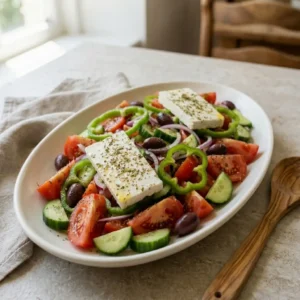
Mediterranean Greek Salad with Feta & Olives
Ingredients
- 1 medium red onion thinly sliced into half-moons
- 4 medium ripe tomatoes cut into bite-size pieces or wedges
- 1 English cucumber partially peeled and sliced into half-moons
- 1 green bell pepper cored and sliced into rings
- 1 handful pitted Kalamata olives
- 1 1/2 teaspoons dried oregano divided
- Kosher salt to taste
- 1/4 cup extra-virgin olive oil
- 1 –2 tablespoons red wine vinegar
- 1 7-ounce block feta cheese in brine, broken into large slabs
Instructions
Mellow the red onion:
- Place the sliced red onion in a small bowl of ice water when you prefer a milder flavor. Add a small splash of the red wine vinegar and let it soak for about 10 minutes. Drain thoroughly.
Combine the vegetables:
- Place the tomatoes, cucumber, green bell pepper, drained red onion, and Kalamata olives in a large shallow serving platter.
Season and dress the salad:
- Sprinkle the vegetables with 3/4 teaspoon dried oregano and a small pinch of kosher salt. Drizzle with the olive oil and 1 tablespoon vinegar. Toss gently, then add the remaining vinegar only when more acidity is needed.
Finish with feta:
- Place the feta slabs over the dressed vegetables. Sprinkle with the remaining 3/4 teaspoon oregano and serve immediately.
Keep the feta in large pieces and place it over the salad after tossing the vegetables.
Presentation Ideas for Summer Lunches and Cookouts
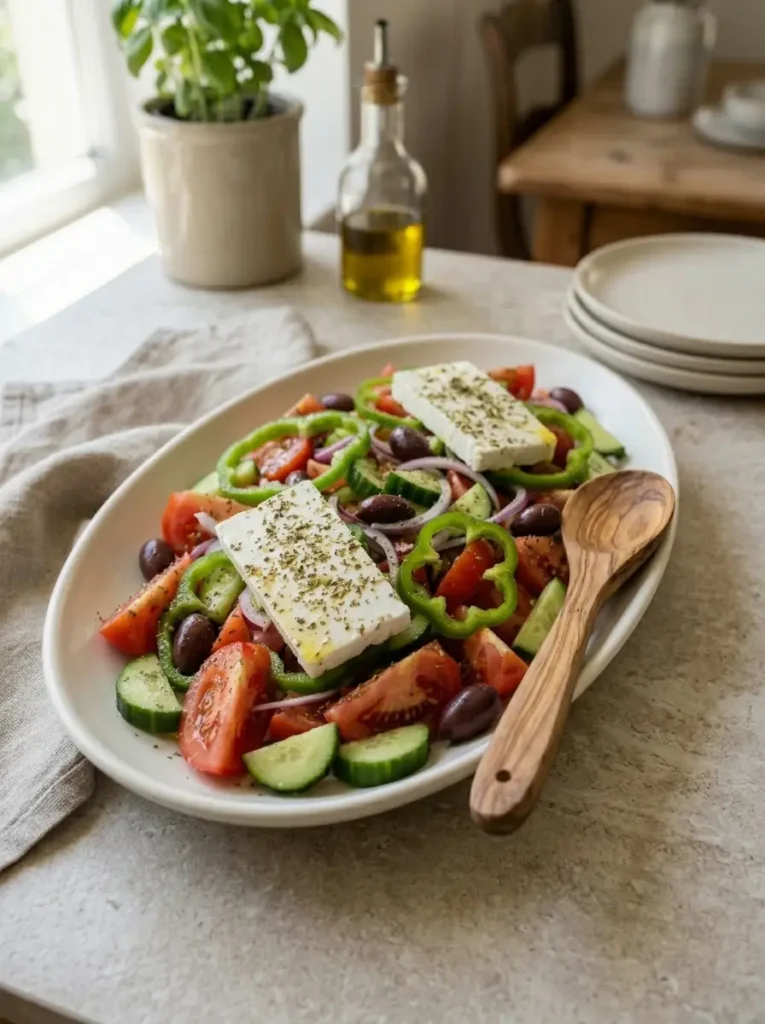
Arrange the vegetables loosely rather than pressing them into a compact layer. Visible sections of tomato, cucumber, bell pepper, onion, and olives make the platter look abundant and fresh.
Place the feta in broad slabs or large uneven pieces across the top. A perfectly crumbled layer can hide the vegetables and make the salad look more like a prepared deli mixture.
Use a white, cream, pale blue, or natural ceramic platter to contrast with the red tomatoes, green vegetables, purple onion, dark olives, and white feta.
A final sprinkle of oregano gives the feta definition. Avoid adding unrelated herbs or decorative ingredients that are not part of the recipe.
For individual servings, place a portion of the dressed vegetables into shallow bowls and add one piece of feta to each. Spoon a little of the collected dressing over the top.
Scale the Salad for More or Fewer People
The recipe can be reduced for a small household or increased for a gathering. Keep the vegetable proportions balanced rather than increasing only the tomatoes or cucumber.
When doubling the recipe, use two serving platters instead of one extremely deep bowl. Smaller platters are easier to toss gently and keep the vegetables from becoming crushed.
Increase the olive oil, vinegar, oregano, olives, and feta proportionally. Add salt more cautiously because larger amounts of feta and olives already increase the overall saltiness.
For a smaller batch, reserve part of the whole vegetables rather than cutting everything. Whole produce keeps better than a fully assembled leftover salad.
Transport and Hold the Salad Safely
Transport the vegetables in a large covered container and pack the feta, olive oil, vinegar, oregano, and salt separately.
Keep everything cold in an insulated bag with ice packs. Assemble the salad after reaching the destination whenever possible.
When the salad must be dressed before travel, use only part of the oil and vinegar. Add the remaining dressing and the feta shortly before serving.
Carry the serving spoon separately so it does not press against the vegetables during transport.
At an outdoor gathering, place the platter in a shaded area and return leftovers to a cooler or refrigerator promptly.
Substitutions and Simple Variations
Use another cucumber
A standard slicing cucumber can replace an English cucumber. Peel thick or waxed skin and remove large watery seeds when necessary.
Use another bell pepper
Red, yellow, or orange bell pepper can replace green pepper. The salad will taste sweeter and slightly less grassy.
Replace the vinegar
Fresh lemon juice can replace the red wine vinegar for a brighter citrus flavor. Add it gradually and taste before using more.
Use crumbled feta
Crumbled feta works when a block is unavailable, but add it after tossing the vegetables. Stirring it too much can make the dressing cloudy.
Reduce the onion
Use less red onion or soak it in ice water for a milder salad. Do not replace it with a large amount of strong raw white onion.
Leave out the olives
The olives can be omitted, although the salad will lose some of its briny flavor. Taste before adding extra salt to compensate.
Storage and Leftovers
This salad has its best texture on the day it is prepared. The tomatoes and cucumber continue releasing liquid after they are salted and dressed.
Transfer leftovers to a covered container and refrigerate them promptly. Use them within about two days.
Before serving leftovers, drain away excessive liquid only when necessary. The collected juices contain olive oil, vinegar, oregano, tomato flavor, and feta seasoning, so do not discard all of it automatically.
Refresh the salad with a small amount of olive oil, fresh oregano, or an additional piece of feta. Avoid adding more salt until it has been tasted.
Freezing is not recommended. Tomatoes, cucumber, onion, and bell pepper lose their crisp texture after freezing and thawing.
Frequently Asked Questions
Does Mediterranean Greek Salad contain lettuce?
This version does not use lettuce. Tomatoes, cucumber, bell pepper, onion, olives, and feta provide the body of the salad.
Can I prepare the salad the night before?
Prepare and refrigerate the components separately, but wait to add the salt, olive oil, vinegar, and feta until shortly before serving. A fully assembled salad becomes softer overnight.
Why is my Greek salad watery?
The vegetables may have been cut and salted too early, or the cucumber may have contained excess moisture. Assemble the salad closer to serving and drain wet ingredients thoroughly.
Should the feta be crumbled or left in large pieces?
Large slabs or pieces create a more distinctive presentation and prevent the cheese from disappearing into the dressing. Crumbled feta can still be used when that is what you have available.