
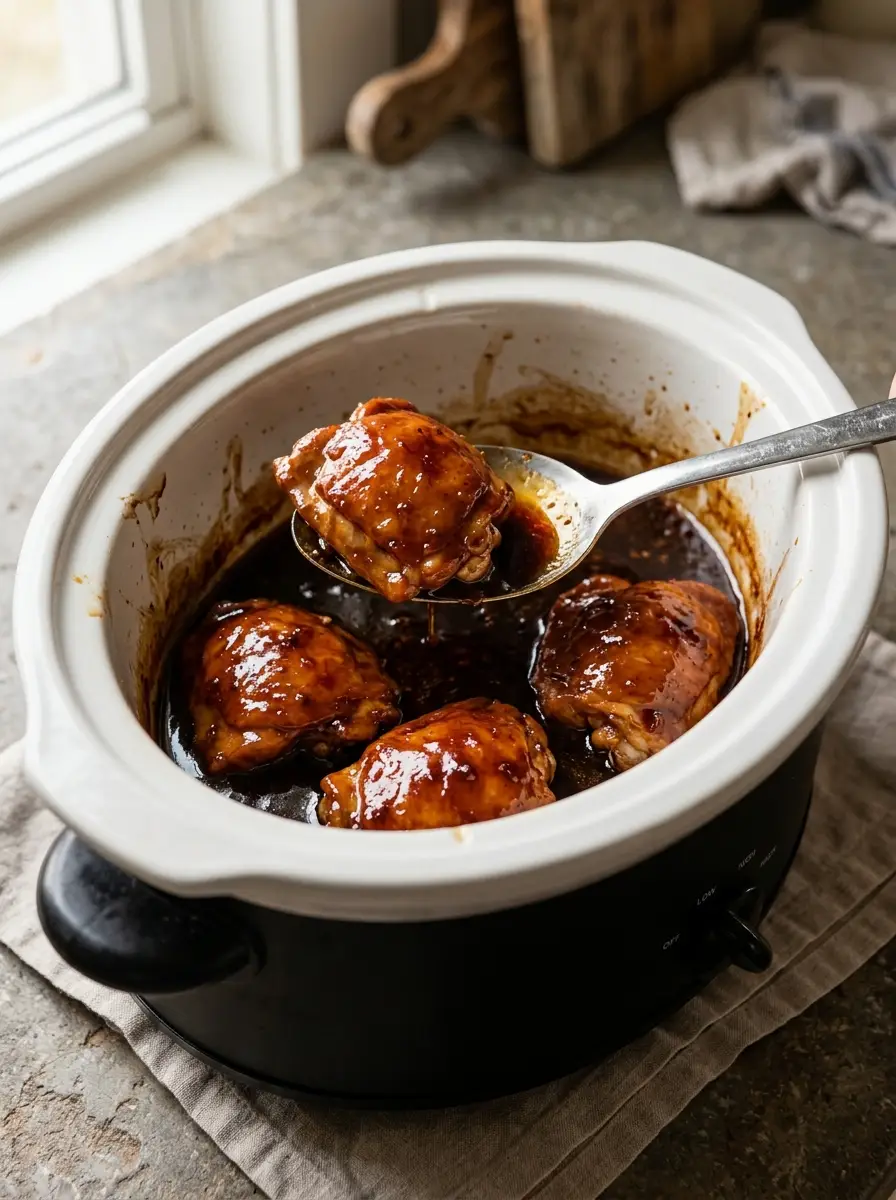
Slow Cooker Honey Garlic Chicken combines tender chicken thighs with a glossy sauce made from honey, fresh garlic, low-sodium soy sauce, and ketchup. The preparation requires only a few minutes, while the slow cooker gently cooks the chicken until it is tender and thoroughly coated in the sweet and savory sauce.
This easy family meal is especially useful on days when dinner needs to cook with minimal attention. There is no browning step, separate saucepan, or complicated seasoning mixture. The chicken and sauce go directly into the slow cooker, and a simple cornstarch slurry thickens the cooking liquid shortly before serving.
The finished chicken has enough flavor to serve as the main part of dinner without a long list of additional components. Spoon the thickened honey garlic sauce over each chicken thigh and pair it with a simple starch or vegetable for a practical Crockpot chicken dinner.
The Sweet and Savory Flavor Behind This Dinner
The defining feature of Slow Cooker Honey Garlic Chicken is its sauce. Honey, soy sauce, ketchup, and garlic each contribute a different element, creating a balanced glaze without requiring specialty ingredients.
Honey supplies sweetness and helps give the completed sauce a glossy finish. Low-sodium soy sauce brings salt and savory depth, while ketchup contributes acidity, tomato flavor, sweetness, and enough body to keep the uncooked sauce from feeling watery.
Fresh garlic gives the recipe its strongest aromatic note. Because it cooks slowly in the covered cooker, its sharp raw flavor becomes milder and blends into the sauce rather than remaining harsh.
The sauce initially looks relatively fluid when it is poured over the chicken. The thighs release additional juices while cooking, so the final thickening step is important. Cornstarch and water are stirred together separately, then added during the last portion of cooking.
Once thickened, the sauce should coat the chicken and the back of a spoon while still remaining easy to pour. It is not intended to become as firm as a bottled glaze or as thin as unthickened broth.
Why Chicken Thighs Work So Well in the Slow Cooker
Boneless, skinless chicken thighs are a dependable choice for slow cooking because they remain moist during a longer cooking period. Their richer flavor also stands up well to a sauce containing honey, garlic, soy sauce, and ketchup.
Chicken breast can become dry when it cooks beyond the point of doneness. Thigh meat contains more natural fat and connective tissue, giving it a wider window between tender and overcooked.
Choose chicken thighs that are reasonably similar in size. Pieces with a large difference in thickness may not finish at exactly the same time.
Trim away large pieces of visible fat, but do not remove every small amount. A little remaining fat contributes moisture and can be skimmed from the sauce before thickening when necessary.
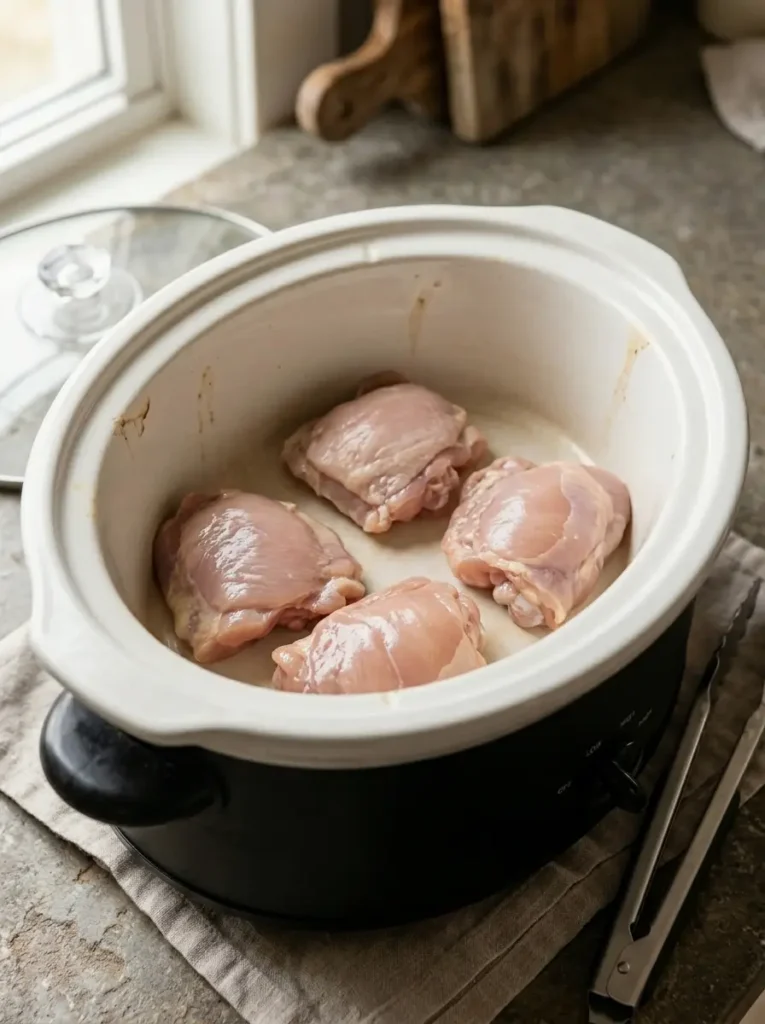
Arrange the chicken in one layer across the bottom of the slow cooker. Slight contact between pieces is fine, but avoid stacking them into several layers. An even arrangement helps every thigh cook at a similar rate and gives more of the chicken direct exposure to the sauce.
What Each Sauce Ingredient Contributes
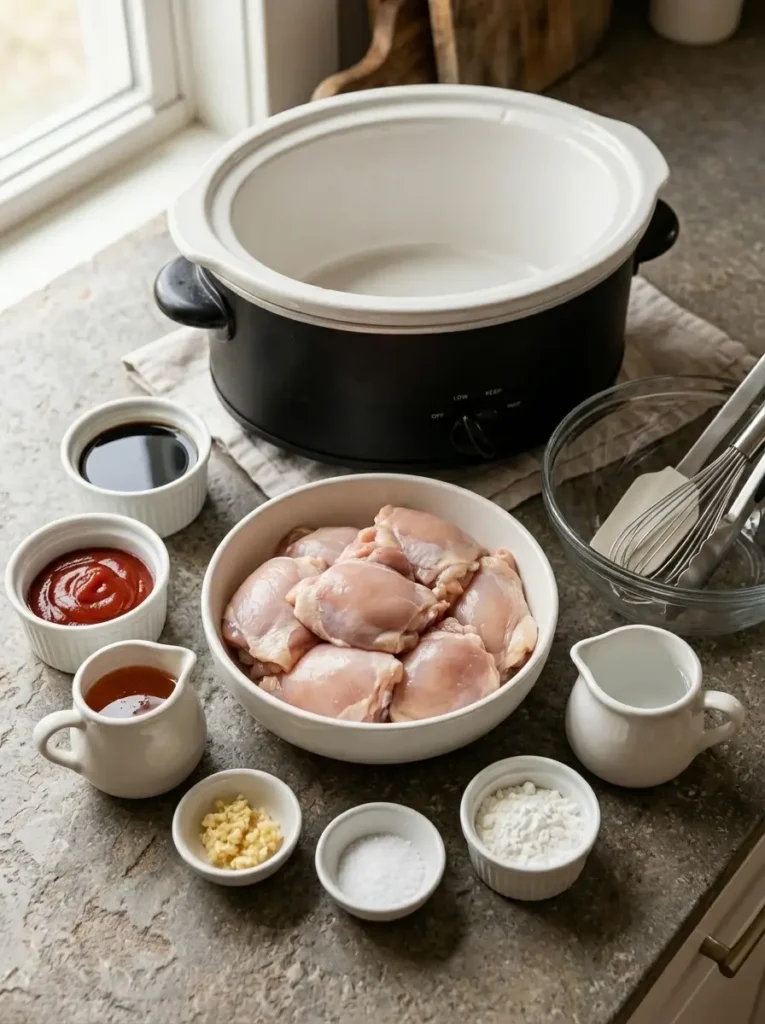
Low-sodium soy sauce
Low-sodium soy sauce forms the savory base of the honey garlic sauce. It seasons the chicken and provides the deep flavor that balances the honey.
Using a reduced-sodium variety is important because the sauce becomes more concentrated as it cooks. Regular soy sauce may create a saltier result, particularly when the finished liquid is thickened.
Different brands still vary in sodium content. Mix the complete sauce before deciding whether the small pinch of additional salt is necessary.
Ketchup
Ketchup adds tomato flavor, mild acidity, sweetness, and body. Its acidity helps prevent the honey sauce from tasting flat or excessively sweet.
It also gives the finished glaze a warm reddish-brown color. Without ketchup, the sauce would be thinner and more strongly dominated by soy sauce.
Use plain ketchup rather than a flavored version so garlic and honey remain the main flavor notes.
Honey
Honey provides the sweetness expected in honey garlic chicken and helps the sauce look glossy after thickening.
Stir it thoroughly with the soy sauce and ketchup. Honey can settle at the bottom of the bowl when the sauce is not mixed completely.
Coating the measuring cup lightly with oil can help the honey release more easily, but this is optional. Scrape the cup with a small spatula so the intended amount reaches the sauce.
Fresh garlic
Freshly minced garlic gives the sauce a direct garlic flavor without introducing additional dried seasonings.
Mince the cloves finely so they distribute through the liquid and soften evenly. Large garlic pieces may remain more noticeable in the finished sauce.
The garlic does not need to be cooked before it enters the slow cooker. It becomes mellow during the covered cooking period.
Cornstarch and water
Cornstarch is responsible for transforming the cooking liquid into a lightly thickened sauce. It is added near the end rather than at the beginning.
Always mix cornstarch with cold or room-temperature water before adding it. Dry cornstarch stirred directly into hot sauce can form small white lumps that are difficult to remove.
The slurry should appear completely smooth and milky. Stir it again immediately before pouring because cornstarch can settle quickly at the bottom of the bowl.
Mix the Honey Garlic Sauce Until Completely Smooth
Combine the low-sodium soy sauce, ketchup, honey, minced garlic, and a small pinch of salt in a medium bowl.
Use a whisk rather than a spoon when possible. Whisking breaks up the ketchup and helps the honey disperse evenly through the thinner soy sauce.
Scrape around the bottom and sides of the bowl. The completed mixture should have an even color with no separate streaks of honey or ketchup.
Taste should not be used to judge sauce that has contacted raw chicken. If you need to check the balance, taste the sauce only before it is poured into the slow cooker.
The uncooked mixture will taste stronger and saltier than the final sauce. Chicken juices dilute it during cooking, and the flavors become more blended over time.
Use the Right Slow Cooker Setting for Your Schedule
This recipe offers two cooking options. Use the Low setting for approximately four hours or the High setting for approximately two to three hours.
The exact time depends on the slow cooker, the thickness of the chicken thighs, and how fully the appliance is loaded. Older and newer slow cookers can heat differently, so temperature is a more dependable guide than appearance alone.
Keep the lid closed during most of the cooking period. Every unnecessary opening releases heat and steam, which can extend the cooking time.
Begin checking the chicken near the earliest recommended point. Insert an instant-read thermometer into the thickest part of a thigh without touching the bottom of the slow cooker.
The chicken must reach at least 165°F. The thighs should also feel tender when gently pressed with tongs, but tenderness does not replace checking the temperature.
Use fully thawed chicken. Frozen chicken should not be placed directly into the slow cooker because it can spend too long warming through before reaching a safe cooking temperature.
How to Thicken the Sauce Without Lumps
When the chicken has reached a safe internal temperature, mix the cornstarch and water in a small bowl.
Whisk until no dry cornstarch remains around the bottom or edges. The mixture should look smooth rather than grainy.
Stir the slurry into the hot liquid around the chicken. Move the chicken gently when necessary so the thickener can disperse throughout the sauce.
Replace the lid and switch the slow cooker to High. Continue cooking for approximately 15 minutes, or until the sauce thickens slightly.
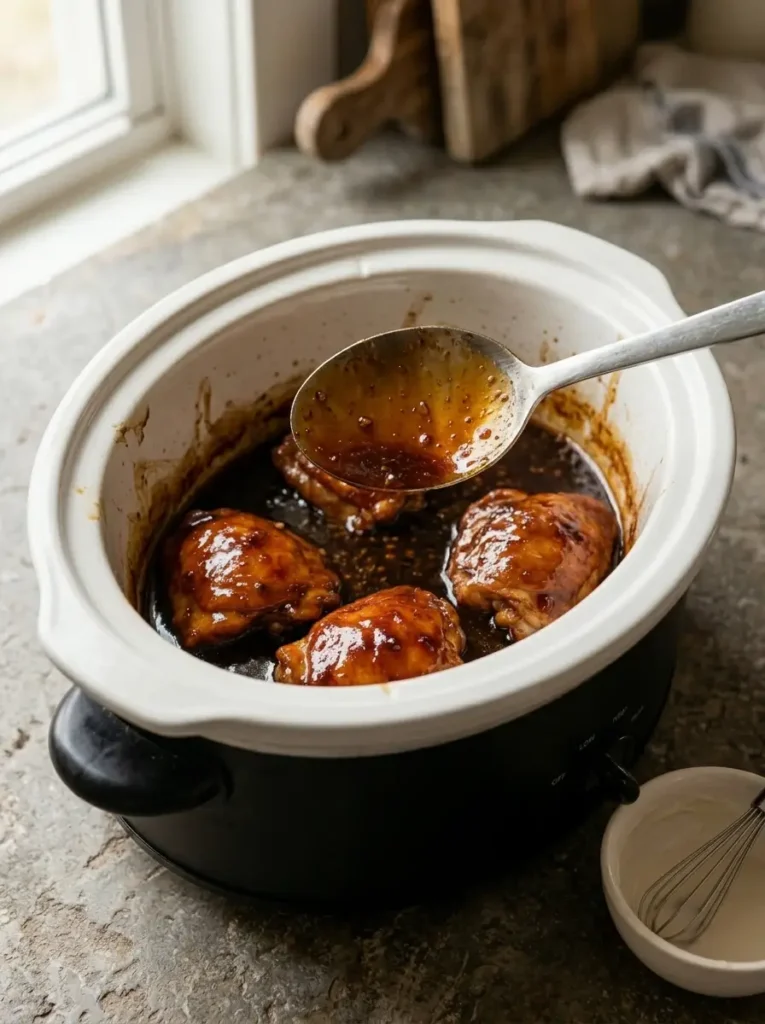
The finished sauce should coat the back of a spoon and cling to the top of the chicken. It will continue thickening slightly as it cools.
If the sauce still appears thin after the full thickening period, give it several more minutes with the lid on. Slow cookers vary in heat intensity, and the liquid must become hot enough for cornstarch to work effectively.
Avoid adding a large second quantity of cornstarch immediately. Too much can create a sauce with a gummy or gel-like texture.
How to Balance the Sauce Before Serving
When the sauce tastes too salty
Add a small amount of warm water and stir it through the sauce. Begin with a tablespoon rather than adding a large quantity at once.
Serving the chicken with a plain starch can also balance a strongly seasoned sauce.
When the sauce tastes too sweet
A small splash of low-sodium soy sauce can strengthen the savory flavor, but add it carefully because the sauce is already concentrated.
A small amount of mild acidity can also reduce the impression of sweetness, although it will slightly change the original flavor.
When the sauce is too thick
Stir in warm water one tablespoon at a time until the glaze loosens enough to spoon over the chicken.
Do not add cold liquid in a large quantity because it can cool the sauce and make the consistency uneven.
When the sauce is too thin
Confirm that the slow cooker is set to High after the slurry is added and allow the sauce the full thickening time.
Stir gently near the end so the cornstarch is distributed evenly. The sauce will also thicken slightly as it stands.
Keep the Chicken Tender and the Glaze Glossy
Use similarly sized thighs
Chicken pieces of similar thickness cook more evenly. Very small pieces may finish before larger thighs become tender.
Do not add frozen chicken
Thaw the chicken safely before placing it in the slow cooker. Pat away excessive surface moisture when necessary so it does not dilute the sauce.
Keep the lid closed
Open the slow cooker only when checking doneness or adding the cornstarch slurry. Repeated opening lowers the temperature and extends the cooking period.
Check the internal temperature
Do not rely only on color or texture. Use an instant-read thermometer and confirm that the thickest portion of every large piece has reached at least 165°F.
Thicken only after the chicken cooks
Adding cornstarch during the final stage gives you better control over consistency and reduces the chance of the sauce becoming overly thick before the chicken is ready.
Spoon sauce over the chicken before serving
Turn each thigh gently in the thickened glaze or spoon the sauce over the top. This gives the chicken a more even, glossy coating.
Slow Cooker Honey Garlic Chicken
Ingredients
- 4 boneless skinless chicken thighs, fully thawed
- 1/2 cup low-sodium soy sauce
- 1/2 cup ketchup
- 1/3 cup honey
- 3 garlic cloves minced
- 1 pinch kosher salt
- 1 tablespoon cornstarch
- 1 tablespoon water
Instructions
Arrange the chicken:
- Place the chicken thighs in a single layer across the bottom of a 4-quart slow cooker.
Mix the honey garlic sauce:
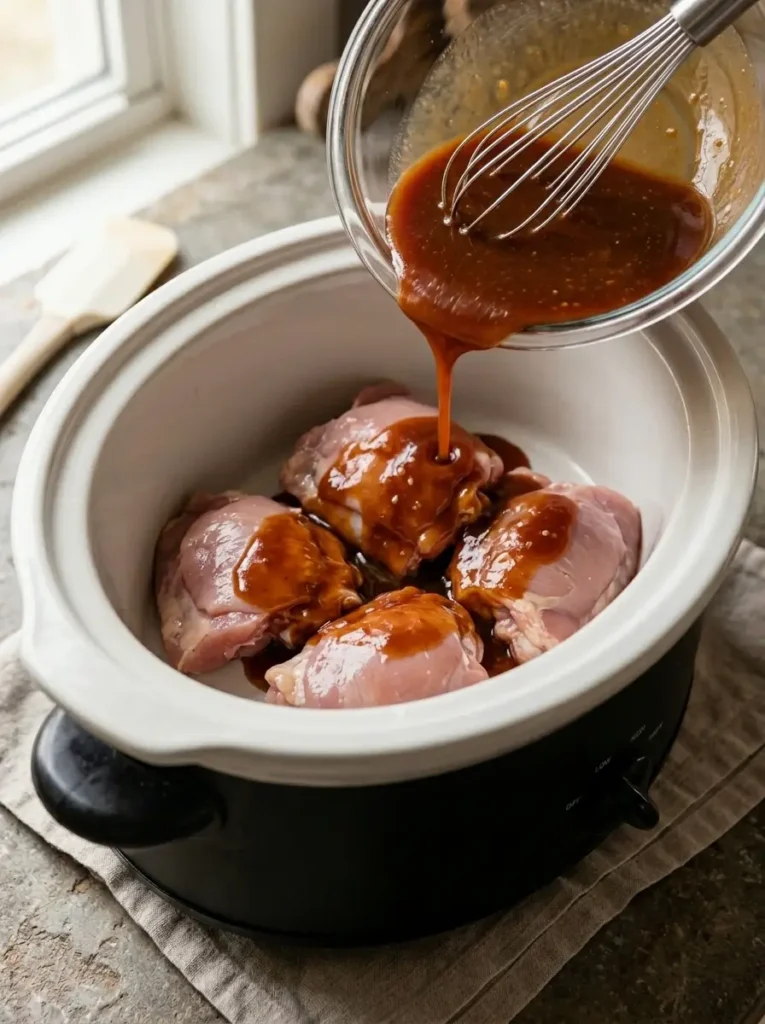
- Whisk the low-sodium soy sauce, ketchup, honey, garlic, and salt in a medium bowl until smooth and evenly combined.
Coat and cook the chicken:
- Pour the sauce evenly over the chicken thighs. Cover and cook on Low for 4 hours or on High for 2–3 hours, until the thickest part of every thigh reaches at least 165°F.
Prepare the cornstarch slurry:
- Whisk the cornstarch and water in a small bowl until completely smooth. Stir the slurry into the hot sauce around the chicken.
Thicken and serve:
- Cover and cook on High for approximately 15 minutes, or until the sauce thickens slightly. Turn the chicken gently in the glaze or spoon the sauce over each thigh before serving.
Begin checking the chicken near the earliest recommended cooking time because slow cookers vary in temperature.
Stir the cornstarch slurry again immediately before adding it because cornstarch settles quickly.
Ingredient Substitutions That Preserve the Main Flavor
Chicken breast
Boneless, skinless chicken breast can replace the thighs, but it may cook more quickly and become dry if left too long.
Use similarly sized breast portions and begin checking their temperature earlier. Remove them when they reach 165°F.
Tamari
Low-sodium tamari can replace soy sauce when its flavor and dietary suitability work for your household.
Check the label carefully because tamari products vary considerably in sodium concentration.
Tomato sauce
Plain tomato sauce can replace ketchup in an emergency, but the finished sauce will be less sweet and thinner.
You may need a little additional honey and slightly more thickening. Make adjustments gradually.
Maple syrup
Pure maple syrup can replace honey, although it will create a different flavor and may produce a slightly thinner sauce.
Begin with the same amount, then judge the balance before the sauce touches raw chicken.
Garlic paste
Plain garlic paste can replace freshly minced garlic. Avoid pastes containing large amounts of salt, oil, herbs, or preservatives that could alter the sauce.
Flavor Variations for Different Family Dinners
Add gentle heat
Add a small amount of crushed red pepper or mild chili sauce to the uncooked sauce.
Keep the quantity moderate when serving children or anyone sensitive to spice. It is easier to add heat at the table than to remove it from the entire slow cooker.
Add fresh ginger
Finely grated fresh ginger can be whisked into the sauce with the garlic.
Use a restrained amount so the recipe remains honey garlic chicken rather than becoming ginger-dominant.
Add a little acidity
A small amount of rice vinegar or fresh lemon juice can sharpen the sauce and reduce its perceived sweetness.
Add it before the sauce touches raw chicken so you can taste and adjust safely.
Turn it into shredded chicken
Remove the cooked thighs, shred them with two forks, and return the meat to the thickened sauce.
This variation works well for rice bowls, sandwiches, wraps, or meal-preparation containers.
Make a larger sauce quantity
When you want extra sauce for rice or noodles, increase all sauce ingredients proportionally rather than adding only more soy sauce or honey.
Do not overfill the slow cooker, and allow additional time for a larger amount of liquid to thicken.
Serving Ideas for a Complete Family Meal
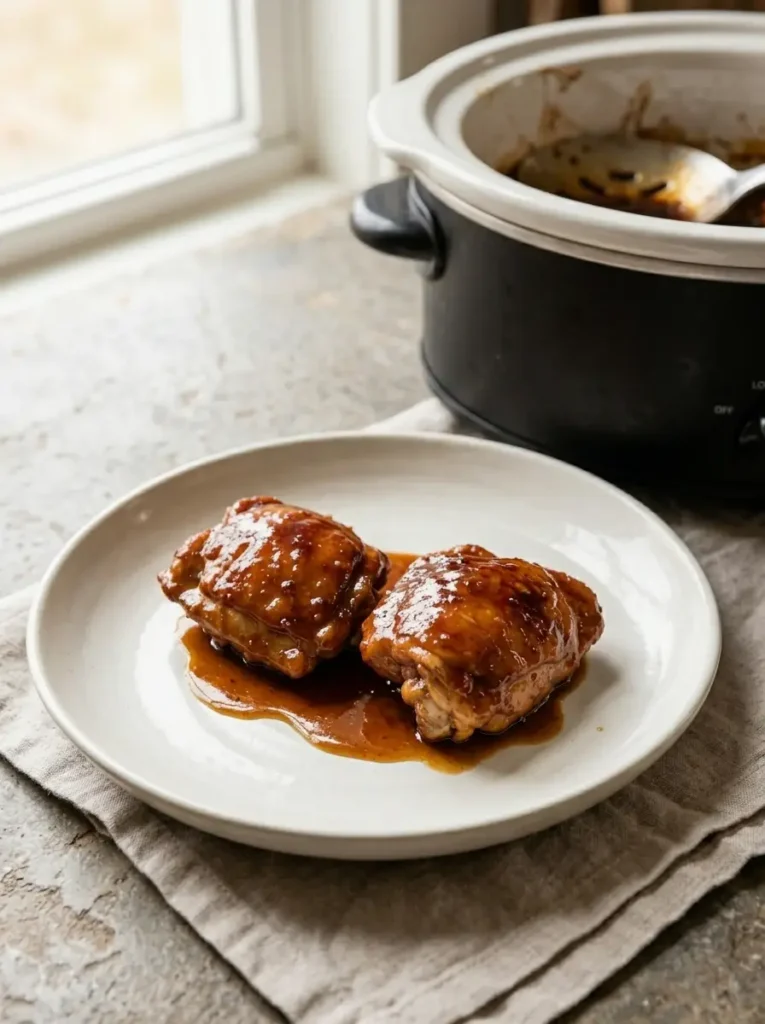
Slow Cooker Honey Garlic Chicken has a strongly flavored sauce, so simple side dishes provide the best balance.
Steamed white or brown rice absorbs the glaze without competing with the honey and garlic. Mashed potatoes, plain noodles, or quinoa can serve the same purpose.
For vegetables, consider steamed broccoli, green beans, carrots, or roasted zucchini. Keep their seasoning light so the sweet and savory chicken remains the center of the meal.
A crisp cucumber salad or shredded cabbage slaw can add freshness and texture beside the soft chicken.
Spoon a moderate amount of sauce over each serving and place additional glaze on the table. This allows each person to control the sweetness and saltiness of the meal.
Make-Ahead, Storage, and Reheating
The uncooked sauce can be mixed one day ahead and refrigerated in a covered container. Keep it separate from the raw chicken until you are ready to begin cooking.
The chicken can also be trimmed ahead. Store it in a sealed container on the lowest refrigerator shelf to prevent raw juices from contacting other foods.
After cooking, transfer leftovers to shallow covered containers and refrigerate them within two hours. Use refrigerated chicken within three to four days.
Reheat on the stovetop
Place the chicken and sauce in a small covered saucepan over low to medium-low heat. Add a tablespoon of water if the glaze has become very thick.
Turn the chicken gently while it reheats and confirm that the center reaches 165°F.
Reheat in the microwave
Place one portion in a microwave-safe dish and spoon sauce over the chicken. Cover it loosely and heat in short intervals.
Turn or reposition the chicken between intervals so it heats evenly, then check that it reaches 165°F.
Do not reheat leftovers in the slow cooker
A slow cooker heats refrigerated food too gradually for safe reheating. Reheat leftovers on the stovetop, in the microwave, or in a conventional oven.
After the food reaches 165°F, it can be transferred to a preheated slow cooker and held hot for serving.
Freezing
Cool the chicken and sauce completely before transferring them to freezer-safe containers. Divide them into meal-size portions so only the amount needed must be thawed.
Thaw frozen leftovers in the refrigerator before reheating. The sauce may look slightly separated at first but usually becomes smoother after gentle stirring.
Frequently Asked Questions
Can I cook frozen chicken in the slow cooker?
No. Thaw the chicken safely before adding it. Frozen chicken can take too long to move through unsafe temperature ranges in a slow cooker.
How do I know when the chicken thighs are done?
Insert an instant-read thermometer into the thickest portion of the largest thigh. The temperature must reach at least 165°F.
Why did my sauce stay thin?
The cornstarch may not have been mixed completely, the sauce may not have become hot enough, or it may need several additional minutes on High. Stir gently and continue cooking with the lid closed.
Can I double the recipe?
Yes, provided the chicken fits comfortably in the slow cooker without excessive stacking and the appliance is not overfilled. Increase the sauce and slurry ingredients proportionally and confirm every chicken piece reaches 165°F.
Can I prepare this Slow Cooker Honey Garlic Chicken overnight?
The recipe needs only about four hours on Low, so cooking it overnight may overcook the chicken. Prepare the ingredients ahead and begin cooking at a time that matches the recommended window.